TRENDING

Thursday, 22 October 2026
----------------------
11 Jumada Al-Awwal 1448 AH
Following an attempted shooting, US President Donald Trump is set to address the White House Correspondents' Dinner under heightened security, underscoring persistent threats to presidential safety and the complex relationship between the executive branch and the press. The event's rescheduling reaffirms democratic traditions while drawing attention to ongoing debates over media access and freedom.
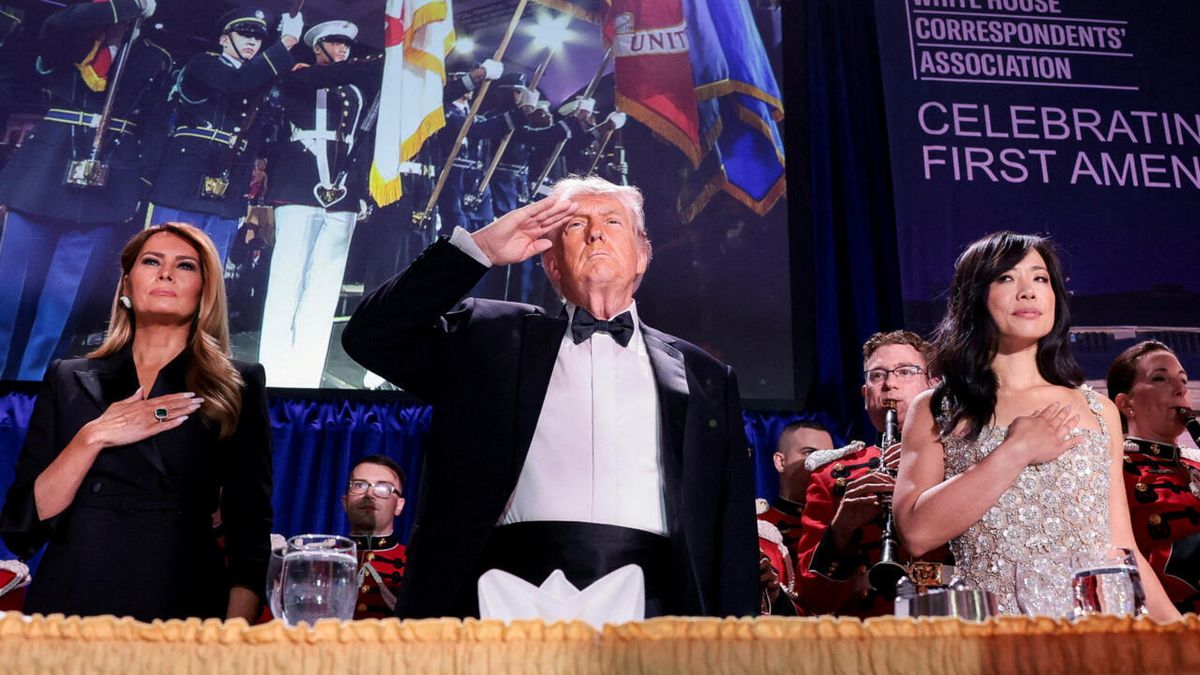
The upcoming White House Correspondents' Dinner, scheduled to feature US President Donald Trump, transcends its traditional role as a social gathering, emerging as a significant barometer of American political stability, presidential security, and the enduring, often contentious, relationship between the executive branch and the press. The event, rescheduled for Friday at the Waldorf Astoria hotel, follows a serious security breach in April 2026 that saw an attempted shooting outside the original venue, the Washington Hilton. This incident, where a suspect fired a shotgun and was later charged with attempting to assassinate the president, has cast a long shadow, transforming the dinner into a focal point for critical geopolitical and domestic concerns.
The original White House Correspondents' Association (WHCA) dinner on April 25, 2026, was abruptly halted when a man, identified as Cole Allen, attempted to breach a security checkpoint and discharged a firearm outside the ballroom where President Trump and his cabinet were preparing to be seated. The swift response of Secret Service officer Victor Gonzales, who was injured but credited with stopping the attack, prevented a potentially catastrophic outcome. The suspect subsequently pleaded not guilty to charges including attempted assassination, highlighting the gravity of the threat.
The immediate consequence was the cancellation and rescheduling of the event, a rare occurrence for a gala that has been a fixture on Washington's calendar for over a century. The relocation to the Waldorf Astoria and the implementation of "heightened security" measures, as confirmed by Secret Service Director Sean Curran, underscore the seriousness with which authorities are treating the ongoing threat environment. Curran's acknowledgment that "we do expect bad people to show up" reflects a pragmatic assessment of the persistent challenges in protecting high-value targets in a polarized society. President Trump himself leveraged the incident to advocate for a $400 million ballroom at the White House, arguing it would enhance presidential security for such events. The rescheduled dinner will also honor Officer Gonzales and the Washington Hilton staff, recognizing their bravery and assistance during the crisis.
The attempted attack carries significant implications beyond domestic security. From a geopolitical perspective, the security of a sitting US President is paramount, not only for the stability of the American government but also for global confidence in the world's leading superpower. An attempted assassination, regardless of its success, signals potential internal vulnerabilities that international allies and adversaries alike observe closely. It can influence perceptions of US domestic cohesion and the reliability of its leadership on the global stage.
Domestically, the incident is a stark reminder of the escalating political tensions and the potential for violence in the United States. In an era of deep partisan divides and often inflammatory rhetoric, the line between political disagreement and direct threats to public officials appears increasingly blurred. This environment poses a challenge to democratic processes and the peaceful transfer of power, raising concerns about the long-term health of American democracy. The suspect's motivations, while not fully detailed in the provided report, are likely to be scrutinized for any links to broader extremist movements or ideological grievances, which could have wider societal repercussions.
Beyond security, the White House Correspondents' Dinner traditionally serves as a symbolic affirmation of the First Amendment and the vital role of a free press in American democracy. This year, however, the event is imbued with additional significance given President Trump's historically adversarial relationship with the news media. Throughout his previous term and current presidency, Trump has frequently denounced unfavorable coverage as "fake news," criticized journalists by name, and taken measures such as barring specific outlets from White House press pools or restricting access to government facilities. He has also threatened to revoke licenses of TV networks, actions that many journalists and press freedom advocates view as direct assaults on the First Amendment.
His decision to attend this rescheduled dinner, after boycotting the event in his previous years in office, is notable. While it could be interpreted as a gesture towards tradition or an opportunity to project resilience, it occurs amidst ongoing tensions. WHCA President Weijia Jiang stated the event "will be a statement that violence has no place in American life and a free press will not be intimidated into silence." This sentiment is echoed by hundreds of veteran journalists and journalism organizations who have urged the WHCA to use the dinner as a platform to condemn what they perceive as Trump’s attacks on press freedom. The dinner, therefore, becomes a stage for a complex interplay of tradition, executive power, and the fundamental principles of a democratic society.
The events surrounding the 2026 White House Correspondents' Dinner are likely to have lasting implications. The focus on presidential security will undoubtedly lead to a re-evaluation of protocols for public appearances, potentially increasing costs and limiting accessibility for future events. More broadly, the incident underscores the need for robust security measures in an increasingly volatile political landscape.
Furthermore, the ongoing friction between the executive branch and the media will continue to shape the information environment. While President Trump has, at times, provided direct access to reporters, his administration's broader actions suggest a strategic effort to control narratives and challenge the legitimacy of critical reporting. This dynamic is crucial for the public's access to unbiased information and the accountability of government, both cornerstones of a functioning democracy. The rescheduled dinner, therefore, is not merely a social event but a critical moment reflecting the complex challenges facing American governance, security, and the foundational principles of its free press.
Source referenced: FRANCE24
This brief was synthesized by our Editorial Engine and reviewed by The Ground Narrative team.