TRENDING

Saturday, 17 October 2026
----------------------
6 Jumada Al-Awwal 1448 AH
Israeli military operations in southern Syria have escalated, bringing arbitrary arrests, torture, and property destruction to local communities. Civilians live in constant fear, caught between an assertive Israel and an absent Syrian government.
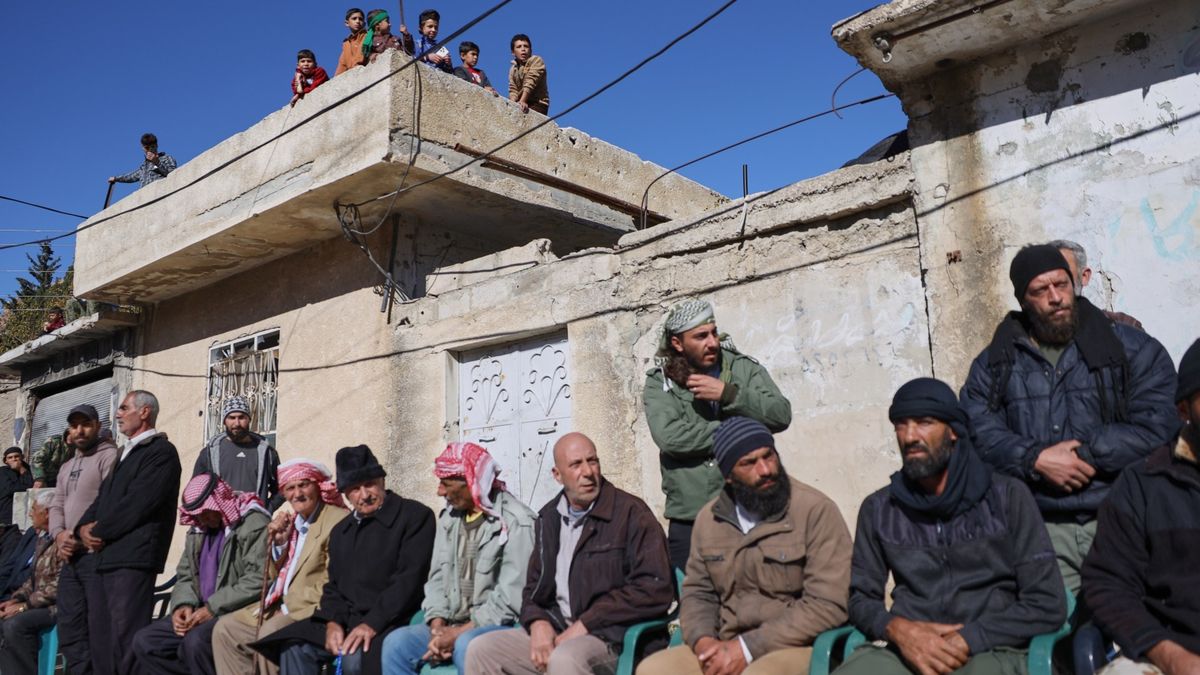
Since late 2024, following the collapse of the Bashar al-Assad regime in December of that year, Israel has significantly intensified its military activities in southern Syria. This surge includes frequent incursions, artillery shelling, machine-gun fire, and a campaign of arbitrary arrests and detentions targeting local populations near the Golan Heights and the 1974 demilitarized zone. These operations have plunged communities into a state of chronic fear and economic instability, with residents reporting torture in Israeli prisons and widespread disruption to daily life.
The escalation of Israeli military actions in southern Syria is a stark demonstration of power projection into a vacuum. With the fall of the Assad regime in December 2024, the already weakened Syrian government lost its tenuous hold over parts of its southern territories, creating a strategic opening that Israel has moved swiftly to exploit. This region, adjacent to the Israeli-occupied Golan Heights, is considered a critical buffer zone by Israel, which seeks to prevent any hostile state or non-state actors, particularly Iran-backed militias like Hezbollah, from establishing a presence there.
Israel frames its incursions and arrests as essential for its national security, often citing the need to defend the local Druze community from perceived threats—a claim the Syrian government rejects. However, the nature of the operations, including extensive intelligence gathering, arbitrary detentions without charges, and the systematic disruption of civilian life, suggests a broader strategic objective. This is not merely about reactive security; it is about proactive control and shaping the future political and demographic landscape of southern Syria to Israel's long-term advantage. By asserting dominance, Israel aims to ensure that any future Syrian authority in the south remains weak or compliant, effectively creating a de facto security zone under its influence.
The Syrian government finds itself in an untenable position. Blocked by Israel from operating effectively in the south and lacking the military strength to confront its more powerful neighbor, Damascus has resorted to stalled negotiations for a security agreement. This impotence leaves its citizens exposed and reinforces the perception of a state unable to protect its sovereignty or its people. Meanwhile, international mechanisms, such as the United Nations Disengagement Observer Force (UNDOF), are rendered largely ineffective. Despite their mandate to monitor the 1974 ceasefire, UNDOF personnel report frequent restrictions on their movement and an inability to intervene in Israeli military activities, highlighting the erosion of international law and peacekeeping authority in the face of unilateral power.
This dynamic is further complicated by the broader regional instability, including the implied US-Israel war on Iran mentioned in the intelligence. Such large-scale conflicts often provide cover for localized power grabs, allowing powerful actors to pursue long-standing strategic goals with less international scrutiny. Israel's actions in southern Syria are thus not isolated incidents but part of a calculated strategy to reconfigure regional power balances in its favor, leveraging the post-Assad chaos and the ongoing wider conflicts.
The residents of southern Syria's villages are bearing the direct and brutal consequences of this unchecked power dynamic. Their lives are characterized by a pervasive sense of fear, uncertainty, and profound injustice, as they become collateral damage in a conflict not of their making.
The most immediate and terrifying impact is the risk of arbitrary arrest and detention. Individuals like Ahmed and Mahmoud describe being seized at checkpoints or from their homes in pre-dawn raids, often based on vague or unsubstantiated accusations. Their accounts of detention are harrowing: prolonged periods in handcuffs, severe beatings, being forced into painful stress positions, and exposure to psychological torture methods like the
Source referenced: ALJAZEERA
This brief was synthesized by our Editorial Engine and reviewed by The Ground Narrative team.


