TRENDING

Saturday, 17 October 2026
----------------------
6 Jumada Al-Awwal 1448 AH
The cable‑stayed Yalu River bridge linking Dandong and Sinuiju opened on October 15, 2026, promising smoother trade and people‑to‑people ties. Beneath the ceremony, the structure rewrites regional power balances and burdens local populations.
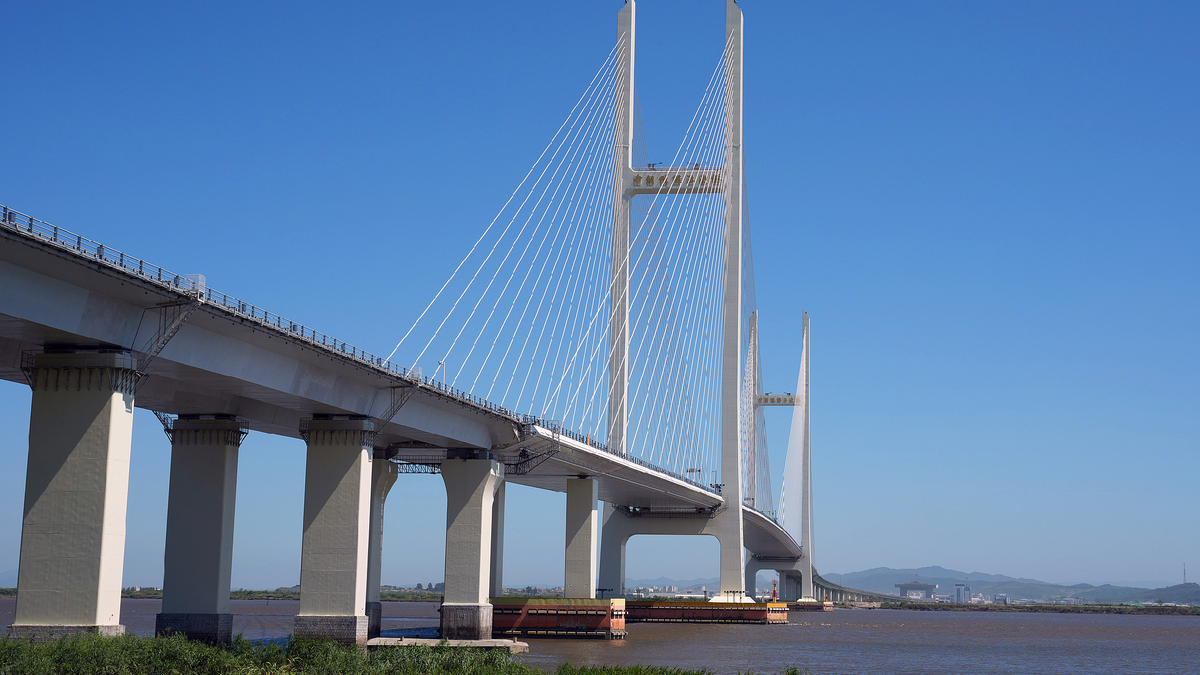
On October 15, 2026, a new cable‑stayed bridge spanning the Yalu River was inaugurated, connecting Dandong in China’s Liaoning Province with Sinuiju in North Korea’s North P’yŏngan Province. The ceremony, attended by officials from both sides, highlighted the bridge’s 28.5‑metre‑wide deck, four traffic lanes, and a clearance for vessels up to 3,000 tonnes. It replaces the aging 20‑tonne‑limit road‑rail bridge that has constrained cross‑border movement for more than a decade.
Since the early 2000s, China has used infrastructure projects to cement its influence over neighboring regimes. The Yalu bridge is a continuation of that playbook, offering Pyongyang a rare conduit for legal trade while deepening Beijing’s economic foothold in the hermit kingdom. By financing construction and controlling customs at Dandong, China can monitor the flow of goods, enforce its own sanctions regime, and extract concessions on energy imports and labor deployment.
For North Korea, the bridge is a lifeline. International sanctions have choked its ability to export coal, minerals, and textiles. The new crossing expands capacity for trucks carrying sanctioned commodities, making it easier to route them through Chinese ports for re‑export. In return, Pyongyang offers China cheap labor, low‑cost manufacturing space, and a buffer against a potential U.S.‑led encirclement.
The bridge also has a military dimension. Its robust design can accommodate heavy military logistics, allowing rapid movement of troops or equipment should Beijing deem it necessary to intervene in a crisis on the Korean Peninsula. This capability reassures China that it can project power without deploying naval assets into the contested East China Sea, while signaling to the United States and South Korea that Beijing remains a decisive stakeholder.
Both governments stand to gain economically: Dandong’s border trade port, already China’s largest with the DPRK, expects a 30‑40 % increase in cargo volume, boosting local tax revenues and employment. Meanwhile, North Korean authorities anticipate higher customs receipts that can fund the regime’s elite patronage network. However, the upside is offset by the risk of renewed U.S. secondary sanctions targeting firms that facilitate illicit shipments across the bridge.
The bridge’s construction employed thousands of Chinese laborers, many from the surrounding Liaoning region, who faced long hours, hazardous conditions, and delayed wages—issues documented in local labor union reports. In North Korea, the workforce comprised conscripted laborers who received minimal rations and were subject to strict surveillance, reinforcing the regime’s coercive labor system.
For families split by the river, the bridge promises easier reunions, yet the reality is mixed. While legal travel permits have increased, the Chinese government continues to restrict entry for many North Korean refugees, fearing a surge of asylum seekers. In Sinuiju, rising traffic has strained inadequate urban infrastructure, leading to congestion, pollution, and a rise in informal markets that often operate outside state control.
Local merchants in Dandong anticipate higher profits, but they also risk becoming entangled in sanction‑evasion schemes. Small‑scale traders who inadvertently handle prohibited goods could face asset freezes or imprisonment under China’s tightened anti‑money‑laundering regime, a risk that disproportionately affects low‑income households.
Official statements from both capitals framed the bridge as a symbol of “people‑to‑people friendship.” What is omitted is the strategic calculus: Beijing’s desire to lock the DPRK into a dependency that limits Pyongyang’s diplomatic wiggle room, and Pyongyang’s hope to leverage Chinese goodwill to soften the impact of UN sanctions.
Construction required dredging of the Yalu River’s navigation channel, disrupting fish habitats that sustain riverine communities on both banks. Moreover, the bridge’s approach roads required the relocation of several villages in North Korea, a process carried out without public consultation and compensated with substandard housing.
Both governments have been tight‑lipped about traffic statistics. Without transparent data, it is impossible for international watchdogs to assess whether the bridge is being used for sanctioned commodity flows or for legitimate humanitarian aid. This opacity fuels speculation that the bridge could become a conduit for illicit arms shipments under the guise of civilian cargo.
- Trade Volume Reports: Monthly customs data from Dandong will reveal whether cargo volumes surge beyond projected levels, a potential red flag for sanction‑evasion.
- U.S. Policy Responses: Watch for secondary‑sanctions proposals from the Treasury Department targeting firms that facilitate prohibited trade across the bridge.
- South Korean Diplomatic Moves: Seoul may increase its own border monitoring or propose alternative trade routes to limit Chinese influence over the DPRK.
- Infrastructure Upgrades: Any plans to add rail links or expand the bridge’s capacity would signal a deeper integration of North Korea into China’s logistics network.
- Human Rights Observations: NGOs will likely document labor conditions and displacement impacts, offering a counter‑narrative to official rhetoric.
By tracking these indicators, readers can gauge whether the Yalu River bridge remains a benign trade conduit or evolves into a strategic lever reshaping power dynamics on the Korean Peninsula.
The bridge expands legal trade capacity, deepens economic interdependence, and gives China a logistical foothold for monitoring and potentially moving military assets across the border.
Increased cargo flow can facilitate the covert movement of sanctioned goods, prompting the United States to consider secondary sanctions on companies that use the crossing for illicit trade.
Residents face environmental disruption, heightened pollution, and the possibility of being caught up in sanction‑evasion investigations that could threaten livelihoods.
Editor's Note: Analysis based on publicly available statements and historical patterns; on‑ground data may evolve.
Source referenced: CGTN
This brief was synthesized by our Editorial Engine and reviewed by The Ground Narrative team.