TRENDING

Saturday, 17 October 2026
----------------------
6 Jumada Al-Awwal 1448 AH
The IMF projects growth for African economies despite global shocks, but warns a sharp decline in foreign aid threatens future stability. This analysis unpacks the power dynamics and human cost behind the headlines.
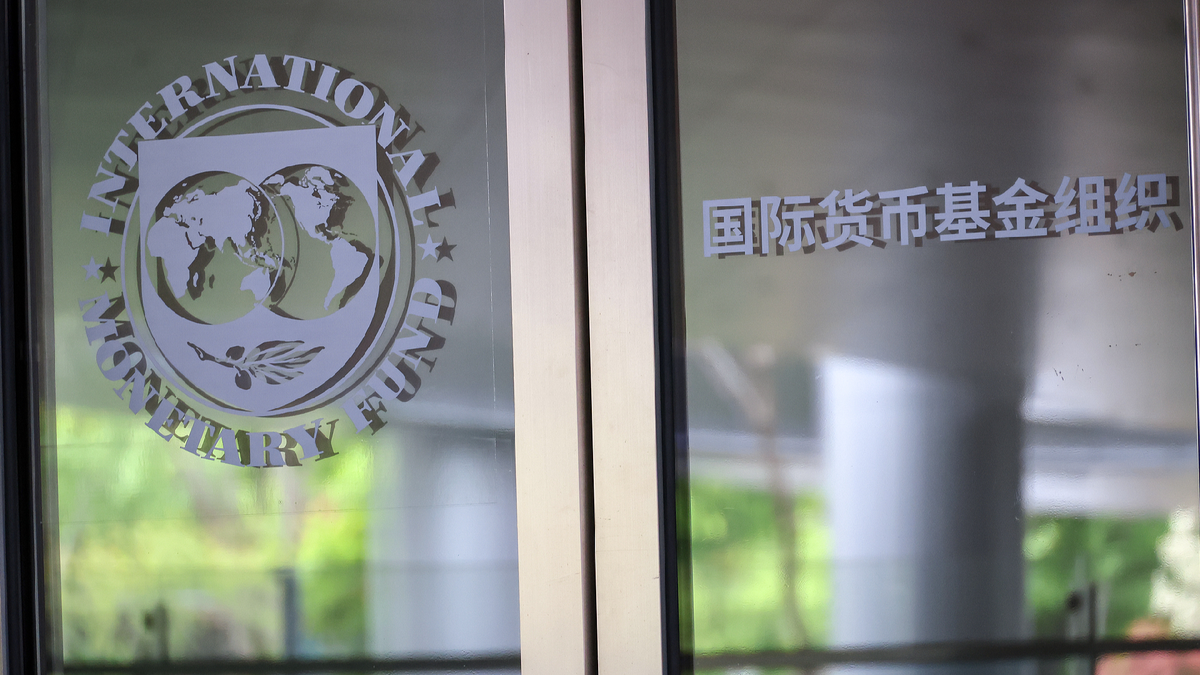
The International Monetary Fund (IMF) recently reported that African economies have demonstrated resilience in the face of an unspecified "Iran conflict" and its associated energy crisis. The fund projects a robust economic growth of 4.5% for the continent this year (2026) and an even stronger 5% in 2027. However, this optimistic outlook is tempered by a critical warning: development assistance to Africa is expected to fall by 12% this year, following a significant decline in 2025. The IMF further cautioned that continued energy disruptions, global financial instability, extreme weather events, and ongoing internal conflicts could exacerbate economic pressures and severely threaten food security across the continent. Amidst these challenges, African finance ministers, meeting in Bangkok alongside IMF and World Bank officials, emphasized the urgent need for job creation, economic diversification, and increased local processing of natural resources, with countries like Guinea and Burkina Faso actively pursuing such strategies, alongside the potential for artificial intelligence to drive future growth.
At first glance, the IMF's declaration of African economic "resilience" seems a positive affirmation, yet it masks complex power dynamics that continue to shape the continent's trajectory. The IMF, as a powerful global financial institution, plays a crucial role in setting economic narratives and influencing investor confidence. Its pronouncements, even when cautiously optimistic, can sway capital flows and policy decisions, often prioritizing macro-stability over granular human well-leveling. The framing of resilience, while technically accurate in aggregate growth figures, can inadvertently downplay the underlying vulnerabilities and the external forces that constantly buffet African nations.
Africa's vulnerability to external shocks, such as the vaguely referenced "Iran conflict," highlights a fundamental imbalance of power. Geopolitical tensions in distant regions, driven by the interests of major global powers, directly translate into energy price volatility and supply chain disruptions that African nations, largely net importers of refined petroleum and industrial goods, are forced to absorb. These are not conflicts of Africa's making, yet its economies and populations bear a significant portion of the cost, illustrating a global system where the consequences of powerful actors' decisions ripple outwards, disproportionately affecting those with less agency.
The decline in foreign aid represents another critical shift in power. For decades, development assistance has been a significant, albeit often conditional, source of funding for many African governments. A sharp 12% drop this year, following an earlier decline, signals a reordering of priorities among traditional donor nations. This redirection of funds could be driven by increased domestic pressures in donor countries, or by strategic shifts towards other geopolitical hotspots, such as the ongoing conflict in Ukraine or competition in the Indo-Pacific. Regardless of the specific reasons, this reduction forces African governments to seek alternative financing, often leading to increased borrowing from commercial markets or non-traditional lenders, potentially deepening debt burdens and ceding further economic autonomy. Aid, in this context, is not merely humanitarian assistance; it is a tool of influence, and its withdrawal reduces the leverage of recipient nations while increasing their financial precarity.
The rising global demand for critical minerals—such as iron ore, gold, cobalt, and copper—presents a dual-edged sword. On one hand, it offers African nations a potential avenue for growth and increased leverage in global trade. Countries like Guinea and Burkina Faso are actively seeking to capitalize on these resources by developing local processing capabilities and infrastructure, aiming to retain more value within their borders. On the other hand, this demand also exposes them to the historical pitfalls of the "resource curse"—vulnerability to commodity price fluctuations, environmental degradation, corruption, and potential for conflict over resource control. The power dynamic here revolves around who controls the value chain, from extraction to processing to final market, and whether African nations can genuinely shift from being mere exporters of raw materials to becoming key players in global manufacturing and technology supply chains.
Finally, the potential of artificial intelligence as a growth driver, while promising, also introduces new power dynamics. The development and deployment of AI are largely concentrated in a few technologically advanced nations. For Africa to truly benefit, it requires significant investment in infrastructure, education, and regulatory frameworks. Without equitable access and strategic adoption, AI could widen the existing digital divide, creating new forms of dependency rather than fostering inclusive growth.
While the IMF's macro-level projections speak of growth and resilience, the reality on the ground for millions of ordinary Africans is far more precarious. The human cost of these global power dynamics and economic shifts is borne directly by families and communities struggling daily.
The most immediate and tangible human cost stems from the warnings of food insecurity. Global energy disruptions, whether from an "Iran conflict" or other sources, translate directly into higher fuel prices for transportation, increased costs for agricultural inputs like fertilizers, and ultimately, more expensive food. For populations where a significant portion of income is spent on food, even marginal price increases can push households into severe hunger or poverty. Climate change, with its extreme weather events, further exacerbates this, destroying crops and livelihoods, forcing displacement, and deepening humanitarian crises. The "resilience" touted by institutions often overlooks the daily struggle of a mother trying to feed her children when staple food prices have surged by 20%.
The sharp decline in foreign aid has profound implications for public services. Aid often funds critical sectors like healthcare, education, and infrastructure development. Reduced assistance means fewer resources for building schools, stocking hospitals with medicines, or maintaining essential roads and power grids. This directly impacts the quality of life, access to opportunities, and overall well-being of citizens. Children may face larger class sizes or a lack of learning materials, while communities may lose access to vital health clinics, increasing preventable diseases and mortality rates. The macro-economic resilience does not necessarily translate into resilient public services, leaving the most vulnerable exposed.
The push for job creation and local processing of critical minerals, while offering hope, also comes with inherent risks for local populations. Historically, communities living near resource extraction sites have often borne the brunt of environmental degradation, displacement, and social disruption, while seeing little direct benefit from the wealth generated. Without robust governance, transparent revenue management, and strong protections for labor and land rights, the mineral rush can lead to new forms of exploitation, exacerbate local conflicts, and deepen inequalities, rather than lifting communities out of poverty. The promise of economic transformation must be carefully managed to prevent it from becoming another chapter in the resource curse, where the human cost outweighs the national gain.
The IMF's assessment, while providing a snapshot of economic trends, omits crucial details and downplays significant underlying narratives that shape Africa's economic reality. These omissions are not accidental; they serve to simplify complex situations and often shield powerful actors from scrutiny.
The most glaring omission is the vague reference to an "Iran conflict." The lack of specificity about this conflict – its nature, its actors, and its precise impact mechanisms – allows for a convenient externalization of blame without accountability. Is it a direct military confrontation, a proxy war, or an economic blockade? The specific nature of such a conflict would dictate its true impact on global energy markets and, by extension, on African economies. By leaving it unnamed, the IMF and other global actors avoid delving into the complex geopolitical decisions made by powerful states that create these ripple effects, effectively presenting it as an unavoidable, abstract force of nature rather than a consequence of human action.
The sharp decline in foreign aid is presented as a neutral economic statistic, but it is deeply political. The "untold story" here is the shifting priorities of donor nations. The significant diversion of funds towards the Ukraine conflict, for example, has been widely reported, as has increased focus on domestic issues in Western economies. This reallocation demonstrates that aid is not a constant, altruistic flow, but a strategic tool leveraged by donor countries to advance their own geopolitical interests and domestic agendas. Africa's development needs, while acknowledged, often rank lower when competing with immediate security crises or internal political calculations of powerful states. The narrative of "donor fatigue" often obscures the reality of calculated strategic choices.
The term "resilience" itself, when applied at a macro-economic level, can be misleading. It often implies that economies can absorb shocks without collapsing, but it rarely captures the severe individual suffering or the long-term developmental setbacks that occur at the micro-level. A national GDP might grow, but if that growth is unevenly distributed, if inflation erodes purchasing power, or if public services are cut, then the "resilience" is an abstract concept for the majority. Powerful institutions tend to focus on aggregate numbers that reassure markets and policymakers, rather than on the lived experiences of ordinary citizens who face profound hardship despite the overall economic stability.
While African finance ministers emphasize the need for local processing of critical minerals, the "untold story" is the immense power imbalance in the global mineral supply chain. Multinational corporations, often backed by powerful states, still largely control the technology, financing, and market access required to process raw materials into high-value components. The rhetoric of "local processing" is a significant aspiration, but the practical challenges of building this capacity and ensuring equitable benefit are enormous. The struggle for African nations to genuinely capture more value from their resources is an ongoing battle against entrenched global economic structures and powerful corporate interests that prefer to maintain the status quo of raw material extraction.
As African economies navigate these turbulent global currents, several key indicators will reveal the true trajectory and the human consequences of the current power dynamics.
First, closely monitor the trend in foreign aid. Will the decline continue, forcing African nations into greater financial precarity, or will there be a reversal as global priorities shift again? The source and conditions of any new financing will be crucial, indicating whether Africa is gaining more autonomy or deepening dependencies.
Second, observe the progress and challenges in local processing of critical minerals. Watch for concrete investments in infrastructure, technology transfer agreements, and the establishment of regulatory frameworks that genuinely benefit local communities and economies. The terms of engagement with foreign mining companies will be a critical barometer of whether African nations are truly capturing more value from their resources.
Third, pay attention to debt sustainability. As aid declines, many African countries will likely increase borrowing. Will this lead to a new wave of debt crises, or will innovative financing mechanisms emerge? Look for any calls for debt relief or restructuring, which would indicate severe pressure on national treasuries.
Fourth, track the actual implementation and impact of climate adaptation funding. Despite warnings about extreme weather, real investment in resilient infrastructure and agricultural practices remains insufficient. The gap between promises and tangible action will directly affect food security and the livelihoods of millions.
Finally, the pace and equity of AI adoption across different sectors and countries will be telling. Will AI become a tool for inclusive development, or will it exacerbate existing inequalities and create new forms of technological dependence? The policies enacted to govern AI development and ensure broad access will be critical in determining its ultimate human impact."
,
The primary concern is a significant decline in foreign aid, which the IMF warns could weaken Africa's ability to withstand future economic shocks and fund essential public services.
Global conflicts, even those far from Africa, can disrupt energy markets, raise commodity prices, and affect supply chains, increasing costs for African nations and contributing to inflation and food insecurity.
African nations are focusing on leveraging demand for critical minerals by increasing local processing, diversifying economies, creating jobs, and exploring the potential of artificial intelligence for various sectors.
Source referenced: CGTN
This brief was synthesized by our Editorial Engine and reviewed by The Ground Narrative team.