TRENDING

Tuesday, 3 November 2026
----------------------
23 Jumada Al-Awwal 1448 AH
Republican‑led map changes in Texas have shifted Black neighborhoods into districts favoring the GOP, erasing long‑standing representation. The story reveals who benefits, who suffers, and the hidden tactics behind the redraw.
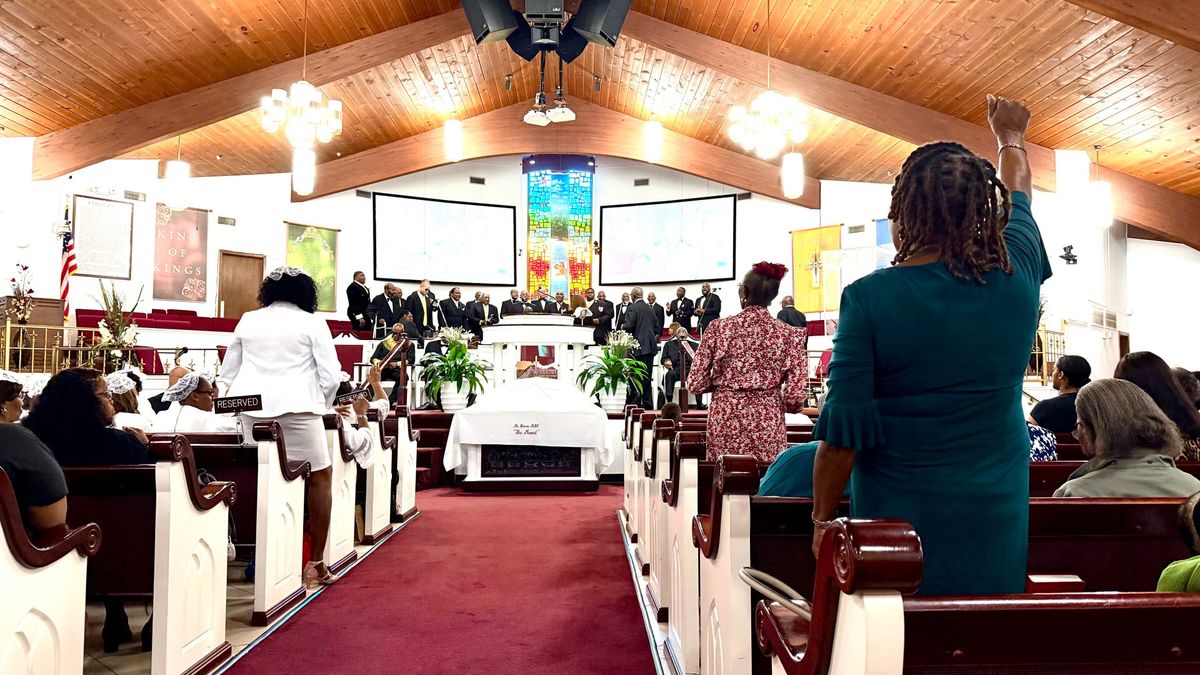
The 2026 U.S. midterm elections are set against a wave of mid‑decade redistricting driven by Republican‑controlled state legislatures. In Houston, the historic Mount Hebron Missionary Baptist Church—a hub for the Black‑majority Sunnyside neighborhood—was moved from the Democratic‑leaning 9th congressional district into the newly drawn, Black‑majority 18th district. The shift forced longtime incumbent Al Green into a primary against fellow Black Democrat Christian Menefee, resulting in Green’s defeat and the loss of a Black seat from Houston’s congressional delegation.
Redistricting is a strategic lever for political survival. By redrawing lines after the 2024 election, Republicans avoided waiting for the 2030 census, allowing them to capitalize on the short‑term demographic swing toward former President Donald Trump among Latino voters. The new maps deliberately “crack” dense Black precincts—splitting cohesive voting blocs across multiple districts—to dilute their collective influence, while “packing” them into a single district where their votes become less decisive in surrounding races. This tactic aligns with the party’s broader goal of netting at least 13 additional seats nationwide, a target that hinges on converting demographic trends into electoral wins. The Supreme Court’s recent ruling that challengers must prove explicit racist intent raises the evidentiary bar, effectively insulating such partisan gerrymanders from judicial reversal.
For congregants at Mount Hebron, the map change is more than a line on a chart; it severs a pipeline of political advocacy that has historically translated worship into representation. Pastor Max Miller describes the maneuver as an attempt to “monopolise the vote,” echoing decades of civil‑rights struggles for descriptive representation. The loss of Al Green removes a familiar voice who championed local health and housing initiatives, leaving residents to navigate a new, unfamiliar representative who may lack the same community ties.
The reconfigured 9th district now contains a sizable Latino population whose turnout historically lags behind national averages. Organizations like Mi Familia Vota warn that the district’s design assumes low participation, effectively banking on a Democratic loss while ignoring the socioeconomic pressures—such as rising rent and job insecurity—that could spur higher turnout. For workers like chemical‑plant employee Christian Garcia, political disengagement is rooted in a sense of systemic neglect, a sentiment that redistricting risks deepening.
Beyond identity politics, the redrawn districts intersect with an affordability crisis. Candidates such as Leticia Gutierrez highlight that median household incomes around $63,000 are insufficient to cover escalating housing costs and healthcare expenses. When district lines are manipulated to favor one party, policy outcomes—tax structures, Medicaid expansion, and infrastructure spending—are likely to reflect partisan priorities rather than the lived realities of these communities.
The 1965 Voting Rights Act’s Section 2 once barred maps that diluted minority voting power. However, the Supreme Court’s April decision shifted the burden to plaintiffs to prove “racist intent,” a standard that legal scholars argue is nearly impossible to meet. This judicial retreat effectively grants state legislatures carte blanche to redraw districts with minimal oversight, a nuance rarely emphasized in official statements that frame the maps as “population‑based” adjustments.
Behind the scenes, political data firms supply granular voter models that identify “low‑propensity” groups for strategic neglect. While lawmakers publicly cite “population growth” and “voter trends,” the underlying algorithms prioritize efficiency over equitable representation, a detail omitted from press releases that tout the maps as reflective of demographic realities.
Both Republican and Democratic spokespeople claim the new maps are neutral, citing public testimony and growth metrics. Yet the timing—mid‑decade, ahead of a high‑stakes midterm—suggests a calculated move to lock in advantage before demographic shifts can rebalance the electorate. This narrative of fairness masks the intentional timing that leverages electoral fatigue and limited public scrutiny.
The 2026 midterms will be a litmus test for whether the engineered advantages translate into seats. Key indicators include: (1) voter turnout rates in the newly drawn 9th and 18th districts, especially among Black and Latino populations; (2) legal challenges that may arise under the heightened burden of proving intent; and (3) grassroots mobilization efforts by organizations like Mi Familia Vota and local churches, which could reshape turnout dynamics. Observers should also monitor post‑election redistricting proposals, as a successful Republican sweep could embolden further mid‑decade map revisions in other swing states.
Mid‑decade redistricting occurs between the ten‑year census cycles, allowing parties to redraw maps based on recent election outcomes rather than updated population data, which can be used to entrench short‑term gains.
The Supreme Court’s recent ruling requires plaintiffs to prove explicit racist intent behind a map, a high evidentiary standard that makes it difficult to overturn redistricting under Section 2 of the Voting Rights Act.
Higher turnout can mitigate the impact of packed or cracked districts, but the structural advantage built into the map—such as low‑propensity voter concentrations—still limits the effectiveness of turnout alone.
Source referenced: ALJAZEERA
This brief was synthesized by our Editorial Engine and reviewed by The Ground Narrative team.