TRENDING

Monday, 5 October 2026
----------------------
24 Rabi' Al-Thani 1448 AH
Syria inaugurates its first parliament since the 2024 ousting of Bashar al-Assad, marking a pivotal moment in the nation's political reconstruction. The new 210-member body, partially appointed by interim President Ahmed al-Sharaa, aims to draft laws and prepare for future popular elections amidst ongoing challenges to stability and national unity.
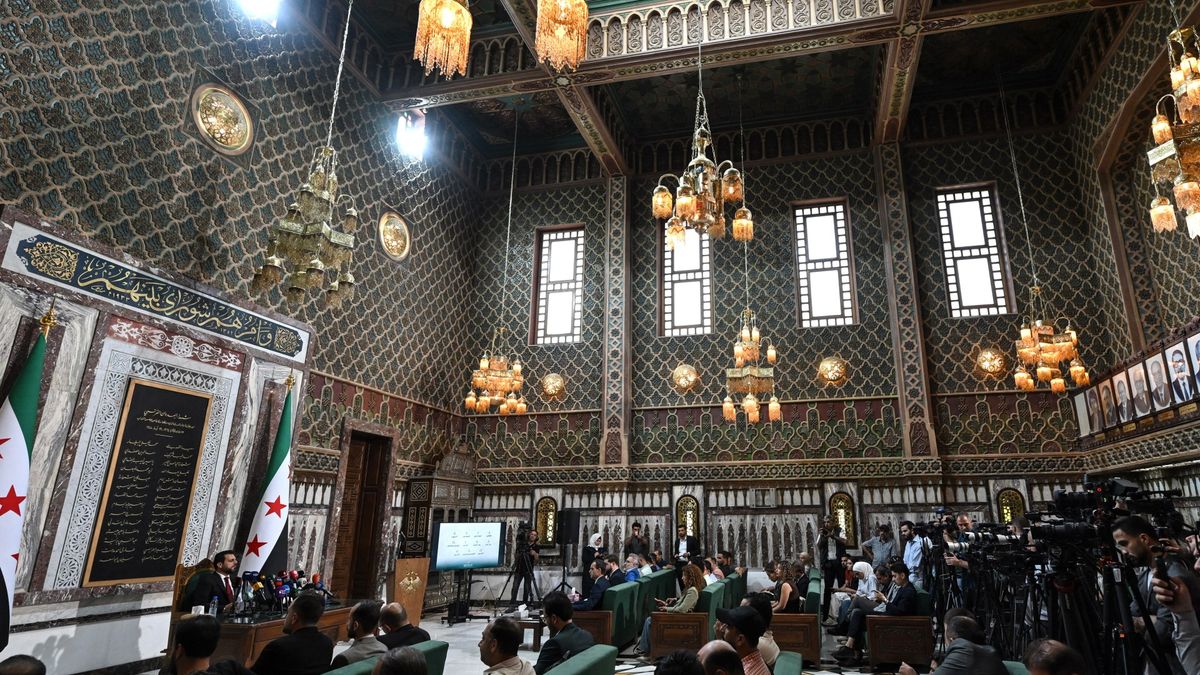
The inauguration of Syria's first parliament since the ousting of long-time ruler Bashar al-Assad in December 2024 marks a pivotal, albeit complex, moment in the nation's arduous journey towards political reconstruction. On Wednesday, July 1, 2026, the new 210-member legislative body, partially constituted by appointments from interim President Ahmed al-Sharaa, commenced its duties in Damascus. This development signals a determined effort by the interim government to establish a new institutional framework and move beyond the devastating legacy of over a decade of civil war and authoritarian rule.
The formation of this parliament is a direct consequence of the profound political upheaval that saw al-Assad's regime collapse after more than 13 years of conflict, which claimed an estimated half a million lives. Interim President al-Sharaa has played a central role in shaping the new legislature, directly appointing 70 of the 210 members, including 15 women, thereby increasing female representation to 22 members. The remaining seats were filled through a two-phase electoral process: an initial vote in October of the previous year, and a subsequent vote in May for the northeast region, following its return to government control after earlier clashes. Notably, the southern province of Suwayda, a predominantly Druze area, was initially excluded from voting due to persistent security concerns, though two legislators from the region have since been included in the new body.
The parliament's immediate mandate, as outlined by Mohammed Taha al-Ahmad, head of Syria’s electoral committee, includes drafting new laws, electing its own presidential council, and crucially, preparing the groundwork for a popular vote in future elections. This 30-month term is envisioned as a critical test for the country's transition, aiming to lay the foundations for a more representative governance structure.
The establishment of this parliament carries significant geopolitical weight, both domestically and regionally. Internally, the process of forming the legislature highlights the delicate balance between establishing stability and fostering genuine democratic representation. The interim president's power to appoint one-third of the members, while potentially ensuring a degree of control and stability in a fractured nation, also raises questions about the body's ultimate democratic legitimacy. This approach, however, has been utilized to address concerns regarding minority representation. Initial reports indicated an underrepresentation of groups like the Kurdish community, which was subsequently remedied by presidential appointments of additional Kurdish members from the Hasakah governorate, alongside representatives from the Alawite community and Suwayda. This deliberate inclusion is vital for fostering national cohesion and preventing the resurgence of sectarian or ethnic grievances that fueled the civil war.
Regionally, a stable and functioning Syrian government is paramount for broader Middle Eastern security. The protracted conflict in Syria has had destabilizing effects on neighboring countries, including Turkey, Israel, Jordan, and Lebanon, and has drawn in major international powers. The formation of a new parliament, even with its transitional characteristics, could signal a move towards greater internal stability, potentially paving the way for increased international engagement, reconstruction efforts, and a more predictable diplomatic landscape. However, the international community will undoubtedly scrutinize the extent to which this new political structure genuinely reflects the will of the Syrian people and adheres to principles of good governance.
The challenges facing this nascent parliament and the broader Syrian transition are immense. The continued presence of "security concerns" in areas like Suwayda and the recent "deadly clashes" in the northeast underscore the fragility of the security environment. Reasserting state authority, ensuring the safety of all citizens, and facilitating the return of displaced populations will be critical for the parliament to effectively legislate and build trust.
Furthermore, the parliament's commitment to preparing for a "popular vote in the next elections" is a crucial benchmark for the country's democratic aspirations. The success of this transition will depend on the ability of the new political class to draft an electoral law that is perceived as fair and inclusive, and to create conditions conducive to free and transparent elections. The legacy of authoritarianism and the deep scars of civil war mean that building robust democratic institutions and a culture of political participation will be a long and arduous process.
In conclusion, the inauguration of Syria's first post-Assad parliament represents a significant, albeit tentative, step in the country's post-conflict recovery. It is an attempt to forge a new political identity and institutional framework after years of devastation. While questions of legitimacy and the enduring challenges of security and national unity persist, this development signifies a critical phase in Syria's ongoing struggle to redefine its future and establish a foundation for long-term stability and governance.
Source referenced: ALJAZEERA
This brief was synthesized by our Editorial Engine and reviewed by The Ground Narrative team.