TRENDING

Wednesday, 23 September 2026
----------------------
12 Rabi' Al-Thani 1448 AH
International bodies warn of impending mass atrocities in Sudan's strategic city of el-Obeid as Rapid Support Forces (RSF) deploy troops for a potential offensive. The move echoes the devastating siege of el-Fasher and highlights the escalating humanitarian crisis and geopolitical complexities of the ongoing conflict.
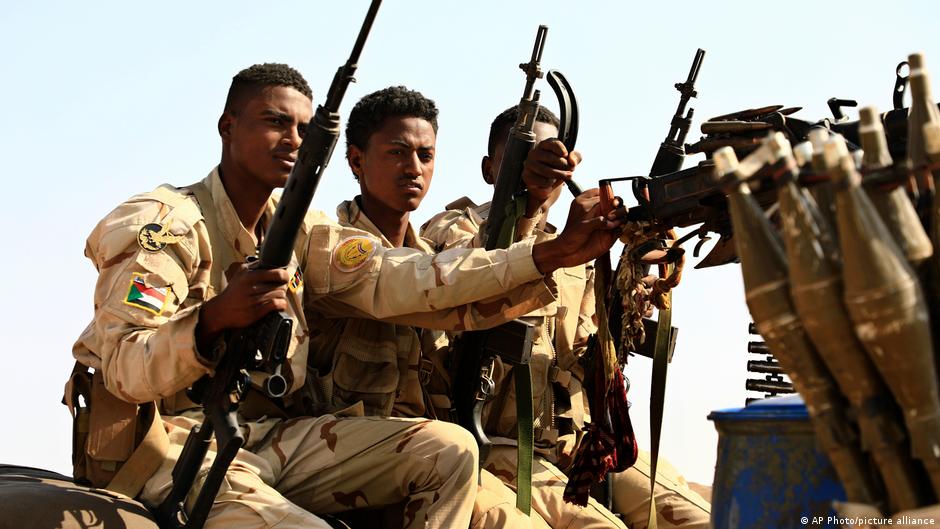
The international community is sounding urgent alarms over the strategic Sudanese city of el-Obeid, warning of an imminent risk of mass atrocities as the paramilitary Rapid Support Forces (RSF) amass troops for a potential offensive. This development marks a critical escalation in the conflict that has ravaged Sudan since April 2023, pitting the Sudanese Armed Forces (SAF) against the RSF. The warnings, issued by the UN Security Council, several European nations, and the United States, underscore profound concerns that the horrors witnessed in el-Fasher could be tragically replicated.
The conflict, which erupted from a power struggle between SAF commander General Abdel Fattah al-Burhan and RSF leader General Mohamed Hamdan Dagalo (Hemedti), has fractured Sudan. The SAF largely controls the north and center, including the capital Khartoum, while the RSF dominates the western Darfur region and parts of the south. This internal strife has plunged Sudan into the world's largest humanitarian and displacement crisis, with over 14 million people displaced internally and across borders, and a death toll estimated to be between 40,000 and 250,000, though reliable figures remain elusive amidst the ongoing fighting.
El-Obeid, a city of approximately 500,000 residents in North Kordofan, holds immense strategic value, making it a pivotal target for the RSF. It serves as a crucial crossroads connecting central Sudan, Khartoum, and the western Darfur region, functioning as a vital gateway for troop movements and the flow of both military and humanitarian supplies. The city also hosts a significant SAF military base and an airfield, further cementing its importance as a logistical hub.
According to Hager Ali, a researcher at the GIGA Institute for Global and Area Studies, capturing el-Obeid would provide the RSF with substantial advantages. Beyond profiting from its urban infrastructure and the lucrative gum arabic trade, the city would offer a strategic forward operating base for launching drones. Drones have emerged as a key weapon for both factions, with the UN human rights agency reporting over 1,000 civilian deaths from drone strikes between January and May 2024. The impending rainy season in July, which makes drone operations less predictable, adds urgency to the RSF's potential push, as a closer forward base would mitigate these operational difficulties. The SAF has maintained control of el-Obeid for some time, making its recapture a significant objective for the RSF to consolidate its territorial gains and project power further into SAF-held areas.
The international community's heightened concern for el-Obeid is deeply rooted in the recent history of el-Fasher in Darfur. A spokesman for UN Secretary-General Antonio Guterres explicitly warned against allowing "the horrors of el-Fasher to be repeated in el-Obeid." El-Fasher became synonymous with mass atrocities after RSF troops besieged the city for 18 months, culminating in the killing of approximately 6,000 people over three days in October 2023—an event that the UN and human rights observers described as bearing the "hallmarks of genocide."
Kenneth Roth, former executive director of Human Rights Watch, articulated the grave fears, stating, "We have every reason to fear that the RSF will continue their mass atrocities if they are allowed to take el-Obeid." He emphasized the RSF's "utter disregard for civilian life," suggesting that "deliberately killing large numbers of civilians seems to be their primary aim." Amgad Fareid Eltayeb, a political and foreign affairs advisor to Sudan's Transitional Sovereign Council, echoed this sentiment, observing "the same script, reformed again over el-Obeid," and criticizing the international community's "grammar of concern" that often fails to translate into effective prevention.
Despite the mounting warnings, the effectiveness of the international response remains a contentious issue. While the US and EU have sanctioned individuals and entities linked to both the SAF and RSF, the UN has yet to sanction the generals or their organizations as a whole. Critics, including Philippe Dam of Human Rights Watch, argue that stronger measures are imperative. Dam advocates for immediate sanctions on RSF leadership, citing their command responsibility for atrocities, and calls for accountability for foreign backers.
The role of external actors in fueling the conflict is a significant geopolitical dimension. The SAF reportedly receives support from Egypt, Turkey, Russia, and Iran, while the RSF is alleged to be backed by the United Arab Emirates, a claim the UAE denies. Fareid Eltayeb contends that the designation of the RSF as a terrorist organization is crucial to impede foreign support, particularly from the UAE. He expresses frustration that international statements often mourn impending atrocities without naming financiers, thereby sidestepping genuine prevention.
The escalating situation in el-Obeid underscores the complex geopolitical landscape of the Sudanese conflict. The involvement of regional and global powers, each with their own strategic interests, transforms the internal struggle into a proxy battleground. For instance, Russia's reported support for the SAF could be linked to its broader ambitions for influence in Africa, including access to Red Sea ports. Similarly, the alleged backing of the RSF by the UAE could be driven by economic interests in Sudan's gold and other resources, as well as regional power projection.
The potential fall of el-Obeid to the RSF would not only deepen Sudan's humanitarian crisis but also significantly alter the military balance, potentially prolonging the conflict and further destabilizing the wider Horn of Africa region. The international community faces a critical test: to move beyond warnings and implement robust, coordinated actions—including targeted sanctions, diplomatic pressure on foreign backers, and humanitarian intervention—to protect civilians and prevent a repeat of the atrocities that have already defined this devastating war. The failure to do so risks cementing Sudan's status as a "forgotten crisis" with catastrophic human and geopolitical consequences.