TRENDING

Monday, 5 October 2026
----------------------
24 Rabi' Al-Thani 1448 AH
Hungary's ruling Tisza party has nominated former Supreme Court chief Andras Baka for president, a figure previously removed from his post by the very political lineage now elevating him. This move raises questions about the true state of judicial independence and the ruling party's strategic calculations amidst international scrutiny.
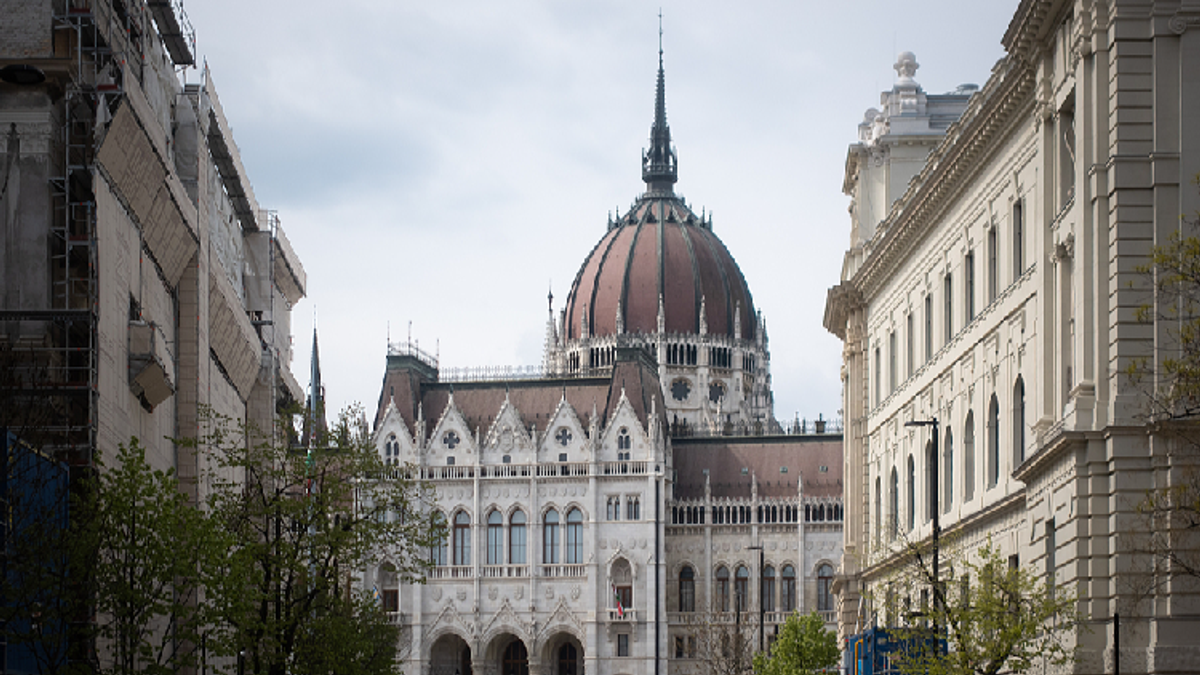
Hungary's ruling Tisza party has put forward Andras Baka, a former Supreme Court chief, as its candidate for president. Baka, 73, is expected to be the sole nominee, ensuring his election by parliament next week. This appointment comes as the country seeks to fill the presidential vacancy left by Tamas Sulyok, whose mandate concluded recently.
The selection of Andras Baka is more than a simple appointment; it is a calculated maneuver within Hungary's tightly controlled political landscape. Baka's history is crucial: he served as president of the Supreme Court until 2011, when his mandate was controversially cut short by judicial reforms introduced by then-Prime Minister Viktor Orban's Fidesz government. The Tisza party, now in power, appears to be a direct political descendant or successor of that Fidesz-led establishment. To now nominate a figure they once sidelined for his defense of the rule of law and judicial independence suggests a strategic intent. This move could be an attempt to project an image of adherence to democratic norms and institutional integrity, particularly towards the European Union, which has long scrutinized Hungary's rule of law record. By installing a figure with a public reputation for defending judicial independence, the ruling party may seek to deflect criticism without fundamentally altering its consolidated power structure. The presidency in Hungary is largely ceremonial, making Baka a safe choice who can lend legitimacy to the office without posing a genuine threat to the executive's authority.
The human cost of such political machinations is often borne by the public's trust in its institutions. When a figure is removed from a high judicial office for defending its independence, only to be re-appointed to a largely ceremonial role by the same political force that ousted him, it sends a confusing message. Citizens may perceive that judicial independence is not an inherent principle but a tool to be deployed or suppressed at the convenience of the ruling elite. This can foster cynicism and apathy, eroding the belief that independent checks and balances genuinely function. The subtle message is that even figures associated with the rule of law are ultimately subject to the will of the dominant political power, potentially diminishing public confidence in the judiciary's ability to act without political influence.
The official narrative will likely frame Baka's nomination as a testament to his distinguished career and commitment to the rule of law. However, what remains unsaid is the deeper strategic calculus at play. The ruling party is downplaying the stark contradiction of elevating a judge it previously removed for his principles. This isn't necessarily a genuine pivot towards strengthening judicial independence, but rather a sophisticated form of political optics. The true story lies in the party's ability to maintain its tight grip on power while subtly adapting its public face to mitigate external pressure. Furthermore, the very existence of the 'Tisza party' as the ruling entity, following the long dominance of Fidesz, raises questions about political rebranding and continuity that are not addressed in the simple announcement of a presidential candidate. This shift in party name, if it represents a broader political evolution, is a significant untold aspect of the current Hungarian political landscape.
Observers should closely watch the reactions from Brussels and other international bodies. Will this appointment be seen as a genuine step towards addressing rule of law concerns, or will it be dismissed as a cosmetic change? Domestically, Baka's tenure will be scrutinized for any signs of independent action or statements, however constrained his presidential powers may be. His past record suggests a willingness to speak out, but his current position will be vastly different. Furthermore, the broader policy direction of the 'Tisza party' – particularly concerning democratic institutions, media freedom, and civil society – will reveal whether this presidential nomination is an isolated gesture or part of a more significant, albeit subtle, shift in Hungarian governance. The true measure will be found not in the symbolism of one appointment, but in the sustained actions of the powerful actors who made it.
Editor's Note: The article refers to 'Tisza party' as the ruling party in 2026, while attributing Baka's 2011 removal to 'then-Prime Minister Viktor Orban's Fidesz government.' The analysis assumes a strong political continuity or direct succession between Fidesz and Tisza, given the context of the event and the historical reference.
Source referenced: CGTN
This brief was synthesized by our Editorial Engine and reviewed by The Ground Narrative team.


