TRENDING

Thursday, 15 October 2026
----------------------
4 Jumada Al-Awwal 1448 AH
Three decades after apartheid, South Africa grapples with escalating xenophobia and anti-migrant violence, starkly challenging Nelson Mandela's vision of a united, equitable nation. This crisis is fueled by persistent economic inequality, high unemployment, and political opportunism, raising critical questions about the nation's post-apartheid trajectory and its regional standing.
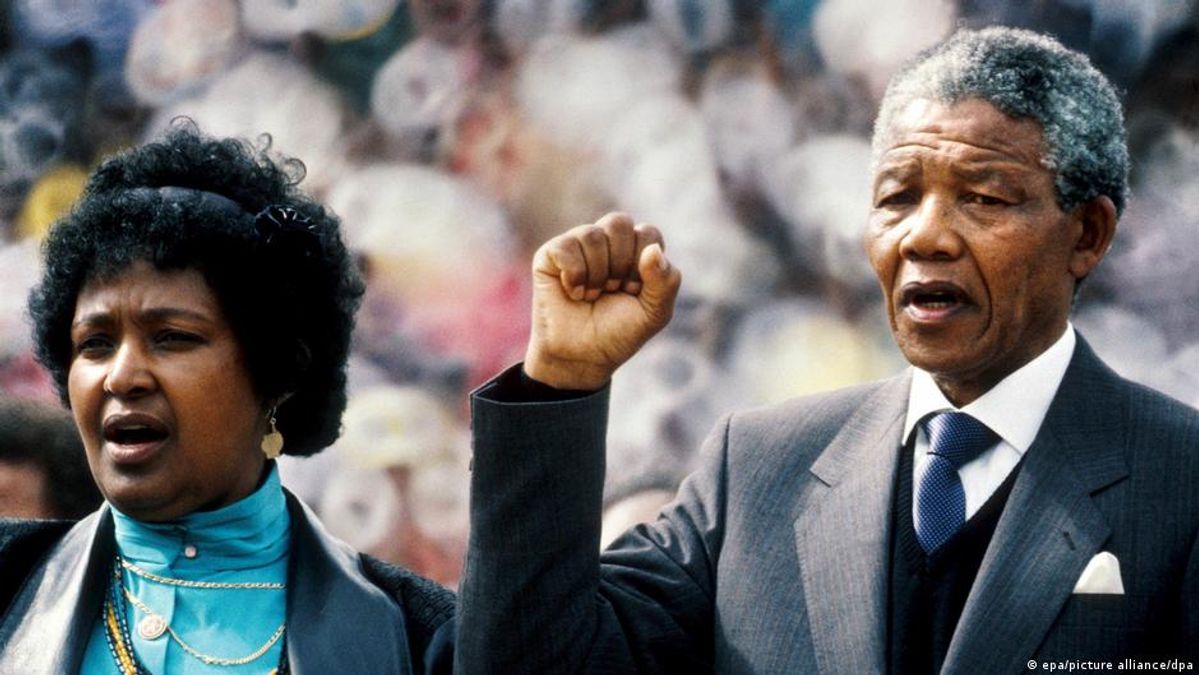
Every year on July 18, Nelson Mandela Day serves as a global reminder of the anti-apartheid hero's vision for a just, reconciled, and unified South Africa. However, three decades after the dismantling of apartheid, the nation is grappling with a starkly different reality: widespread anti-migrant sentiment, escalating xenophobia, and targeted violence against foreign nationals. This crisis not only tarnishes South Africa's post-Mandela reputation but also raises profound questions about the country's commitment to its foundational principles of human dignity and African solidarity.
Recent weeks have seen a significant escalation of anti-migrant protests across South Africa, with groups like "March and March" and "Operation Dudula" actively threatening and intimidating foreign nationals. These actions have prompted many migrants to flee, driven by fear for their safety. The "Mabahambe" ("You must go!") marches underscore a deep-seated frustration among many South Africans who perceive a failure by the government to address critical issues such as unemployment, crime, irregular migration, and inadequate public service delivery. While critics rightly label these protests as xenophobic, they are symptomatic of deeper socio-economic and political fissures.
At the heart of South Africa's current predicament lies a complex interplay of economic frustration and structural inequality. Many young South Africans, facing limited opportunities and high unemployment, often direct their frustrations towards foreigners, viewing them as competitors for scarce jobs. This sentiment is particularly acute in townships near Johannesburg and other urban centers, where economic hardship is most pronounced. Social worker Mpho Tsotetsi highlights this despair, noting that while Mandela's dream is not shattered, it is undoubtedly challenged by these realities.
Beyond immediate economic pressures, analysts point to the enduring legacy of apartheid's economic architecture. Sociologist Tessa Dooms argues that a "special form of apartheid still exists," where wealth continues to accumulate in the hands of a political and economic elite, largely ignoring the majority poor, who are predominantly Black. This failure to structurally dismantle inequality and redistribute wealth, rather than merely reconciling the nation, is identified as a critical misstep in the post-apartheid era. The economic compromises made by the Mandela administration, consistent with the African National Congress's (ANC) vision of capitalism, are criticized for fostering an economy dominated by foreign mineral monopolies and cheap labor, which critics like Mametlwe Seipei argue has not advanced society but rather perpetuated exploitative structures reminiscent of colonial practices.
Furthermore, the current wave of anti-migrant sentiment is not purely organic; it is also politically driven. With local elections approaching in November, opposition parties have an incentive to stoke anti-government sentiment, often by scapegoating foreign nationals for the nation's woes. Verne Harris of the Nelson Mandela Foundation notes that Mandela's legacy, while dynamic, can be mobilized for both good and ill, underscoring the political opportunism at play.
Nelson Mandela envisioned a South Africa built on reconciliation, respect for human dignity, and African solidarity, recognizing the crucial support many African countries provided during the anti-apartheid struggle. He believed that Africa's future depended on unity, not division. The current surge in Afrophobia and xenophobia directly contradicts this foundational principle, undermining South Africa's moral authority and its role as a beacon of democracy and human rights on the continent.
South Africa, as an emerging economy and a regional powerhouse, has historically sought to play a leadership role in African affairs. However, its increasingly hostile environment for fellow Africans risks straining diplomatic relations and hindering regional integration efforts. The perception of South African capital relating to the rest of the continent in a "profoundly exploitative manner," as noted by Harris, further complicates its regional standing, drawing parallels to colonial exploitation and border policing seen in European and North American contexts.
Despite the challenges, some observers, like accountant Obakang Arie, maintain that Mandela's legacy remains visible in South Africa's continued commitment to democracy, strong protection of human rights, and the active role of citizens and civil society organizations. These democratic institutions offer a framework for addressing the current crisis, providing avenues for citizens to elect their government and hold it accountable. However, the nation's economic growth rate, which remains below inflation, continues to limit meaningful development and exacerbate social tensions.
The current generation faces a critical juncture: to allow fear and division to define South Africa, or to actively choose compassion, justice, and accountability. The ongoing struggle against xenophobia and inequality is not merely a domestic issue; it is a test of South Africa's post-apartheid identity and its commitment to the principles that once inspired the world. The nation's ability to reconcile its democratic ideals with its socio-economic realities will determine whether Mandela's vision can truly become a lived reality for all its inhabitants, regardless of origin.
Source referenced: DW
This brief was synthesized by our Editorial Engine and reviewed by The Ground Narrative team.