TRENDING

Friday, 16 October 2026
----------------------
5 Jumada Al-Awwal 1448 AH
Chinese President Xi Jinping has called for global collaboration in artificial intelligence development, directly challenging the notion of single-country dominance amidst escalating tech rivalry with the United States. His remarks at the World AI Conference in Shanghai underscore China's strategic push to shape global AI governance and foster technological alliances, particularly with developing nations.
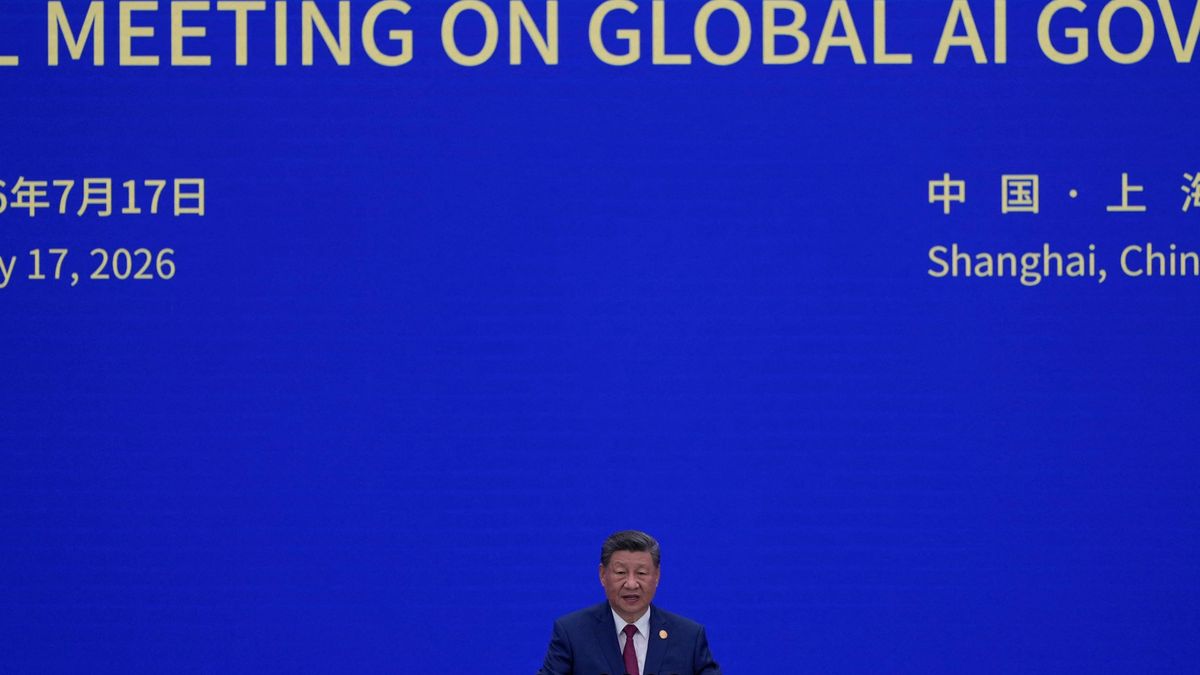
Chinese President Xi Jinping, speaking at the World Artificial Intelligence Conference in Shanghai on Friday, July 17, 2026, articulated a clear vision for the future of artificial intelligence (AI) development, emphasizing international cooperation over single-country dominance. His address, delivered amidst a backdrop of intensifying technological competition with the United States and its allies, signals China's strategic intent to position itself as a leader in shaping global AI norms and fostering a more inclusive technological landscape.
Xi's core message, that AI "should not be a solo performance by a single country, but a symphony of international cooperation," directly counters the prevailing narrative of a bifurcating global tech order. This rhetoric is a thinly veiled critique of the United States' efforts to restrict China's access to advanced AI technologies, particularly through export controls on semiconductors and related components. By advocating against "overstretching the national security concept in the field of AI," Xi implicitly challenges the justifications behind Washington's and the European Union's import restrictions on Chinese tech, framing them as protectionist measures rather than legitimate security concerns.
At the heart of Xi's speech lies the escalating geopolitical rivalry between China and the United States for technological supremacy. The US Commerce Department's recent guidance, affirming restrictions on advanced AI chip shipments to Chinese-headquartered companies globally, highlights the depth of this competition. These measures aim to curb China's progress in cutting-edge AI, which is seen as critical for future economic and military power. China, in turn, views these restrictions as an attempt to stifle its rise and maintain American technological hegemony.
China's response, as articulated by Xi, is multifaceted. Diplomatically, it seeks to build a coalition of nations that share its vision for a more equitable AI landscape. Xi announced plans for cooperation with international bodies across Africa, Latin America, Asia, and BRICS countries, aiming to provide AI-related opportunities and capacity-building. This initiative serves a dual purpose: to advance China's soft power and influence in the Global South, and to create alternative supply chains and technological ecosystems that are less reliant on Western-controlled infrastructure. By offering lower-cost AI models and emphasizing equitable access, China aims to attract global users, particularly from developing economies, thereby challenging the market dominance of US tech giants.
Beyond diplomatic maneuvering, China possesses tangible advantages that bolster its AI ambitions. While acknowledging a lag in access to the most cutting-edge semiconductors, the article highlights China's significant lead in powering the massive data centers essential for AI operations. Its abundant and cheap electricity supply, coupled with aggressive state-led investment in its energy grid, positions China ideally to meet the colossal energy demands of next-generation hyperscale data facilities. This infrastructural advantage is a critical, often understated, component of long-term AI leadership, enabling China to scale its AI capabilities more efficiently and cost-effectively than many competitors.
Xi also stressed the importance of a "people-centred" approach to AI, advocating for robust laws, regulations, technological monitoring, and emergency response systems to ensure AI remains "always under human control." This emphasis on governance and ethics resonates with global concerns about AI's societal impact, including its deployment in military combat and potential misuse by malicious actors. By framing its approach around human control and responsible development, China seeks to shape the global discourse on AI ethics, potentially influencing international standards in ways that align with its own political and social values, which may differ from Western liberal democratic frameworks.
The pronouncements from Shanghai underscore a pivotal moment in the global AI race. China's push for a multilateral, cooperative approach to AI development, coupled with its strategic investments in infrastructure and diplomatic outreach, signals a determined effort to counter US technological containment. The coming years are likely to see an acceleration of this competition, with nations increasingly aligning themselves with either a US-led or China-led technological bloc. The debate over AI governance, ethical guidelines, and equitable access will intensify, shaping not only the future of technology but also the broader geopolitical order.
Source referenced: ALJAZEERA
This brief was synthesized by our Editorial Engine and reviewed by The Ground Narrative team.


