TRENDING

Friday, 16 October 2026
----------------------
5 Jumada Al-Awwal 1448 AH
A nominee for the top US intelligence post, Jay Clayton, has sparked controversy by not directly affirming the 2020 election results, instead stating that President Biden was 'certified.' This stance during a Senate confirmation hearing raises significant questions about the independence of the intelligence community and the stability of democratic norms, with potential repercussions for US global standing.
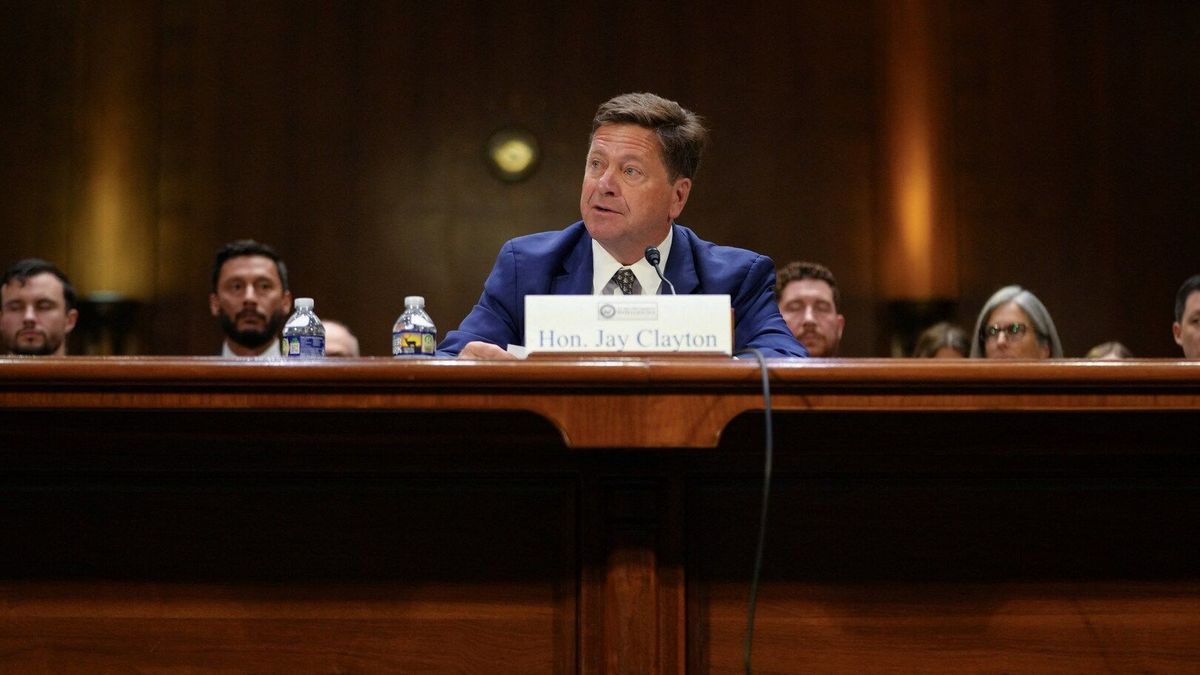
During a Senate confirmation hearing on July 16, 2026, Jay Clayton, President Donald Trump’s nominee to lead the nation’s intelligence community as the Director of National Intelligence (DNI), reportedly evaded directly stating that President Trump lost the 2020 election. Clayton, while acknowledging that President Joe Biden had been “certified” as president and asserting, “I am not an election denier,” stopped short of a clear affirmation of the election's outcome. This nuanced position by a prospective head of the US intelligence apparatus carries significant geopolitical implications, touching upon domestic political stability, the integrity of intelligence institutions, and America's international credibility.
The Director of National Intelligence is a pivotal figure in the US national security architecture, responsible for overseeing and integrating the work of 18 intelligence agencies. The DNI serves as the principal intelligence advisor to the President and the National Security Council, ensuring that policymakers receive timely, objective, and accurate intelligence assessments. The effectiveness of this role hinges on perceived impartiality and a steadfast commitment to factual reporting, free from political influence. Any perceived compromise of this neutrality can have far-reaching consequences for national security decision-making and the trust placed in intelligence products by both domestic and international partners.
Clayton's carefully worded statement, while not an outright denial, nonetheless contributes to an ongoing political narrative that questions the legitimacy of past election results. In a highly polarized political environment, such statements from high-level nominees can further erode public trust in democratic institutions and the peaceful transfer of power. The principle of acknowledging election outcomes is fundamental to democratic governance. When a nominee for a critical national security position appears to equivocate on this principle, it can be interpreted as a concession to political loyalty over institutional integrity. This dynamic risks normalizing challenges to electoral processes, potentially fueling future domestic instability and deepening partisan divides within the United States.
The US intelligence community (IC) operates on the bedrock of objectivity and non-partisanship. Its ability to provide unbiased assessments, whether on foreign threats or domestic issues, is paramount. A DNI who is perceived as politically compromised or unwilling to unequivocally uphold fundamental democratic facts could undermine the IC's internal morale, its public standing, and its operational effectiveness. Such a perception might lead to concerns that intelligence assessments could be influenced by political considerations rather than purely factual analysis. This erosion of trust could hinder intelligence sharing with allies and empower adversaries who seek to exploit perceived weaknesses in US governance and institutional integrity.
Globally, the United States often champions democratic values, free and fair elections, and the rule of law. When a senior US official nominee appears to equivocate on the legitimacy of its own electoral processes, it can significantly weaken America's moral authority and soft power on the international stage. Allies may question the stability and reliability of US leadership, particularly concerning commitments to democratic principles. Adversaries, conversely, may seize upon such instances to highlight perceived hypocrisy or internal divisions within the US, potentially undermining Washington's efforts to promote democracy abroad and challenge authoritarian regimes. The incident could be leveraged in information warfare campaigns, portraying the US as a nation struggling with its own democratic foundations, thereby diminishing its influence in global governance and diplomatic initiatives.
Jay Clayton's testimony during his Senate confirmation hearing, specifically his reluctance to directly affirm the 2020 election results, transcends a mere political talking point. It represents a significant moment that underscores the ongoing challenges to democratic norms within the United States and the potential ramifications for its intelligence community and global standing. The DNI's role demands an unwavering commitment to facts and institutional independence. Any perceived deviation from this standard, particularly on issues as fundamental as electoral legitimacy, could have lasting consequences for US national security, its domestic political landscape, and its position as a global leader advocating for democratic principles.
Source referenced: ALJAZEERA
This brief was synthesized by our Editorial Engine and reviewed by The Ground Narrative team.