TRENDING

Wednesday, 14 October 2026
----------------------
3 Jumada Al-Awwal 1448 AH
The European Union's Emissions Trading System (ETS), a global blueprint for carbon pricing, is undergoing a crucial revision. This comes as the bloc balances its ambitious climate goals with intense lobbying from industries facing economic headwinds and geopolitical uncertainties.
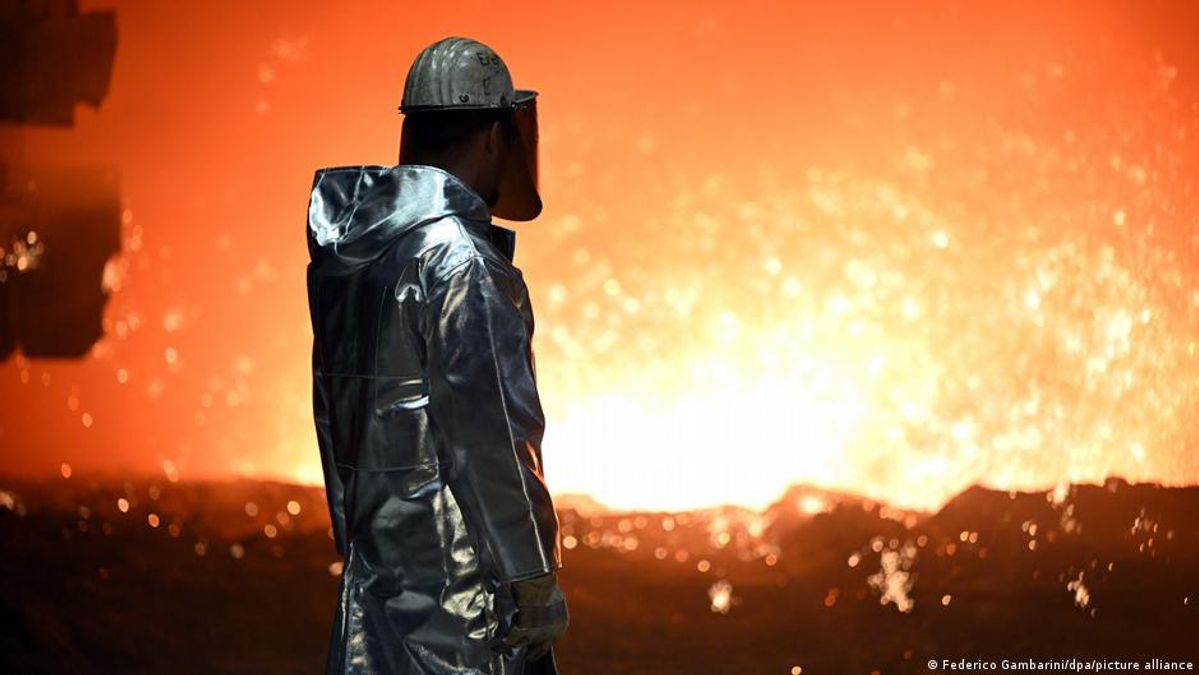
TheThe European Union's Emissions Trading System (ETS), a cornerstone of its climate policy, is currently at a critical juncture. Established two decades ago, the ETS has evolved into one of the world's most influential mechanisms for pricing carbon, serving as a blueprint for over 35 similar systems globally. As the European Commission prepares to propose its next revision, the debate intensifies over whether the system will be strengthened to meet the EU's ambitious goal of carbon neutrality by 2050 or weakened under pressure from various industrial sectors.
The ETS operates on a 'cap-and-trade' principle, setting an overall limit on greenhouse gas emissions for covered sectors and issuing a finite number of allowances. Companies must hold permits for their emissions, which can be traded on a carbon market. This creates a carbon price, incentivizing businesses to reduce their emissions. The system covers significant industrial emitters, including power stations, oil refineries, steelworks, cement, glass, paper production, parts of the chemicals industry, and aviation, collectively accounting for up to 40% of EU emissions.
Since its inception, the ETS has demonstrated considerable success, particularly in the energy sector, where emissions from stationary industrial sites fell by 51% between 2005 and 2024. The energy-intensive steel industry, for instance, has reduced its emissions by approximately 20%. This progress underscores the system's effectiveness in driving decarbonization in key sectors. However, the system has also faced criticism. Emissions from aviation, for example, continue to rise, partly because the ETS captures only a fraction of the sector's total climate impact.
A central point of contention and a significant weakness of the ETS is the widespread practice of free allocation of emissions allowances. Initially introduced as a temporary measure to protect European industries during the transition to a low-carbon economy, these free permits remain prevalent two decades later. According to Carbon Market Watch, roughly 90% of industrial emissions are still covered by free allowances, meaning many industries pay the full carbon price for only a small portion of their CO2 output. This practice not only dilutes the incentive to decarbonize but also allows some companies to profit by selling surplus allowances.
The current plan to gradually phase out these free permits is encountering substantial resistance. Major industry groups, particularly from the oil, petrochemical, and coal-based manufacturing sectors, are lobbying heavily against the phase-out. They argue that maintaining free allowances is crucial for their competitiveness, especially amidst rising inflation, geopolitical conflicts, trade restrictions, and high defense expenditures that are already straining the European economy.
The EU's pioneering role in carbon pricing has led to a phenomenon known as the 'Brussels effect,' where its regulations influence global standards. The ETS has served as a blueprint for over 35 emissions trading systems worldwide. This global adoption has been further accelerated by the EU's Carbon Border Adjustment Mechanism (CBAM), which imposes carbon costs on certain imports. CBAM aims to level the playing field, preventing imported goods from gaining an unfair advantage over European products manufactured under stricter climate regulations. This mechanism has spurred countries like Indonesia, the Philippines, India, and Turkey to develop or accelerate their own ETS initiatives.
However, the global replication of the ETS also carries risks. Other nations may inadvertently adopt some of Europe's initial shortcomings, such as the reliance on offsetting projects abroad, which environmental groups argue can be opaque and may not always deliver genuine emission reductions. New Zealand's ETS, for example, showed no statistically significant effect on CO2 emissions, largely due to the exclusion of its agriculture sector, which accounts for nearly half of its national emissions.
The upcoming revision of the ETS is the subject of an intense political battle in Brussels. Advocates for stronger climate action, including some industrial frontrunners who have already invested in cleaner production, emphasize the need to maintain an ambitious linear reduction factor for the emissions cap. They also call for expanding the system to include sectors like waste incineration.
Conversely, powerful business lobbies, represented by groups like BusinessEurope, are pushing for delays or weakening of key elements. Their demands include slowing the phase-out of free allowances and softening the EU's 2040 climate strategy. Political groups within the European Parliament, such as the conservative EVP, propose extending free allowances beyond 2039 but linking them to investments within Europe to secure jobs and strengthen the continent as an industrial hub. This reflects a broader geopolitical concern about industrial competitiveness and the potential for carbon leakage if European industries are disproportionately burdened.
The political pressure has already yielded results, with the launch of a second ETS covering fuels for buildings and road transport postponed from 2027 to 2028. The German Environment Agency (UBA) and other environmental bodies warn against further delays or dilution, asserting that limiting free allowances and maintaining a robust carbon market are indispensable for the EU to achieve its climate objectives.
The outcome of this revision will have profound geopolitical and economic implications. It will determine the EU's credibility as a global climate leader, its ability to meet its own climate targets, and the competitiveness of its industries in a rapidly changing global economy. The balance struck between environmental ambition and economic pragmatism will not only shape Europe's future but also influence the trajectory of carbon pricing and climate policy worldwide. The ongoing debate highlights the complex interplay between environmental imperatives, industrial policy, and international trade in the global effort to address climate change.
Source referenced: DW
This brief was synthesized by our Editorial Engine and reviewed by The Ground Narrative team.


