TRENDING

Friday, 16 October 2026
----------------------
5 Jumada Al-Awwal 1448 AH
Following the death of Supreme Leader Ayatollah Ali Khamenei, Iran's leadership has intensified its rhetoric, publicly calling for retaliation against perceived adversaries. This surge in 'revenge propaganda' serves both to consolidate domestic support for the new leadership and to project strength internationally amidst ongoing regional tensions.
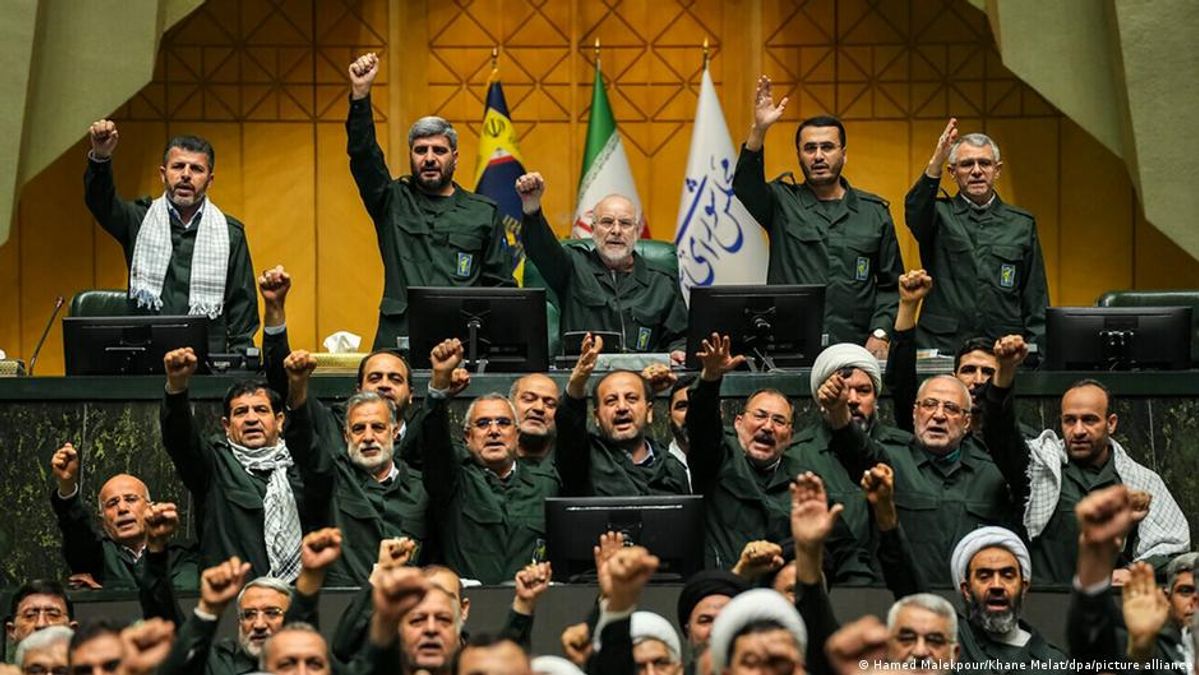
Since the passing of Iran's Supreme Leader, Ayatollah Ali Khamenei, the Islamic Republic has witnessed a significant escalation in its public rhetoric, characterized by fervent calls for 'revenge' against those deemed responsible for his death. This intensified narrative, emanating from senior political figures, state-controlled media, and the newly appointed Supreme Leader, Mojtaba Khamenei, represents a multifaceted strategy aimed at both domestic consolidation and international deterrence.
The immediate aftermath of Ayatollah Ali Khamenei's funeral saw a concerted effort by the Iranian establishment to instrumentalize the mourning period for political ends. On July 14, Iran's parliament, in its first in-person session since the onset of what the article refers to as 'the war,' saw over 180 of its 290 members endorse demands for retaliation, with lawmakers waving red flags symbolizing vengeance. Concurrently, pro-government media outlets, such as the conservative daily *Hamshahri*, aggressively promoted this narrative, even publishing a 'wanted list' featuring 13 Western politicians and military officials, including foreign and defense ministers, the commander of US Central Command (CENTCOM), and, as reported, German Chancellor Friedrich Merz.
Experts interpret this escalating rhetoric as a sophisticated form of psychological warfare, serving several critical objectives. Domestically, the primary goal appears to be the consolidation of power for the new Supreme Leader, Mojtaba Khamenei. His immediate focus on retaliation, rather than reconciliation or reconstruction, following his father's funeral, underscores a deliberate strategy to project strength and continuity. This narrative is crucial for rallying the regime's support base, particularly in the face of what analysts describe as 'military setbacks' and 'security challenges.' By creating an impression of unwavering determination and capability to exact revenge, the regime seeks to divert attention from internal vulnerabilities and legitimize the continuation of its current policies and regional engagements.
Internationally, the 'revenge propaganda' functions as a deterrent and a signal of potential escalation. Legal scholar Moein Khazaeli highlights the importance of distinguishing between the capability, intention, and actual possibility of carrying out such threats. While not to be dismissed as mere political rhetoric, a significant portion of these pronouncements aims to portray a weakened military and security apparatus as robust and operational. Furthermore, the regime is signaling its potential willingness to resort to asymmetric or 'terrorist methods' if international pressure persists. Given Iran's documented history of overseas operations, this threat carries a credible weight, intended to influence the calculations of Western governments and other international adversaries.
The timing of this rhetorical surge, coinciding with a critical leadership transition, underscores its geopolitical significance. The death of a Supreme Leader is a pivotal moment for Iran, often accompanied by internal power struggles and a need to reassert authority. The aggressive posture serves to project an image of internal cohesion and strength, both to its own populace and to regional and global rivals. The mention of Gulf nations being 'caught between Iran and the US as war escalates' further illustrates the regional instability exacerbated by such rhetoric, placing allies and adversaries alike on edge.
The involvement of entities like the Islamic Revolutionary Guard Corps (IRGC), to which *Hamshahri* is reportedly close, signifies the deep integration of military and ideological objectives within this propaganda campaign. The IRGC, Iran's most powerful military institution, plays a central role in both domestic security and foreign policy, often employing unconventional tactics. The historical context of Iran's responses to military defeats or security setbacks with heightened threats reinforces the current strategy as a familiar playbook for the Islamic Republic.
The messages are meticulously crafted for dual audiences. For the regime's supporters, the narrative of revenge reinforces loyalty and belief in the leadership's resolve. For international audiences, including Western governments and Iranian dissidents abroad, the threats are designed to intimidate. The reported satisfaction among Iranian state media and pro-government channels following the death of former US Senator Lindsey Graham, a proponent of 'maximum pressure' against Iran, exemplifies the regime's intent to project its animosity towards perceived enemies and to celebrate their misfortunes.
In conclusion, Iran's escalating 'revenge propaganda' is a complex geopolitical maneuver. It is a strategic response to a critical leadership transition and ongoing regional challenges, designed to project strength, consolidate domestic support, and deter international pressure. While the actual execution of all threats remains uncertain, the rhetoric itself is a potent tool in Iran's foreign policy arsenal, shaping perceptions and influencing the broader geopolitical landscape of the Middle East and beyond.
Source referenced: DW
This brief was synthesized by our Editorial Engine and reviewed by The Ground Narrative team.