TRENDING

Friday, 23 October 2026
----------------------
12 Jumada Al-Awwal 1448 AH
A South African court has temporarily paused the parliamentary impeachment process against President Cyril Ramaphosa, stemming from the 'Farmgate' scandal. This ruling underscores the nation's robust judicial independence while highlighting persistent challenges to political stability and governance.
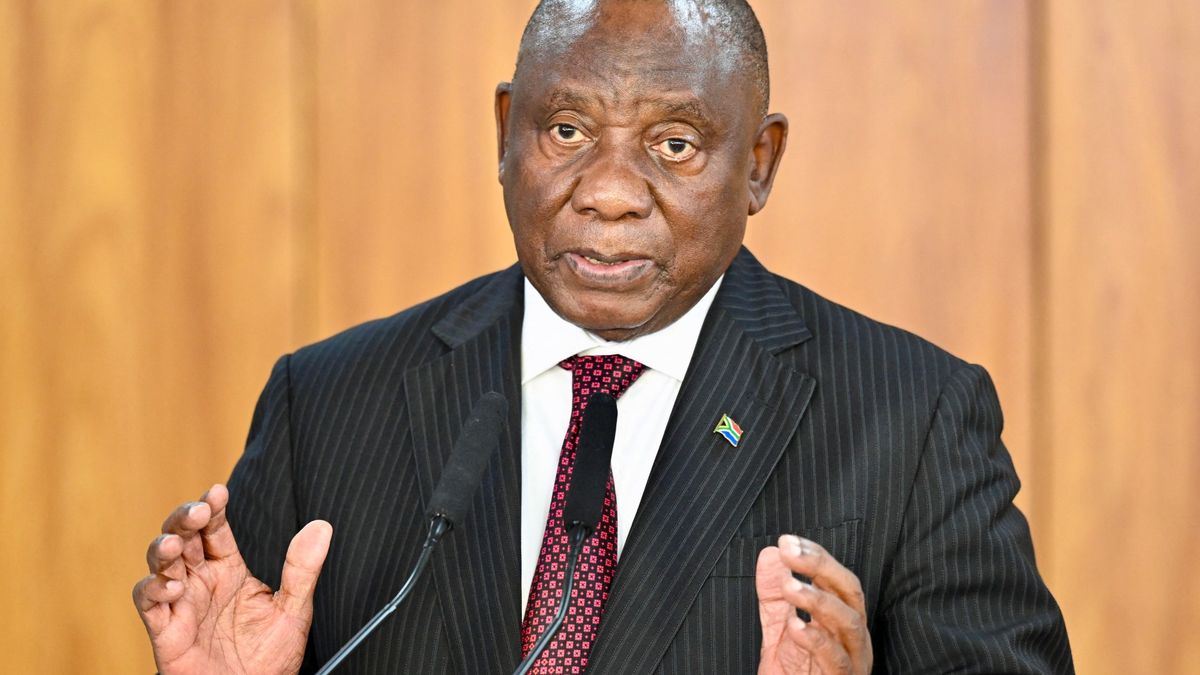
On July 24, 2026, the Western Cape High Court in South Africa granted an "interim interdict" that temporarily halted parliamentary impeachment proceedings against President Cyril Ramaphosa. This significant legal development effectively pauses public hearings by an impeachment committee, which was established following a 2022 report suggesting the President "may have committed" serious violations and misconduct. The court's decision allows President Ramaphosa to challenge the legality of this foundational report, thereby asserting the principle of judicial review over legislative processes.
The impeachment process centers on the "Farmgate" scandal, which first came to light in 2020. The allegations involve a substantial sum of undeclared foreign currency, reportedly $580,000, discovered hidden in a sofa at Ramaphosa's Phala Phala farmhouse in Limpopo province. While the President has consistently denied any wrongdoing, asserting the money was proceeds from the sale of buffaloes, the incident has raised significant questions regarding financial transparency and ethical conduct at the highest levels of government. The scandal nearly cost Ramaphosa the leadership of his African National Congress (ANC) in late 2022, underscoring deep internal divisions within the ruling party.
This judicial intervention carries substantial implications for South Africa's domestic political landscape and its standing as a key regional power. Domestically, the ruling provides a temporary reprieve for President Ramaphosa, allowing him to navigate ongoing legal challenges while maintaining his position at the helm of a coalition government. His spokesperson, Vincent Magwenya, affirmed the President's respect for judicial independence and the separation of powers, signaling a commitment to constitutional processes even amidst intense political pressure.
The political context is particularly complex. The African National Congress, which has governed South Africa since the end of apartheid, lost its outright majority in the May 2024 elections, marking the most closely contested vote in the nation's democratic history. This electoral setback forced the ANC into a coalition government, making Ramaphosa's leadership and the party's internal cohesion even more critical. While political analysts anticipate Ramaphosa will likely remain in power, the ongoing impeachment threat and the need to secure the backing of diverse coalition partners in any future impeachment vote highlight the fragility of the current political arrangement. The outcome of this process will inevitably shape the ANC's future trajectory and its ability to govern effectively.
Beyond immediate political survival, the "Farmgate" scandal and the subsequent impeachment attempt underscore persistent challenges related to governance, transparency, and the fight against corruption in South Africa. For years, allegations of corruption have plagued the ANC, contributing to declining public trust and electoral support. The court's decision, while upholding due process, does not resolve the underlying questions of accountability that the scandal has brought to the fore. How these issues are ultimately addressed will be crucial for reinforcing democratic institutions and restoring public confidence.
From a geopolitical perspective, South Africa's internal stability is paramount for regional peace and economic development across Southern Africa. As a leading voice for the Global South and a member of significant international blocs like BRICS, South Africa's capacity for effective governance directly impacts its diplomatic influence and economic partnerships. Prolonged political uncertainty or a perception of weakened rule of law could deter foreign investment, affect economic growth, and potentially diminish its role as a regional mediator and advocate on the international stage. The integrity of its democratic processes, including the robust functioning of its judiciary, serves as a vital benchmark for other nations on the continent.
The temporary halt to the impeachment process offers President Ramaphosa a critical window to consolidate his position and address the legal challenges. However, the underlying allegations and the political divisions they expose will continue to shape South African politics. The ultimate resolution of the "Farmgate" scandal, whether through legal judgments or political processes, will have lasting consequences for Ramaphosa's legacy, the future of the ANC, and the broader trajectory of South Africa's democratic journey. The interplay between the judiciary, parliament, and the executive in this high-stakes political drama will continue to be a focal point for observers of African governance and international relations. The nation's ability to navigate these challenges transparently and constitutionally will be a testament to the resilience of its democratic institutions.
Source referenced: ALJAZEERA
This brief was synthesized by our Editorial Engine and reviewed by The Ground Narrative team.