TRENDING

Tuesday, 27 October 2026
----------------------
16 Jumada Al-Awwal 1448 AH
Serbian university students converted two years of street protests into a sweeping parliamentary win, challenging entrenched power. The shift carries profound implications for regional geopolitics and ordinary citizens alike.
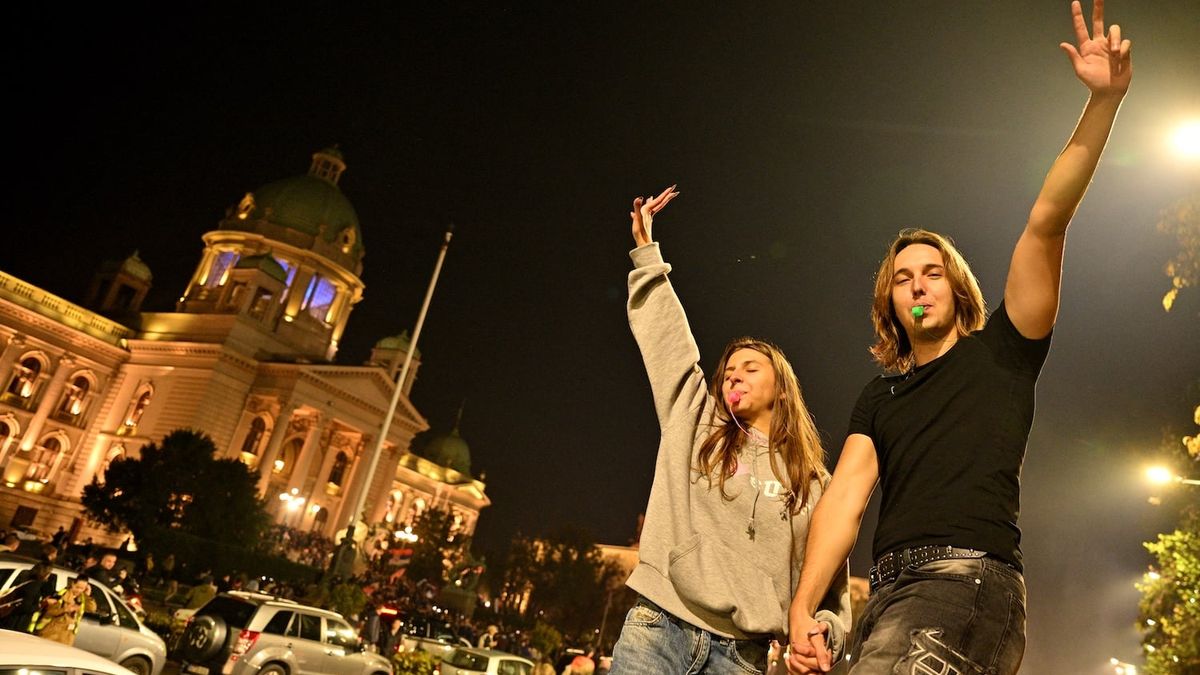
On 25 October 2026, the Student List, a coalition of university activists, secured a clear majority in Serbia's 250‑seat parliament. The victory followed months of disciplined, non‑violent demonstrations that began after a police‑triggered tragedy at a Novi Sad train station in June 2025. Voter turnout surged to 68 percent, and traditional parties—including the long‑dominant Serbian Progressive Party of former President Aleksandar Vučić—failed to cross the electoral threshold.
The Serbian political landscape before the election was defined by a tightly knit patronage network. Vučić had consolidated control over the media, security services, and state‑owned enterprises, creating a quasi‑authoritarian system that still operated under the veneer of democratic institutions. Internationally, Serbia served as a strategic foothold for both Russia and China, offering energy contracts and military cooperation that compensated for Western hesitancy.
The student movement’s success hinged on three structural levers. First, the electoral law required parties to present a national list, but it did not bar non‑party groups from registering, allowing the Student List to bypass the entrenched opposition parties that were widely perceived as co‑opted by the regime. Second, the protests leveraged Serbia’s highly centralized media environment: by maintaining strict non‑violence, the students forced state broadcasters to cover the unrest without the usual justification for a heavy‑handed crackdown, exposing the regime’s reliance on repression.
Third, the United States and the European Union quietly shifted from a policy of cautious engagement to a more proactive stance. Washington’s recent bipartisan consensus on Balkan stability and Brussels’ renewed push for a Serbia‑Kosovo dialogue created diplomatic space for the students to claim external legitimacy. Yet both actors balanced their support with the need to keep Russian and Chinese influence at bay, a calculus that limited overt financial assistance to the movement.
Internally, the students’ internal governance model—strict vetting, zero party affiliation, and proportional representation of faculties—neutralized the regime’s classic tactic of co‑optation through patronage appointments. By presenting a roster of candidates with clean records, the movement undercut the narrative that only seasoned politicians could govern, forcing the electorate to choose between a known corrupt elite and an untested but morally credible cohort.
The catalyst for the protests was a police‑induced stampede that killed sixteen commuters and injured dozens more. Victims’ families endured months of bureaucratic stonewalling, denied compensation, and faced intimidation when they demanded accountability. Their suffering became a rallying point that transformed abstract calls for democracy into concrete demands for justice.
Beyond the urban centers, Serbia’s agrarian regions felt the brunt of the regime’s fiscal policies. Subsidies were tied to loyalty, and corruption siphoned funds away from rural infrastructure projects. The student movement’s promises of transparent budgeting resonated with farmers who had watched roads crumble and schools close under the previous administration.
Even before the protests, Serbia suffered a steady outflow of engineers, doctors, and IT specialists to the EU. The uncertainty of living under a regime that manipulated university admissions and research funding pushed many to seek opportunities abroad. The protests offered a glimmer of hope that a new government could reverse the exodus, but the risk of political instability also threatened to accelerate it.
Official statements from Washington and Brussels have highlighted the “peaceful nature” of the protests and the “potential for democratic renewal.” What remains under‑reported is the depth of the security apparatus that still reports to loyalists of Vučić. Intelligence assessments suggest that key ministries—particularly the Ministry of Internal Affairs—retain officers who were appointed during the 2012‑2020 period and who have informal ties to Russian security firms.
Furthermore, the narrative that the student victory will automatically translate into economic investment overlooks the entrenched crony capitalism that underpins Serbia’s energy sector. Russian and Chinese state‑owned enterprises still hold majority stakes in the national oil company, and any abrupt divestment could trigger legal battles that would deter foreign capital.
The EU’s public emphasis on rule‑of‑law reforms masks a pragmatic concern: the bloc fears that a destabilized Serbia could become a conduit for illicit migration into the Schengen area. Consequently, Brussels is likely to condition future aid on measurable progress in border security, a demand that could sideline the student government’s broader social agenda.
Lastly, domestic media outlets, many of which are still owned by oligarchs linked to the former regime, have downplayed the scale of the student movement’s grassroots network. By framing the victory as a “single‑issue” anti‑corruption wave, they obscure the coalition’s broader platform, which includes education reform, environmental protection, and minority rights—issues that could reshape Serbia’s internal power balance.
The next twelve months will test whether the Student List can transition from protest leadership to effective governance. Key indicators include: (1) the composition of the new cabinet and whether former security officials are retained or replaced; (2) the pace of negotiations with the European Union on a potential accession roadmap, especially the implementation of the rule‑of‑law chapter; (3) the response of Russia and China to any moves to re‑nationalize strategic assets, which could manifest as diplomatic pressure or economic retaliation.
Equally important is the upcoming presidential election in December 2026. If the student‑backed parliamentary majority can field a credible presidential candidate, it may consolidate power and marginalize Vučić loyalists. Conversely, a fragmented opposition could open the door for a comeback by the old guard.
Observers should also monitor civil‑society coalitions forming around the student government. Their ability to mobilize support in smaller towns will determine whether the movement remains a metropolitan phenomenon or evolves into a truly national force.
Finally, the United States’ congressional agenda on Balkan aid will reveal how much political capital Washington is willing to invest in a Serbia that is still navigating between Western integration and Eastern patronage. A shift in U.S. policy—whether through increased military assistance or targeted sanctions on Russian energy interests—could tip the balance of power in the region for years to come.
They organized a non‑violent, nationwide campaign, fielded a vetted list of unaffiliated candidates, and capitalized on public fatigue with entrenched corruption, while leveraging limited Western diplomatic support.
It must reform security services still loyal to the former regime, navigate Russian and Chinese economic interests, and secure EU integration without triggering backlash from entrenched domestic elites.
Source referenced: FOREIGNPOLICY
This brief was synthesized by our Editorial Engine and reviewed by The Ground Narrative team.