TRENDING

Tuesday, 27 October 2026
----------------------
16 Jumada Al-Awwal 1448 AH
A wave of student activism swept Serbia's snap parliamentary vote, delivering a decisive win for the Student List and ending Aleksandar Vucic's ten‑year grip on power. The shift promises a new political order but also raises questions about the entrenched interests still pulling the strings.
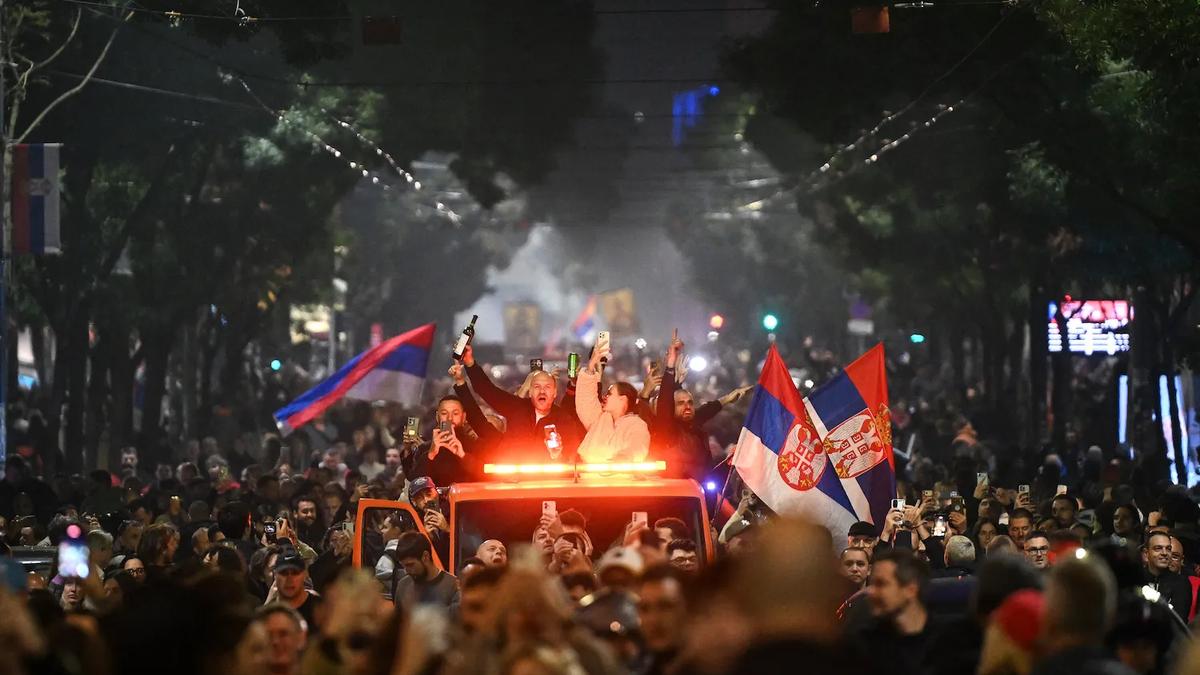
On 25 October 2026 Serbian voters turned out at a historic 69 percent rate, the highest in three decades, and handed the Student List 52.54 percent of the parliamentary vote. The result unseated Aleksandar Vucic, who had dominated the Serbian political scene since 2014 by alternating between the presidency and prime ministership. In the streets of Belgrade, tens of thousands of young people celebrated the victory, waving banners and chanting for a new era of governance.
Vucic’s regime relied on a web of patronage that linked state institutions, media outlets, and security forces to the Serbian Progressive Party. State resources—public procurement contracts, subsidies to loyal businesses, and control over broadcasting—were routinely deployed to tilt the electoral playing field. The Organization for Security and Co‑operation in Europe noted that the ruling party enjoyed “entrenched advantages” that included intimidation of opposition candidates and disruption of campaign activities.
While publicly courting Russia and China for energy and infrastructure projects, Vucic also sought to keep the European Union at arm’s length, using the EU accession process as a bargaining chip. This dual alignment gave him leverage: Western aid could be threatened if he drifted too far east, while Russian and Chinese investments filled budget gaps left by stalled EU reforms. The student movement’s pro‑European stance threatens to upend this balancing act, potentially forcing Belgrade to choose a clearer orientation.
In the months leading up to the vote, the United States signaled a willingness to support Vucic as a bulwark against Russian influence, a stance echoed by former President Donald Trump’s personal outreach. However, the election outcome suggests that domestic elite calculations—particularly among business owners tired of corruption and cronyism—aligned more with the protestors than with external patrons.
The catalyst for the protests was the collapse of a concrete canopy at a Belgrade railway station in November 2024, which killed 16 people and injured dozens more. Victims’ families have long demanded accountability for what they describe as systemic negligence and corruption. The tragedy exposed how state‑run construction contracts, often awarded to firms with political connections, compromised safety standards.
Before the election, Serbia’s youth unemployment hovered around 25 percent, prompting many to seek work abroad. The Student List campaigned on promises of job creation, education reform, and anti‑corruption measures, resonating with a generation that felt trapped by a stagnant economy and limited political voice.
Rural areas, historically neglected under Vucic’s central‑focused development model, suffered from under‑investment in healthcare, schools, and infrastructure. The protests highlighted how these communities bore the brunt of budgetary decisions that favored urban construction projects tied to patronage networks.
Both Russia and China have framed the Serbian election as an internal affair, emphasizing stability over democratic standards. Their state media outlets have minimized the significance of the student movement, portraying it as a fleeting fad rather than a structural shift. This narrative serves to protect ongoing infrastructure contracts and energy deals that could be jeopardized by a more Western‑aligned government.
While Vucic publicly blamed “foreign interference,” many analysts point to a quiet coalition of domestic oligarchs who have long profited from state‑linked contracts. These actors, wary of further exposure, have quietly shifted support to the Student List, betting that a reform‑oriented parliament will legitimize their enterprises through transparent procurement while still preserving their market dominance.
State‑run television continued to broadcast Vucic’s narrative of external sabotage on election night, yet independent online platforms—Telegram channels, YouTube livestreams, and encrypted messaging groups—provided real‑time election results and coordinated protest logistics. The regime’s traditional media grip was insufficient to contain the digital wave, a fact the authorities have largely ignored in post‑election statements.
- Coalition formation: Although the Student List holds a clear majority, the choice of prime minister will signal whether the movement can stay true to its grassroots roots or succumb to elite bargaining. Watch for the nomination of either Ilija Srdanovic or Dejan Soskic, both of whom embody different strands of the protest coalition.
- EU accession talks: A more pro‑European government could accelerate Serbia’s EU integration, but this will depend on how quickly reforms—judicial independence, media freedom, and anti‑corruption measures—are enacted.
- Russian and Chinese responses: Expect diplomatic outreach from Moscow and Beijing aimed at preserving existing energy and infrastructure projects. Their next moves will reveal how much leverage they retain after the political turnover.
- Domestic economic policy: The new parliament’s handling of unemployment benefits, public sector wages, and rural development funds will directly affect the everyday lives of Serbians and test the movement’s ability to translate protest energy into policy.
- Civil society space: Monitoring whether the government eases digital repression, releases political prisoners, and reforms policing practices will be crucial indicators of a genuine democratic transition.
The coming months will determine whether Serbia’s student‑led victory marks a fleeting protest victory or the foundation of a lasting reconfiguration of power, both domestically and within the broader Balkan geopolitical landscape.
The protests began after a railway station canopy collapse in November 2024 that killed 16 people, exposing state negligence and corruption, and grew into a broader movement demanding democratic reforms.
The new government is expected to tilt toward the European Union, seeking accelerated accession talks and reforms, while renegotiating existing Russian and Chinese contracts to align with a more Western‑friendly stance.
Source referenced: FOREIGNPOLICY
This brief was synthesized by our Editorial Engine and reviewed by The Ground Narrative team.