TRENDING

Monday, 26 October 2026
----------------------
15 Jumada Al-Awwal 1448 AH
A significant portion of Israeli citizens are considering leaving the country, driven by deep internal divisions, escalating regional conflicts, and a soaring cost of living. This potential exodus of skilled workers could reshape Israel's economy and political landscape, challenging its long-term stability.
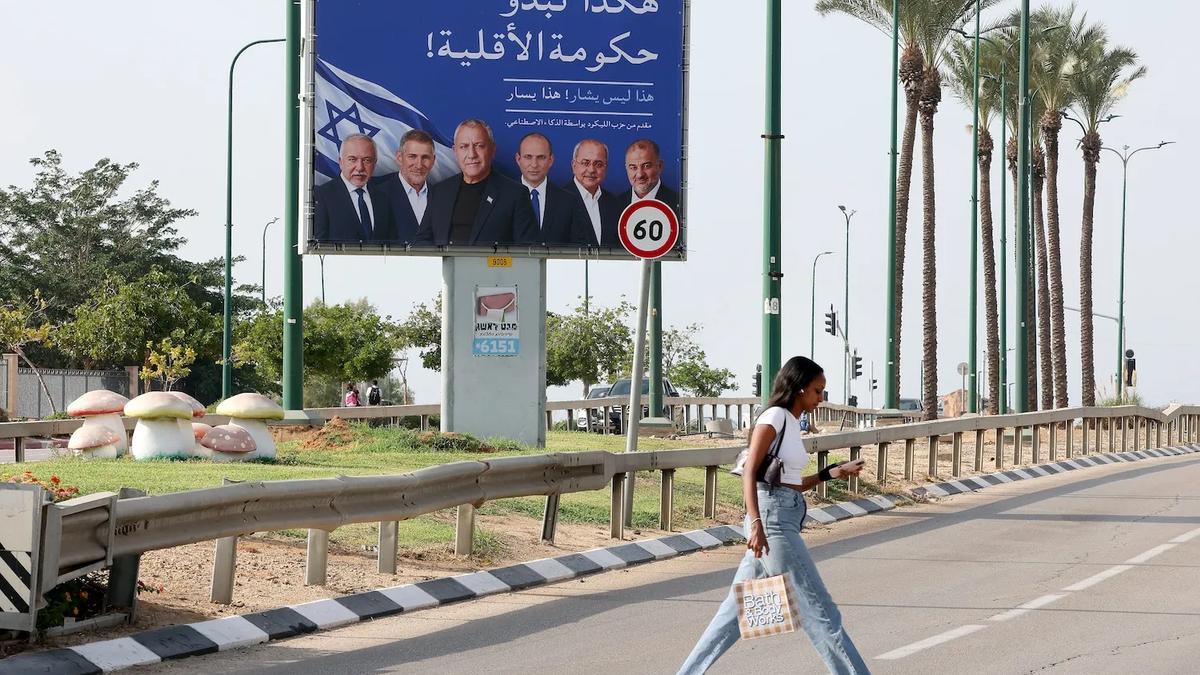
As Israel approaches a pivotal parliamentary election, a striking number of its citizens are contemplating emigration, reflecting profound anxieties about the nation's direction. Nearly one-fifth of Israeli voters are considering leaving the country, a sentiment fueled by escalating regional conflicts, a soaring cost of living, and deep internal societal polarization. Should the current far-right coalition led by Prime Minister Benjamin Netanyahu secure another term, many highly skilled workers, primarily from the secular-liberal factions, indicate they may seek permanent residence elsewhere, potentially triggering a significant brain drain.
The current political landscape in Israel is a complex interplay of coalition survival, ideological divides, and the leveraging of external threats to manage internal dissent. At its core, the potential for a mass exodus exposes the structural vulnerabilities within the nation's power dynamics, where the pursuit of political stability by one faction inadvertently destabilizes the broader societal fabric.
Benjamin Netanyahu's long tenure as prime minister, nearly 19 years, is a testament to his ability to forge and maintain coalitions, often by appealing to the religious-nationalist right. This political calculus frequently involves advancing policies that prioritize this base, sometimes at the expense of secular-liberal segments of the population. The proposed judicial reform bill in 2023, which aimed to curb the Supreme Court's oversight, was a stark example. While ultimately struck down, the attempt itself exposed a deep-seated desire within the ruling bloc to consolidate power and reshape the balance of authority, triggering widespread protests and exacerbating societal fissures. For Netanyahu, securing a majority means navigating a fragmented political map where the support of smaller, ideologically aligned parties is paramount, even if their demands alienate a substantial portion of the electorate.
A critical fault line running through Israeli society, and a significant driver of resentment, is the issue of military conscription. While thousands of Israel Defense Forces (IDF) reservists have served hundreds of days in Gaza and Lebanon since the Oct. 7, 2023, Hamas attacks, members of the ultra-Orthodox Jewish population, or Haredim, have largely remained exempt from service. The Haredi community is Israel's fastest-growing demographic, and their political representatives are crucial to many right-wing coalitions. Despite a 2024 Supreme Court ruling ordering an end to these exemptions, ultra-Orthodox military service and workforce participation remain low. This disparity fuels deep resentment among other Israelis who bear the burden of both military service and a shrinking tax base, creating a powerful undercurrent of dissatisfaction that the ruling coalition must manage without alienating its key partners.
The economic strain on ordinary Israelis is another critical power mechanic. The cost of living has skyrocketed, with food prices increasing by 20 percent in the last four years. Wartime costs have deepened national debt, and key sectors like tourism and construction have been hit hard by labor shortages and the suspension of work permits for Palestinians from the West Bank. These economic pressures are not merely abstract figures; they translate into daily struggles for families and contribute to a pervasive sense of insecurity about the future. While governments often frame military actions as necessary for security, the economic consequences disproportionately impact different segments of society, intensifying existing divisions. For a government seeking re-election, managing these economic realities while funding ongoing conflicts and maintaining coalition stability is a delicate balancing act, often leading to policies that favor short-term political survival over long-term economic equity.
The potential for a significant wave of emigration from Israel is not merely an economic statistic; it represents a profound human cost, impacting individuals, families, and the very fabric of society. The decision to leave one's homeland, often after generations, is fraught with emotional and practical challenges, reflecting a deep disillusionment with the present and uncertainty about the future.
For individuals like Amir, the technology freelancer considering a permanent move to Greece, the choice to emigrate is born from a pervasive sense of insecurity and a feeling that the country is moving in a direction incompatible with their values. These are often highly skilled, educated individuals who have contributed significantly to Israel's innovation economy. Their departure signifies a personal surrender to the forces of polarization and instability, a heartbreaking decision to seek a better future elsewhere for themselves and their children. The Hebrew University of Jerusalem's survey, showing fewer than one-quarter of residents believe their children will live in a better reality, underscores this deep-seated anxiety shared by many.
The internal divisions between secular-liberal and religious-nationalist factions have created a deeply fractured society. This polarization manifests in daily life, from political discourse to social interactions, eroding trust and a shared sense of national purpose. The resentment over military conscription exemptions for the ultra-Orthodox community, for instance, pits those who sacrifice years of their lives and face mortal danger against those perceived as not contributing equally. This internal strife weakens social cohesion, making collective problem-solving more difficult and fostering an environment where different groups feel increasingly alienated from one another. The human cost here is the loss of a unified national identity, replaced by a mosaic of competing interests and grievances.
The ongoing wars in Gaza and Lebanon, and the broader regional tensions with Iran, cast a long shadow over Israeli society. The Oct. 7, 2023, Hamas attacks were a profound trauma, leading to a pervasive sense of insecurity. For thousands of reservists and their families, the constant deployments mean prolonged separation, economic hardship, and the psychological toll of combat. Even for civilians, the constant threat of conflict, the need for heightened security, and the associated anxieties create a stressful living environment. This perpetual state of alert impacts mental health, family stability, and the ability to plan for a peaceful future, pushing many to seek calmer shores.
While the focus of the emigration discussion is on Israeli citizens, it is crucial to acknowledge the immense human cost borne by Palestinians in Gaza. The raw intelligence states that more than 74,000 people have been killed in Gaza, and much of the enclave has been destroyed since the war began. This staggering loss of life, coupled with widespread displacement, famine, and the destruction of infrastructure, represents a catastrophic humanitarian crisis. The actions and policies of the Israeli government, driven by its security imperatives, have had devastating consequences for an entire population, a cost that often remains unseen or downplayed in the internal Israeli political discourse, yet is a direct outcome of the broader conflict dynamics.
Governments and powerful actors often shape narratives to maintain control and justify policies, frequently downplaying or omitting critical aspects that complicate their preferred storyline. In Israel's current predicament, several crucial elements are often sidelined in official discourse, revealing deeper structural issues.
The narrative of constant external threats from Hamas, Hezbollah, and Iran is a powerful tool for political mobilization and cohesion. While these threats are real, their consistent emphasis by the government can serve to deflect attention from profound internal challenges. By framing the national struggle primarily as an existential battle against external enemies, the ruling coalition can downplay its responsibility for domestic issues like soaring living costs, deepening societal polarization, and the erosion of democratic norms. The focus on
Source referenced: FOREIGNPOLICY
This brief was synthesized by our Editorial Engine and reviewed by The Ground Narrative team.


