TRENDING

Monday, 26 October 2026
----------------------
15 Jumada Al-Awwal 1448 AH
A deadly attack on a Greek Orthodox church in Jordan's Karak governorate has shattered a funeral procession, killing eight and wounding dozens. The incident, attributed to local 'extremist terrorists,' exposes the kingdom's delicate balance between stability and simmering internal threats.
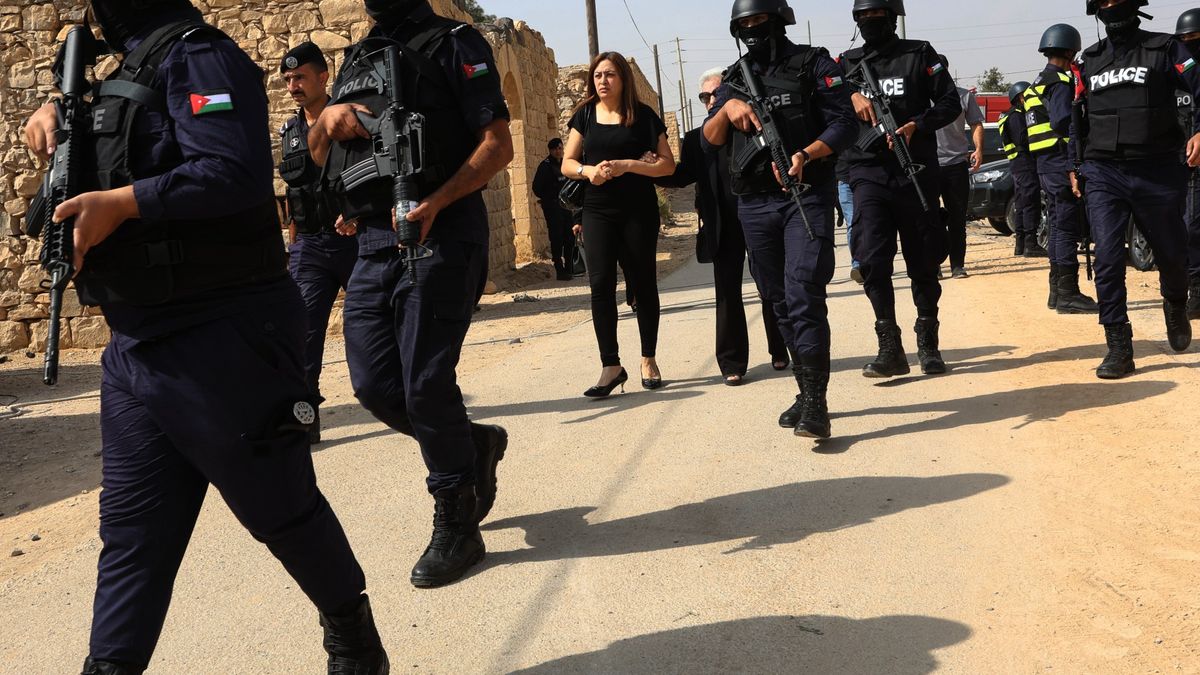
On a solemn Friday, a funeral procession at St George’s Church in the village of Hamoud, within Jordan’s Karak governorate, was violently interrupted. Armed individuals stormed the church compound, opening fire on mourners and leaving eight people dead and 34 wounded. The unprecedented assault on a Christian minority community immediately triggered a swift and forceful response from Jordanian authorities. Within days, security forces conducted a dawn raid in the nearby village of al-Jadeeda, apprehending three Jordanian suspects identified as members of the same family, including two brothers. Authorities have labeled the perpetrators as “extremist terrorists” and stated that the suspects resisted arrest, sustaining severe injuries during the operation.
The Hashemite Kingdom of Jordan operates on a carefully constructed foundation of stability, balancing tribal loyalties, a robust security apparatus, and a strategic alliance with Western powers. This attack, while seemingly isolated, strikes at the heart of this delicate equilibrium, challenging several core tenets of Jordanian power.
First, the monarchy's legitimacy is partly derived from its role as a protector of all its citizens, including its Christian minority, and its broader claim as a custodian of Islamic and Christian holy sites, particularly in Jerusalem. An attack on a church, especially during a funeral, directly undermines this narrative and signals a failure in the state's primary duty: ensuring internal security. The immediate and forceful response – King Abdullah II's directive for an “iron fist” and the swift apprehension of suspects – is a clear demonstration of the state reasserting its control and projecting an image of unwavering resolve. This rapid action is not just about justice; it's a critical performance of power designed to reassure both domestic and international audiences that Jordan remains firmly in control.
Second, the incident exposes the persistent threat of homegrown extremism, even in a country known for its relatively stable internal security compared to its neighbors. While authorities have been quick to dismiss ties to larger, internationally recognized terrorist organizations, the labeling of the perpetrators as “extremist terrorists” points to a deeper societal challenge. The power dynamic here is between the centralized state, which seeks to maintain order and a secular-leaning identity, and fringe ideological elements that reject this order, often fueled by a mix of religious fundamentalism, socio-economic grievances, and regional conflicts. The state's narrative of “extremists” having “no relationship to humanity” is a rhetorical tool to dehumanize the perpetrators and isolate their ideology from the broader Jordanian populace, thereby reinforcing the state's moral authority.
Third, Jordan's strategic importance as a bulwark against regional instability cannot be overstated. As a key partner for the United States and Europe in counter-terrorism efforts and a host to millions of refugees, Jordan's internal security is of paramount concern to its allies. Attacks like this, even by seemingly isolated actors, inevitably raise questions in Western capitals about the kingdom's long-term stability and its capacity to manage internal dissent and radicalization. The Jordanian state, therefore, is not only managing a domestic crisis but also performing for an international audience, eager to demonstrate its effectiveness and reliability as an ally.
Finally, the power of information control is evident. By not naming the suspects or detailing their specific motives beyond
Source referenced: ALJAZEERA
This brief was synthesized by our Editorial Engine and reviewed by The Ground Narrative team.


