TRENDING

Monday, 26 October 2026
----------------------
15 Jumada Al-Awwal 1448 AH
The 1966 US midterm elections saw the Vietnam War's escalating costs directly linked to rising inflation and household expenses, fundamentally altering the political landscape. This pivotal moment demonstrated how foreign policy can profoundly impact the daily lives and voting decisions of ordinary citizens.
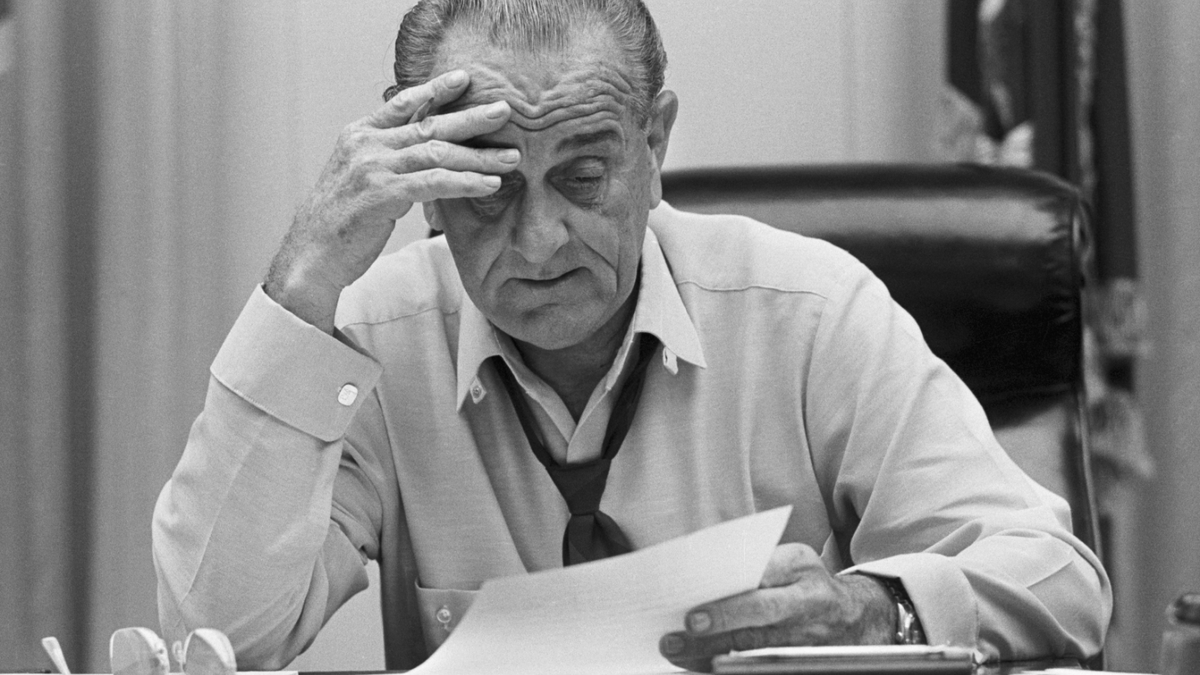
In the 1966 US midterm elections, the ruling Democratic Party suffered significant losses in Congress, a sharp reversal from their landslide victory just two years prior. This shift was largely driven by a growing public discontent over the escalating economic costs of the Vietnam War, which Republicans successfully framed as the primary cause of rising inflation and the increasing price of everyday goods, from food to medical care. The election became a referendum on the Johnson administration's ability to manage both an expensive foreign conflict and an ambitious domestic agenda without imposing undue financial burdens on American households.
At the heart of the 1966 electoral shift was the intricate interplay between presidential power, economic policy, and public perception. President Lyndon B. Johnson had initially wielded immense political capital, using his 1964 mandate to enact sweeping Great Society programs aimed at poverty reduction and civil rights. However, the simultaneous escalation of the Vietnam War introduced a critical vulnerability.
The administration attempted to finance both the war and its domestic agenda without raising taxes, fearing a political backlash. This decision, however, led to a growing federal deficit, which, though modest by later standards, was unprecedented for the post-World War II era. Economists widely agree that this deficit spending, primarily driven by military expenditures, was the central catalyst for the inflation that began to grip the nation.
Republicans, initially marginalized after the 1964 election, seized this economic vulnerability. They masterfully connected the abstract concept of wartime spending to the tangible reality of rising prices in grocery stores. Their campaign strategy was simple yet effective: link Johnson's foreign policy decisions directly to the shrinking purchasing power of the American dollar. This was not merely about opposing the war itself, which was still gaining momentum and lacked a unified anti-war movement at the time; it was about the *cost* of the war, framed as a direct tax on the common household.
The Federal Reserve, under Chairman William McChesney Martin, attempted to cool the overheating economy by raising the discount rate in late 1965. This move, which infuriated Johnson, led to higher interest rates and a credit crunch, further dampening economic activity, particularly in the housing sector. This demonstrated a critical tension: the central bank's mandate for economic stability often clashes with a president's political imperative to maintain popular support, especially during wartime.
Furthermore, the Democratic Party's internal cohesion was fracturing. While the Great Society programs were generally popular, the civil rights movement, particularly the push for open-housing legislation in Northern cities, sparked a backlash among some white working-class voters who had historically been part of the New Deal coalition. Republicans exploited these racial anxieties, subtly weaving them into a broader narrative of government overreach and economic mismanagement. The confluence of a costly war, domestic social upheaval, and a perceived loss of economic control created a potent cocktail that eroded the Democratic majority and reshaped the balance of power in Washington.
The immediate and most acutely felt consequences of the 1966 economic climate were borne by ordinary American families, particularly those living paycheck to paycheck. The abstract notion of a federal deficit translated directly into concrete struggles at the checkout counter.
For the first time in nearly a decade, Americans experienced a significant jump in the Consumer Price Index. This wasn't just a statistical blip; it meant that the price of essential goods—pork chops, beef, transportation, and medical care—rose noticeably. Housewives across several states organized boycotts of local supermarkets, a powerful, grassroots expression of frustration and economic distress. These protests highlighted how the financial burden of a distant war was landing squarely on household budgets, forcing families to make difficult choices about what they could afford.
Beyond daily expenses, the Federal Reserve's efforts to curb inflation led to a credit crunch. Interest rates rose, making it more expensive for individuals to borrow money for homes or for businesses to invest. This directly impacted the housing market, with housing starts, homebuilding, and commercial construction all declining. For many, the dream of homeownership or expanding a small business became more distant, as the cost of capital increased and economic uncertainty loomed.
While not directly caused by inflation, the economic anxieties of the mid-1960s exacerbated existing social tensions. The backlash against civil rights legislation, particularly in Northern cities, was fueled by a sense of insecurity among some white ethnic voters. Republicans skillfully tapped into these fears, suggesting that government spending on both the war and social programs was not only causing economic hardship but also disrupting traditional social orders. This created a climate where economic grievances and racial anxieties became intertwined, deepening societal divides and making it harder for communities to find common ground.
What powerful actors often downplayed or strategically omitted in the discourse surrounding the 1966 elections was the full scope of the choices being made and their long-term implications. Both sides engaged in selective framing that obscured a more complete picture of power and responsibility.
The Johnson administration was in an unenviable position, attempting to wage a costly war while simultaneously building a more equitable society through the Great Society programs. What was often downplayed was the immense political pressure Johnson faced regarding a tax increase. Raising taxes during wartime is historically unpopular, and the administration gambled that it could manage the economy without such a move, or at least delay it. This gamble, however, led to an inflationary spiral that ultimately undermined public support for both the war and, to some extent, the domestic agenda. The administration framed the economic issues as temporary adjustments, rather than direct consequences of its fiscal choices, hoping to ride out the storm.
Republicans, while effectively connecting war spending to inflation, often omitted a nuanced discussion of the geopolitical realities driving the Vietnam War or the long-term societal benefits of the Great Society. Their narrative was largely focused on the immediate pain of the shrinking dollar, avoiding the complexities of foreign policy strategy or the social inequalities that the domestic programs aimed to address. They painted a picture of government waste and fiscal irresponsibility without offering a clear alternative path that would simultaneously fund the war, maintain social safety nets, and curb inflation. The focus was on the *cost* of government, not necessarily the *value* of its endeavors, allowing them to capitalize on public frustration without committing to difficult policy choices themselves.
The role of the Federal Reserve was also largely understood only by economic elites. While Johnson publicly expressed his displeasure with the Fed's interest rate hike, the average voter likely didn't fully grasp the central bank's independent power to influence their mortgage rates or the availability of credit. The Fed's actions, though necessary to combat inflation, added another layer of economic pain for consumers and businesses, further complicating the political narrative. This highlighted a fundamental tension in democratic governance: the unelected central bank's mandate for economic stability can directly conflict with the elected government's political objectives, often with the public caught in the middle, unaware of the full scope of the forces at play.
Perhaps the most significant untold story was the subtle erosion of public trust in government's ability to manage the economy. The 1966 elections marked a turning point where a significant segment of the electorate began to view government spending, particularly on foreign ventures, with skepticism. This laid the groundwork for future political movements that would champion fiscal conservatism and question the efficacy of large-scale government programs, both domestic and international. The idea that
Source referenced: FOREIGNPOLICY
This brief was synthesized by our Editorial Engine and reviewed by The Ground Narrative team.