TRENDING

Monday, 26 October 2026
----------------------
15 Jumada Al-Awwal 1448 AH
Yemen's protracted conflict has seen a significant escalation, with Houthi forces launching missile and drone attacks deep into Saudi territory, targeting civilian infrastructure like Riyadh's airport. The Saudi-led coalition has retaliated with airstrikes across Houthi-held areas, further entrenching a cycle of violence that impacts millions.
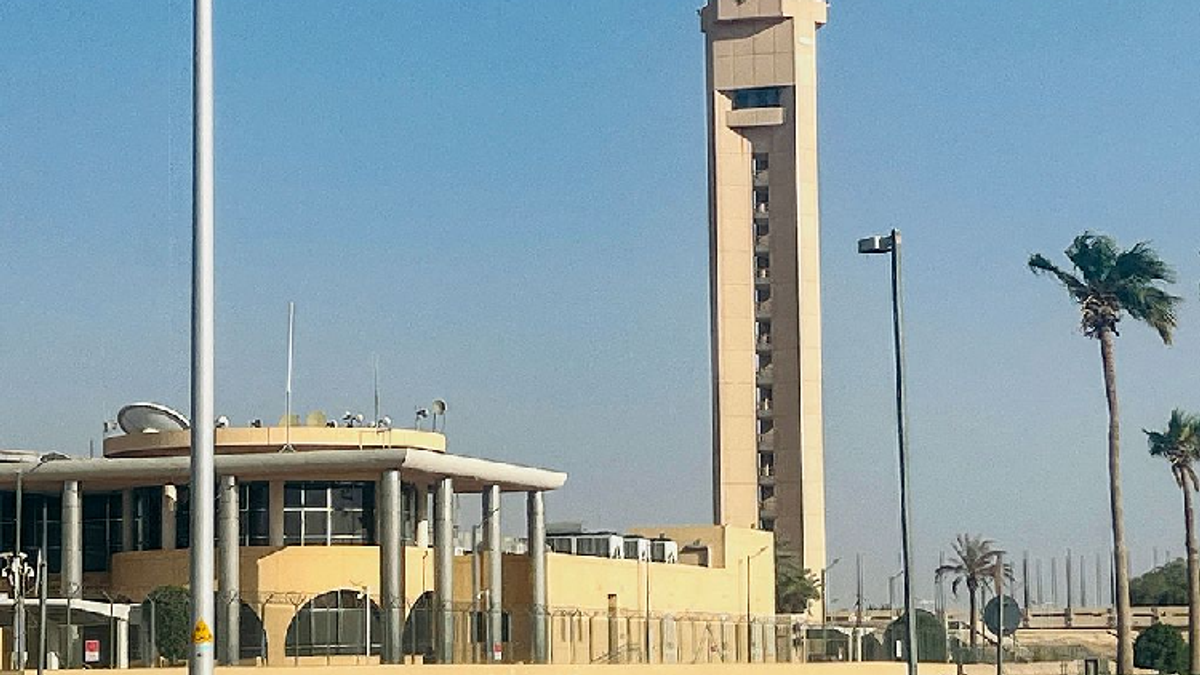
The long-running conflict in Yemen has sharply escalated, with Houthi forces launching a series of missile and drone attacks deep into Saudi Arabian territory. Targets included King Khalid International Airport in Riyadh, the King Khalid Air Base in Khamis Mushait, and a Saudi Border Guard naval base in Jazan. The attacks prompted a partial closure of Riyadh's main airport, and Houthi spokesmen issued stark warnings to airlines and travelers against using Saudi airspace, specifically excluding Mecca and Medina. In response, the Saudi-led coalition reported intercepting 12 missiles and two drones, with debris causing injuries to a Saudi citizen and an Asian resident, alongside damage to residential buildings and vehicles in Khamis Mushait and Ahad Rafidah governorates. The coalition subsequently carried out dozens of airstrikes on Houthi-held areas across Yemen, including Sanaa, Hajjah, Lahj, Amran, Saada, Al-Jawf, Taiz, and Ibb, resulting in numerous casualties, including women and children. Amidst the heightened security risks, the United States ordered the departure of non-emergency government employees and their family members from Saudi Arabia, citing the potential for rapid escalation.
The latest surge in hostilities reveals the enduring, and in some ways evolving, power dynamics that have sustained the Yemen conflict for nearly a decade. At its core, this is a struggle for regional influence, internal control, and strategic leverage, fought primarily by proxies and with devastating consequences for ordinary people.
The Houthi movement, which controls significant portions of northern Yemen, including the capital Sanaa, has long employed asymmetric warfare tactics to counter the overwhelming conventional military superiority of the Saudi-led coalition. Their missile and drone programs, reportedly bolstered by external support, allow them to bypass traditional air defenses and project power beyond Yemen's borders. By targeting civilian infrastructure like Riyadh's airport and issuing warnings about oil facilities, the Houthis aim to impose economic and psychological costs on Saudi Arabia. This strategy seeks to disrupt daily life, erode investor confidence, and demonstrate their continued capacity to inflict pain, thereby creating leverage for a negotiated settlement or to force an end to the Saudi-imposed blockade. The explicit exclusion of Mecca and Medina from their airspace warnings also carries a symbolic weight, attempting to frame their actions as resistance against a political adversary rather than a broader religious conflict.
The Saudi-led coalition intervened in Yemen in 2015 with the stated goal of restoring the internationally recognized government and countering what it perceives as Iranian expansionism. Despite vast military expenditures and advanced weaponry, the coalition has struggled to achieve its objectives or fully neutralize the Houthi threat. Their strategy relies heavily on air power and a naval blockade, which, while effective in limiting Houthi resupply, has also contributed to Yemen's dire humanitarian crisis. The recent attacks on Saudi territory highlight a critical vulnerability: even with sophisticated air defense systems, preventing every drone or missile from reaching its target is nearly impossible. This forces Saudi Arabia into a reactive cycle of interception and retaliation, which, while militarily necessary for defense, has not proven strategically decisive. The Arab League's swift condemnation and reaffirmation of solidarity with Saudi Arabia underscore the regional political support the kingdom enjoys, but this diplomatic backing has not translated into an end to the conflict.
The United States plays a complex role, balancing its long-standing alliance with Saudi Arabia against growing domestic and international pressure regarding the humanitarian crisis in Yemen. The order for non-emergency government employees to depart Saudi Arabia is a significant signal. It reflects a tangible assessment of increased security risks but also serves as a subtle form of diplomatic pressure. While the US provides critical intelligence, logistical support, and arms to Saudi Arabia, it has also, at times, called for de-escalation and a political solution. The withdrawal of personnel indicates a heightened concern for US citizens' safety, but it also implicitly questions the effectiveness of the current security posture and could be interpreted as a message to Riyadh to re-evaluate its approach to the conflict. The US seeks regional stability, but the ongoing conflict, particularly its spillover into Saudi Arabia, directly undermines that objective, creating a precarious balancing act between alliance commitments and broader strategic interests.
The relentless cycle of attacks and counter-attacks ensures that the primary burden of this conflict falls squarely on ordinary civilians. For nearly a decade, the people of Yemen have endured what the United Nations has repeatedly called the world's worst humanitarian crisis, while Saudi citizens are increasingly finding their sense of security eroded by the conflict spilling across their borders.
In Yemen, the human cost is catastrophic and pervasive. The Saudi-led coalition's airstrikes, described by the Houthis as targeting
The Houthis claim their attacks are in retaliation for the Saudi-led coalition's military intervention and ongoing blockade of Yemen, which has caused a severe humanitarian crisis. They aim to impose costs on Saudi Arabia to force an end to the conflict and blockade.
The conflict has led to the world's worst humanitarian crisis, with millions facing famine, disease, and displacement in Yemen. In Saudi Arabia, civilians face disruptions and injuries from Houthi missile and drone attacks, eroding their sense of security.
The US is a long-standing ally of Saudi Arabia, providing military support and arms. However, it also faces pressure over the humanitarian crisis in Yemen and has recently ordered the evacuation of non-emergency personnel from Saudi Arabia due to security risks.
Editor's Note: The analysis is based on the provided raw intelligence, contextualized within the broader understanding of the Yemen conflict and regional power dynamics, adhering strictly to TGN's editorial doctrine.
Source referenced: CGTN
This brief was synthesized by our Editorial Engine and reviewed by The Ground Narrative team.