TRENDING

Monday, 26 October 2026
----------------------
15 Jumada Al-Awwal 1448 AH
A high-profile forum in China's Xiongan New Area concluded with a bold vision for global governance, advocating for sweeping reforms to international institutions and greater power for developing nations. This initiative signals a deliberate effort to reshape the global order, challenging established norms and power structures.
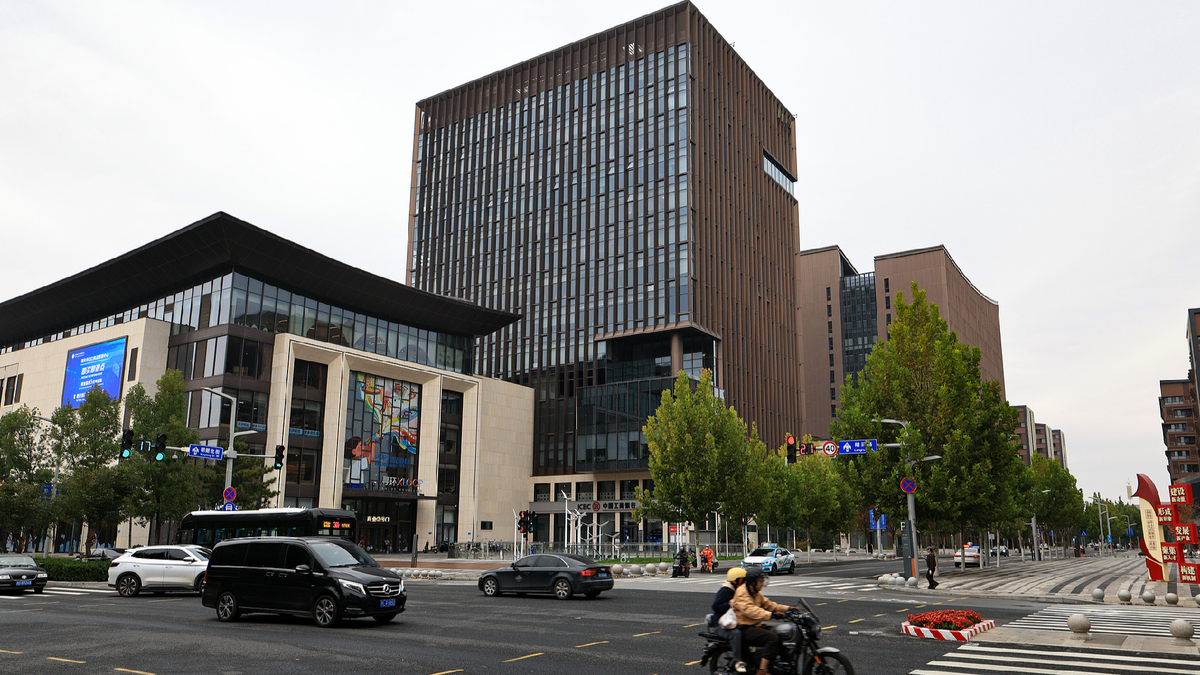
The 2026 Global Governance Forum in Xiongan New Area, north China's Hebei Province, concluded recently with the release of the "Global Governance: Xiongan Vision." Attended by representatives from 97 countries and international organizations, the forum convened under the theme "Rebuilding Confidence and Cooperation: Reforming and Improving Global Governance in a Transforming World." The resulting Xiongan Vision calls for stronger multilateral cooperation, significant reforms to global institutions, and enhanced representation for developing countries, particularly those in the Global South, in international decision-making processes.
The Global Governance Forum in Xiongan is not merely an academic exercise; it is a carefully orchestrated diplomatic maneuver by China to position itself as a leading architect of a new global order. By hosting such a high-profile event, Beijing signals its intent to move beyond merely participating in existing international frameworks to actively shaping their future direction and fundamental principles. The choice of Xiongan New Area as the venue is itself symbolic, as Xiongan is touted as a model city for China's future, implicitly suggesting its governance model holds lessons for the world.
At its core, the Xiongan Vision represents a direct challenge to the post-World War II international system, largely designed and dominated by Western powers. The call for "reforms to global institutions" and "greater representation for developing countries" targets institutions like the United Nations Security Council, the International Monetary Fund (IMF), and the World Bank, where the influence of the United States and its allies remains paramount. China, along with a growing number of Global South nations, views these structures as outdated and inequitable, reflecting a geopolitical reality that no longer exists.
The emphasis on "multilateral cooperation" is a key battleground. While sounding universally positive, different powers hold vastly different interpretations of what multilateralism entails. For the United States and many Western nations, multilateralism often implies a rules-based order underpinned by liberal democratic values and a willingness to address issues like human rights and democratic governance. China's interpretation, echoed in the Xiongan Vision, tends to prioritize state sovereignty, non-interference in internal affairs, and economic development, often sidestepping issues that might be deemed intrusive by authoritarian regimes. This divergence is not semantic; it dictates whose values and priorities will ultimately guide global decision-making.
On economic governance, the forum's calls for making development a global priority, accelerating the UN 2030 Agenda for Sustainable Development, and reforming the World Trade Organization (WTO) are particularly potent. These proposals resonate deeply with the Global South, many of whom feel marginalized by existing trade rules and financial architectures. China, through initiatives like the Belt and Road Initiative (BRI), has already demonstrated its capacity to create parallel economic structures and offer alternative development models. By advocating for a more "inclusive and equitable economic globalization" and improving the representation of the global economy in the international financial architecture, China is effectively seeking to institutionalize its growing economic clout and legitimize its alternative approaches.
The document's focus on emerging domains like climate change, artificial intelligence (AI), cyberspace, and outer space reveals another layer of power dynamics. These are the new frontiers of global competition, and establishing governance norms now will determine who holds sway in the decades to come. China's push for the UN to serve as a central platform for global AI governance, while stressing human control, aligns with its desire to prevent Western technological dominance from translating into regulatory control. Similarly, advocating for "respect for countries' digital sovereignty" is a clear nod to its own stringent internet controls and a desire to prevent external interference or the imposition of Western norms on digital governance.
While high-level forums discuss abstract concepts like "global governance deficits," the consequences of these deficits are borne by ordinary people worldwide. The current system's inability to effectively address pressing global challenges translates directly into human suffering and lost opportunities.
The call for a fair and effective global climate governance system, with greater financial and technological support for developing countries, is a critical human imperative. For populations in the Global South, climate change is not a distant threat but a daily reality of extreme weather, crop failures, and displacement. Without significant transfers of resources and technology from wealthier, historically polluting nations, these communities will continue to pay the highest price for a crisis they did little to create. The rhetoric of cooperation must translate into tangible support, or millions will face worsened poverty, food insecurity, and health crises.
Promises of a more "inclusive and equitable economic globalization" offer hope to communities struggling with poverty and lack of opportunity. However, if reforms merely shift power among states without fundamentally altering the exploitative aspects of global capitalism, the benefits will not reach those who need them most. Similarly, while "digital sovereignty" can protect nations from external cyber threats, it can also be leveraged by governments to restrict internet access, censor information, and surveil citizens, thereby curtailing fundamental freedoms and hindering economic participation for individuals. The balance between national security and individual digital rights is a delicate one, with direct human consequences.
Perhaps the greatest human cost lies in the potential for competing visions of global governance to lead to further fragmentation rather than genuine cooperation. If the world divides into rival blocs, each adhering to its own set of rules and institutions, the ability to tackle truly global problems like pandemics, climate change, and economic instability will be severely hampered. Ordinary citizens, regardless of their nationality, will ultimately bear the burden of a less stable, less predictable, and less cooperative international environment, facing increased risks of conflict, economic downturns, and a diminished capacity to address shared threats.
What the official statements from the Global Governance Forum downplay or omit is the profound strategic self-interest driving China's promotion of the Xiongan Vision. While framed as a benevolent call for global cooperation and equity for the Global South, this initiative is deeply intertwined with Beijing's ambitions to reshape the international order to better reflect its own power and values.
The narrative of a world entering a "new period of turbulence and transformation" is not just an observation; it's a justification for fundamental shifts in global power. China, as a rising power, benefits from this narrative, as it legitimizes its efforts to challenge existing norms and institutions that were established when its influence was negligible. By championing the Global South, China positions itself as a leader of a broad coalition, amplifying its diplomatic leverage against the United States and its traditional allies. This is not merely about representation; it's about building a new consensus that aligns more closely with China's state-centric, non-interventionist foreign policy principles.
The forum's assertion that Xiongan New Area's planning and development offer "valuable lessons for improving global governance" is a subtle but significant piece of the untold story. Xiongan is a showcase for China's top-down, state-led development model, characterized by long-term planning, massive infrastructure investment, and centralized control. By suggesting this model's applicability to global governance, Beijing is implicitly promoting its own system as a viable, perhaps even superior, alternative to Western liberal democratic models. This aims to legitimize its domestic governance practices on the international stage and encourage other nations, particularly in the Global South, to adopt similar approaches, thereby expanding China's ideological influence.
The call for "reforms to global institutions" is notably selective. While the Xiongan Vision advocates for strengthening the UN's central role and improving its effectiveness, it does not explicitly call for reforms to the UN Security Council's permanent membership or veto power – a structure from which China directly benefits. This omission highlights that the push for reform is not universally applied but strategically targeted at institutions or aspects of governance where China perceives a disadvantage or an opportunity to increase its influence. The focus on WTO reform, for instance, aims to address issues like digitalization and green development, areas where China has significant economic interests and seeks to shape new global standards.
In the wake of the Global Governance Forum and the Xiongan Vision, several key developments will indicate the true trajectory of global power dynamics.
First, observe how the Xiongan Vision translates into concrete proposals and actions within existing international bodies. Will China and its allies actively push for specific reforms at the UN General Assembly, WTO, or other multilateral platforms? The rhetoric of reform must be followed by tangible diplomatic initiatives to be taken seriously.
Second, pay close attention to the cohesion and commitment of the Global South. While many developing countries share grievances about the current international order, their interests are not monolithic. Will they form a unified bloc behind the Xiongan Vision, or will individual national interests lead to fragmentation? The extent of their collective action will determine the vision's ultimate impact.
Third, monitor the response from established powers, particularly the United States and the European Union. Will they dismiss the Xiongan Vision as mere propaganda, or will they engage with its proposals, perhaps offering counter-proposals or initiating their own reform efforts? A proactive engagement, rather than outright rejection, could lead to a more nuanced evolution of global governance, while outright competition risks further polarization.
Finally, watch for the emergence of new or strengthened parallel institutions. If existing bodies prove resistant to reform, rising powers might increasingly invest in alternative mechanisms, such as expanded BRICS initiatives or new regional blocs, that better reflect their vision for global governance. This could lead to a two-tiered international system, with profound implications for global stability and cooperation.
Source referenced: CGTN
This brief was synthesized by our Editorial Engine and reviewed by The Ground Narrative team.


