TRENDING

Sunday, 27 September 2026
----------------------
16 Rabi' Al-Thani 1448 AH
Russia's ruling United Russia party has announced its lead candidates for the upcoming September parliamentary election, prominently featuring an injured Ukraine war veteran and a state television war correspondent. This strategic move signals a deliberate effort to integrate figures associated with the ongoing conflict into the political elite, reinforcing the Kremlin's narrative and consolidating domestic support amidst geopolitical challenges.
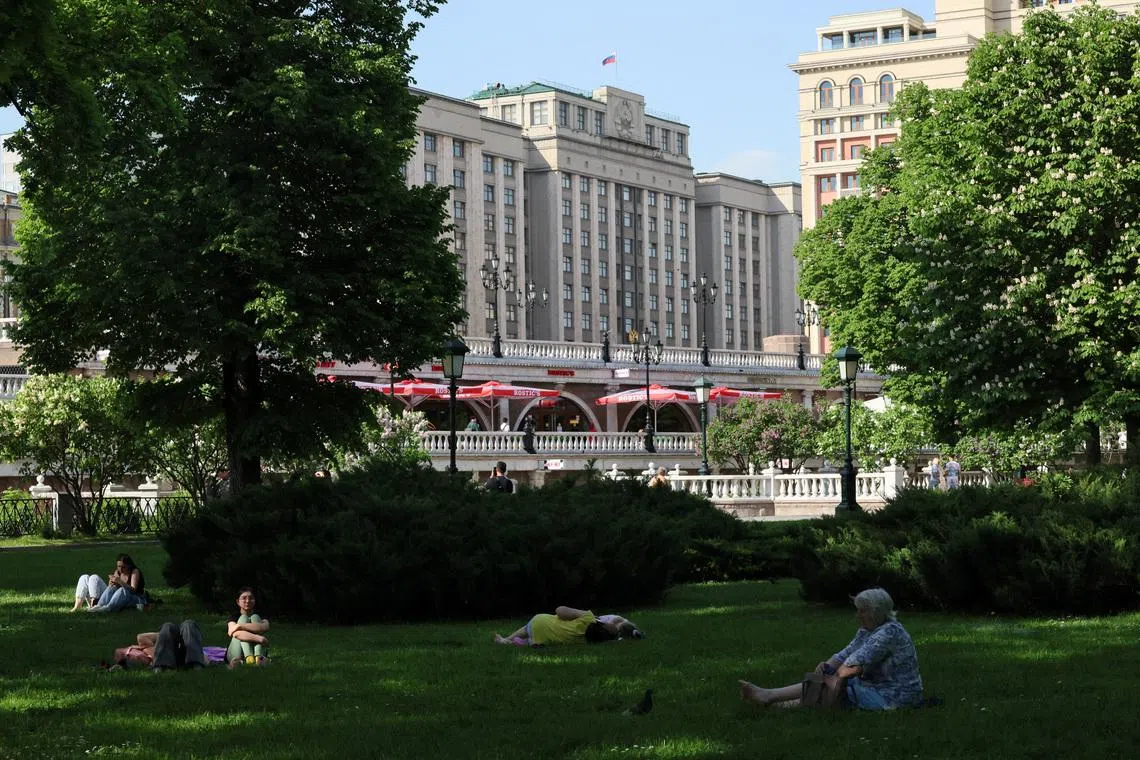
Russia's dominant political force, the United Russia party, recently unveiled its lead candidates for the parliamentary election scheduled for September 2026. The announcement, made on Sunday, June 28, 2026, at the party's pre-election congress in Moscow, highlights a strategic shift towards integrating figures directly associated with the ongoing conflict in Ukraine into the nation's political leadership. This move is poised to shape Russia's domestic political landscape and reinforce its geopolitical stance.
Among the most notable inclusions are Vladislav Golovin, a 29-year-old injured Ukraine war veteran who gained prominence during the 2022 battle for Mariupol, and Yevgeny Poddubny, a state television war correspondent wounded in Russia's Kursk region in 2024. These individuals will head the party's candidate list, alongside established political heavyweights such as Foreign Minister Sergei Lavrov and Moscow Mayor Sergei Sobyanin, both highly recognized and popular officials. Also featured is Maria Lvova-Belova, Russia's commissioner for children's rights.
The selection of these candidates by United Russia, chaired by former president Dmitry Medvedev, is deeply rooted in the Kremlin's broader strategic objectives. President Vladimir Putin has consistently articulated a vision for war veterans to transition into politics, forming a 'new elite' that is ideologically aligned and loyal to the state's current trajectory. By elevating figures like Golovin and Poddubny, United Russia directly implements this directive, aiming to infuse the legislative body, the State Duma, with individuals who have firsthand experience and a vested interest in the 'special military operation' in Ukraine.
This strategy serves multiple purposes. Firstly, it aims to legitimize and valorize the war effort domestically. By placing combatants and war reporters at the forefront of the political process, the party seeks to present the conflict not merely as a military operation but as a national cause, deserving of political representation and public support. This narrative is particularly crucial given the 'difficult backdrop of an ongoing war and fuel shortages driven by Ukrainian drone strikes,' as noted in the original reporting. The party, despite being less popular than President Putin himself, consistently secures large majorities, bolstered by his endorsement and a largely compliant parliamentary opposition.
Secondly, the inclusion of popular national figures like Lavrov and Sobyanin alongside the war-affiliated candidates aims to project an image of stability, continuity, and broad national unity. Lavrov's presence signals an unwavering commitment to Russia's current foreign policy direction, while Sobyanin's popularity as Moscow's mayor helps to ground the party's appeal in effective governance and urban development. This blend of military heroism and established political leadership is designed to maximize electoral appeal and consolidate power.
The implications of this candidate selection are significant, both domestically and geopolitically. Internally, it signifies a further consolidation of the Kremlin's power and its narrative. A State Duma dominated by United Russia, especially with a new cohort of war-affiliated politicians, will likely ensure continued legislative support for the government's policies, particularly concerning the conflict in Ukraine. This reinforces the existing political system, where independent voices are increasingly marginalized, and state control over information and political discourse is paramount.
From a geopolitical perspective, this move sends a clear message to both Ukraine and the international community. It underscores Russia's resolve to continue its military campaign and its intention to integrate the war effort deeply into its national identity and political structure. The elevation of war veterans into political roles suggests a long-term commitment to the current geopolitical course and a potential hardening of Russia's political elite, which could have lasting effects on its relations with Western nations and its neighbors.
Historically, the integration of military figures into political structures during or after significant conflicts is not uncommon. However, Russia's current approach appears to be a deliberate, top-down strategy to cultivate a new, loyal political class directly from the ranks of those involved in the ongoing conflict. This could lead to a more nationalistic and potentially militarized political landscape in Russia for years to come, shaping its domestic priorities and foreign policy decisions well beyond the immediate electoral cycle.
In conclusion, United Russia's candidate list for the September parliamentary election is more than just a routine political announcement. It is a carefully orchestrated strategic maneuver designed to reinforce the Kremlin's authority, legitimize its military actions, and cultivate a new generation of politically active elites aligned with the state's current geopolitical ambitions. This development will likely ensure legislative continuity and further entrench the current political system, with profound implications for Russia's future trajectory and its role on the global stage.