TRENDING

Wednesday, 14 October 2026
----------------------
3 Jumada Al-Awwal 1448 AH
US Secretary of State Marco Rubio expresses optimism for an Iran peace deal, requiring Tehran to curb its nuclear program and reopen the Strait of Hormuz for sanctions relief. Rubio's comments come as the three-month US-Israeli war on Iran appears to have reached an impasse.
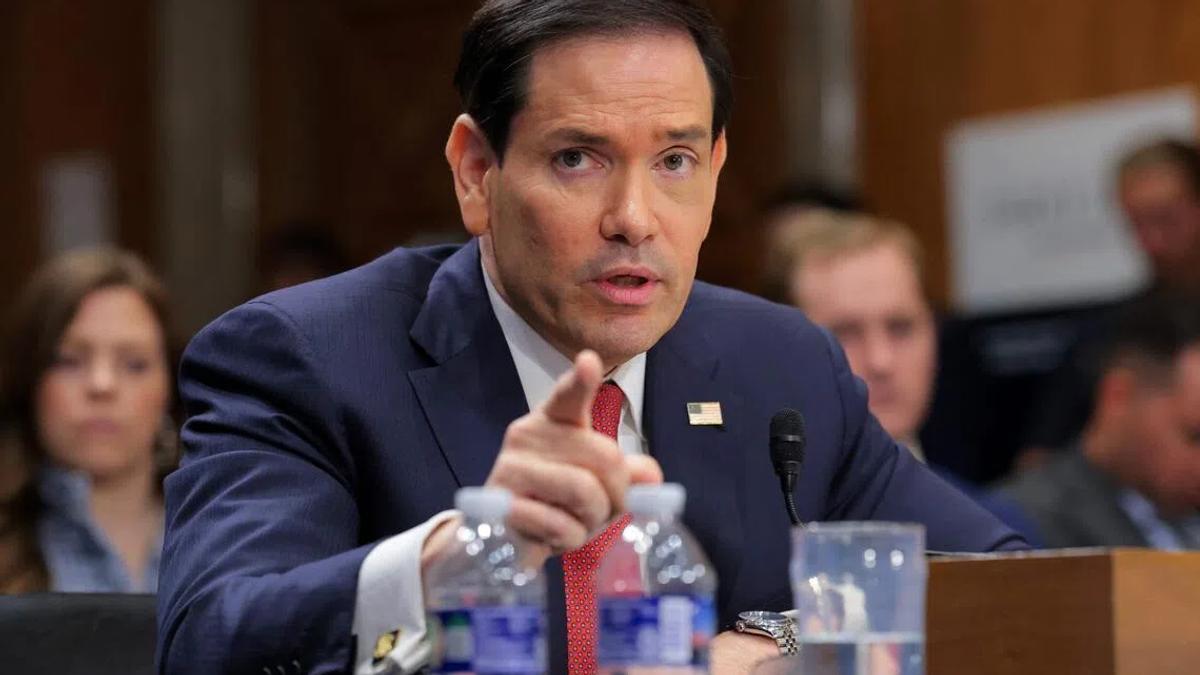
US Secretary of State Marco Rubio's recent testimony before the Senate Foreign Relations Committee has sparked renewed hope for a potential Iran peace deal. Rubio expressed optimism that a deal could be reached, requiring Tehran to severely curtail its nuclear program and reopen the Strait of Hormuz for sanctions relief. This development comes as the three-month US-Israeli war on Iran appears to have reached an impasse, with the closure of the strategic shipping channel continuing to disrupt global energy markets.
Rubio's comments suggest that the US is seeking to capitalize on the weakened state of Iran's military and economy. The war has significantly reduced Iran's ability to do harm, with Rubio claiming that the country has "no navy left" and its economy is "far worse today" than it was six to nine months ago. This assessment is consistent with reports from various sources, including the International Crisis Group, which has noted that the war has had a devastating impact on Iran's economy and military capabilities.
The US-Israeli war on Iran is a complex and multifaceted conflict that has been driven by a range of strategic and ideological factors. The war has its roots in the 2015 Joint Comprehensive Plan of Action (JCPOA), which imposed strict limits on Iran's nuclear program in exchange for relief from international sanctions. However, the Trump administration withdrew from the JCPOA in 2018, citing concerns about Iran's ballistic missile program and its support for militant groups in the region.
The potential for a peace deal with Iran has significant implications for the region. A deal could potentially lead to the reopening of the Strait of Hormuz, which would have a major impact on global energy markets. It could also lead to a reduction in tensions between the US and Iran, which would have a positive impact on regional stability.
However, a peace deal with Iran is far from certain. The war has created a range of complex and interconnected challenges that will need to be addressed in any potential agreement. These challenges include the issue of Iran's nuclear program, the status of the Strait of Hormuz, and the impact of the war on regional stability.
Rubio's comments on the potential for a peace deal with Iran are a significant development in the ongoing conflict. While a deal is far from certain, it is clear that the US is seeking to capitalize on the weakened state of Iran's military and economy. The potential implications of a peace deal are significant, and it will be important to monitor developments in the coming weeks and months.
Editor's Note: While Rubio's comments suggest that a peace deal is possible, it is unclear whether the US and Iran will be able to reach an agreement.
Source referenced: STRAITSTIMES
This brief was synthesized by our Editorial Engine and reviewed by The Ground Narrative team.


