TRENDING

Friday, 2 October 2026
----------------------
21 Rabi' Al-Thani 1448 AH
A recent incident involving President Trump's Marine One helicopter and a commercial jet at Reagan National Airport raises concerns about air traffic control and the prioritization of presidential safety over public safety. The Federal Aviation Administration's (FAA) investigation into the incident highlights the complexities of managing air traffic in sensitive areas.
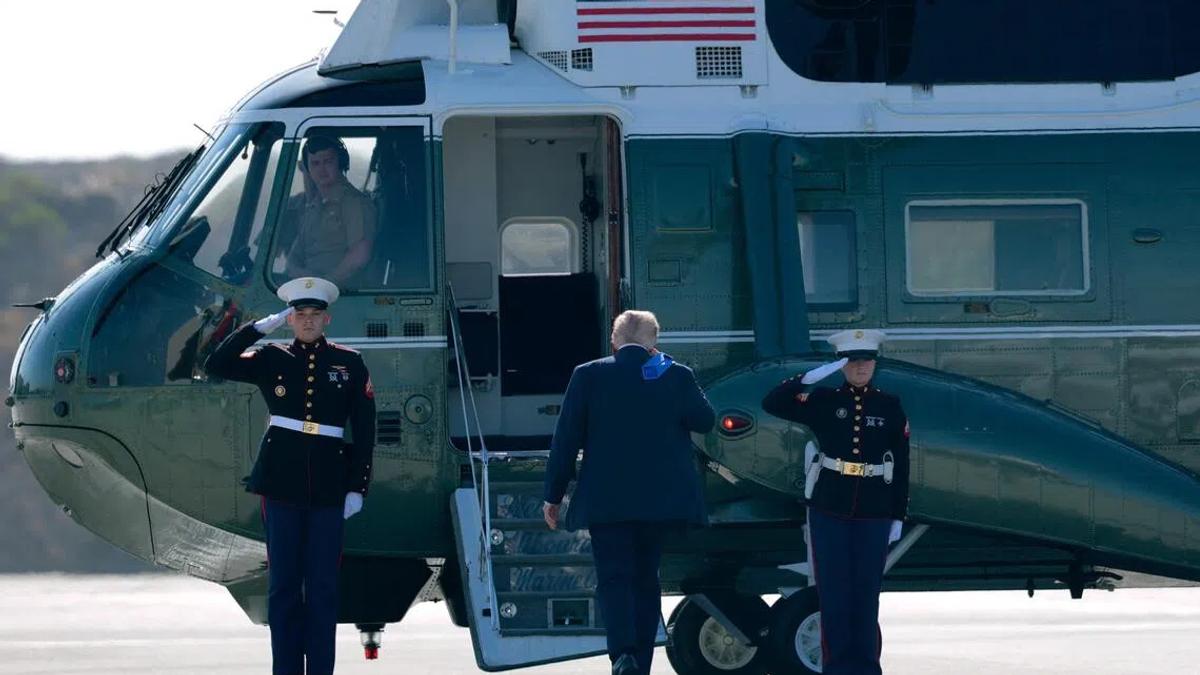
On August 4, 2026, President Trump's Marine One helicopter took off from the White House, and in a brief moment, found itself too close to a commercial jet departing Reagan Washington National Airport. This incident occurred despite the FAA's strict rules, implemented after a 2025 crash, which mandate the separation of helicopter and jet traffic around the airport.
The incident underscores the delicate balance between ensuring the safety of the President and the general public. The FAA's rules, designed to prevent such incidents, were not followed in this case, raising questions about the prioritization of presidential movements over standard safety protocols. The fact that air-traffic controllers did not halt commercial flights as required suggests a potential lapse in communication or procedure.
The human cost of such lapses in safety protocols can be devastating, as evidenced by the 2025 crash that killed 67 people. While this incident did not result in any harm, it highlights the potential risks faced by passengers on commercial flights when standard safety procedures are not adhered to. The incident also affects the families of those involved and the broader community that relies on air travel, emphasizing the need for stringent safety measures.
What is being downplayed in this incident is the systemic issue of how presidential movements are prioritized over public safety. The fact that the FAA is planning a safety review and the National Transportation Safety Board is considering an investigation indicates that there are concerns about the standard operating procedures in place. The use of visual separation for helicopter traffic near major airports, which was barred by the FAA in March, also points to a larger discussion about the safety of air traffic control practices.
Readers should watch for the outcome of the FAA's safety review and the potential investigation by the National Transportation Safety Board. The implementation of new safety measures or the revision of existing protocols could significantly impact how air traffic is managed around sensitive areas like the White House. Furthermore, any findings on the prioritization of presidential safety over public safety could lead to a broader discussion on the balance between these two critical concerns.
Editor's Note: The analysis is based on the information provided and may be subject to change as more details emerge from the ongoing investigations.
Source referenced: STRAITSTIMES
This brief was synthesized by our Editorial Engine and reviewed by The Ground Narrative team.