TRENDING

Tuesday, 6 October 2026
----------------------
25 Rabi' Al-Thani 1448 AH
Secretary of Defense Pete Hegseth used his State of the Force address to launch a rapid push for autonomous systems and a hard‑line cultural overhaul. The moves promise faster capability growth but also place service members and civilians in the line of fire.
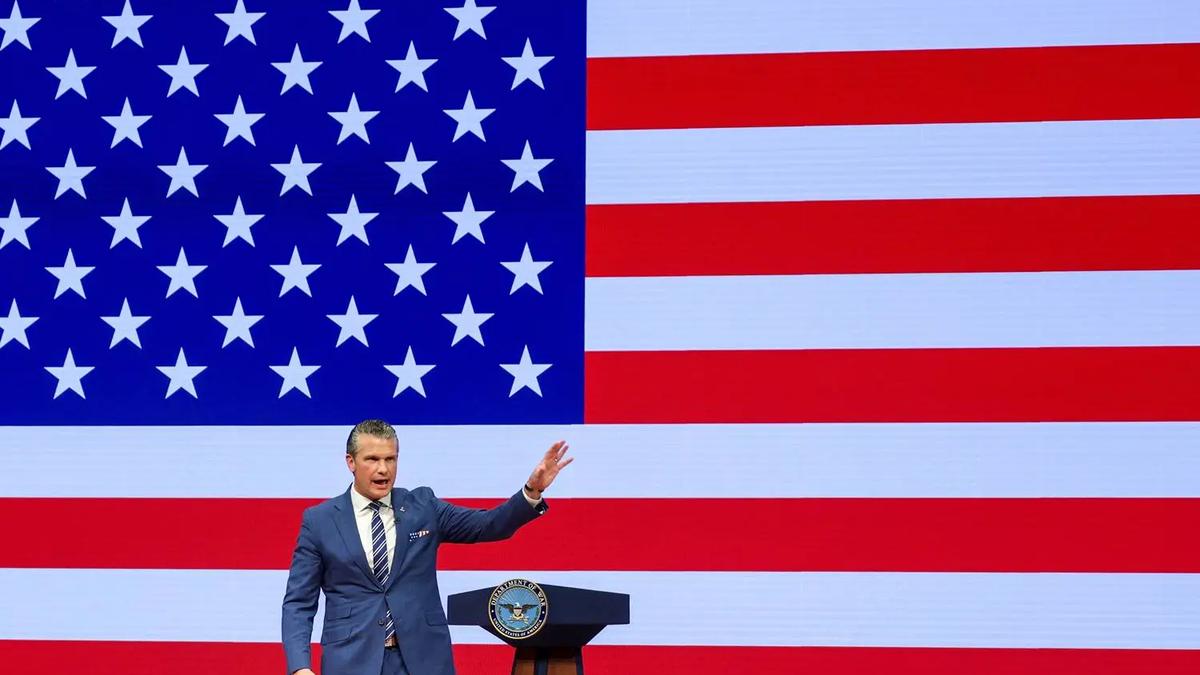
On Sept. 30, Pete Hegseth delivered his annual State of the Force speech at Marine Corps Base Quantico. He announced the creation of an Autonomous Warfare Command (Autowarcom), a 120‑day Project Meridian led by tech moguls and a former speaker, and a new resilience office dubbed FORTRESS America. At the same time, he confirmed a 20 % cut of senior officers and introduced strict grooming and testosterone‑testing policies for male personnel, framing them as a purge of “woke” influences.
The establishment of Autowarcom signals a shift from incremental upgrades to a wartime‑pace integration of AI‑driven weapons. By centralising procurement and doctrine under a single command, the Pentagon sidesteps the traditional inter‑service bargaining that often slows innovation. The command’s mandate to “scale autonomous and robotic capabilities” leverages private‑sector partnerships, notably with Elon Musk’s ventures and Anduril’s Palmer Luckey, whose companies already profit from AI‑enabled drones and surveillance.
Hegseth’s 20 % senior‑officer reduction serves two purposes. First, it removes commanders who have publicly resisted rapid AI integration, consolidating loyalty among younger, tech‑savvy officers. Second, it creates a narrative of fiscal responsibility that can be sold to a Congress wary of defense spending spikes. The cultural edicts—mandatory clean‑shaven faces, testosterone tests, and a new Office of Religious Affairs—reinforce a homogeneous identity that aligns the military’s public image with the administration’s broader “America First” rhetoric.
FORTRESS America’s focus on on‑site energy generation and domestic rare‑earth production is a direct response to recent disruptions in global semiconductor supply chains. By insulating bases from civilian grid failures, the Pentagon gains operational autonomy, but it also creates a new market for defense contractors to build private micro‑grids and mineral extraction projects, often in partnership with firms that have lobbying clout in Washington.
The rapid rollout of autonomous weapons raises ethical and safety concerns for the troops who will operate, maintain, and potentially be replaced by machines. Junior soldiers receive limited training on AI decision‑making, increasing the risk of accidents or unintended engagements. Moreover, the new grooming and hormone‑testing policies disproportionately affect enlisted men from lower socioeconomic backgrounds, where facial hair and natural hormone variations are common.
FORTRESS America’s push for on‑site power and rare‑earth processing will likely be built on or near existing military installations, bringing construction jobs but also exposing nearby civilian communities to environmental hazards associated with mining and high‑voltage energy systems. The demand for specialized technicians creates a surge in high‑pay positions that are out of reach for many veterans transitioning to civilian life.
Hegseth’s rhetoric—labeling “diversity” as a weakness and using slurs for transgender personnel—creates a hostile environment for women, LGBTQ+ service members, and people of color. While recruitment numbers for Black and female candidates reportedly rose, retention rates may suffer if the cultural climate turns punitive rather than inclusive.
While the speech highlighted national security, it omitted the fact that the companies steering Project Meridian stand to secure multi‑billion‑dollar contracts. Elon Musk’s firms, for instance, have already lobbied for preferential treatment in defense AI procurement. The lack of transparent bidding processes means taxpayer money could be funneled to a handful of tech giants with close ties to the administration.
Hegseth’s focus on unilateral capability building coincides with the Pentagon’s decision to exclude key NATO members from an upcoming summit. By emphasizing self‑reliance, the United States signals a willingness to sideline allies who might demand joint oversight of autonomous weapons, potentially fracturing alliance cohesion.
The article briefly mentions a massive breach of military personnel records, but the broader implication is that a more digitised, AI‑driven force creates larger attack surfaces. If adversaries infiltrate the same systems that control autonomous weapons, the risk of sabotage or false‑flag operations escalates, yet this vulnerability is downplayed in official briefings.
- Legislative oversight: Expect congressional hearings on the procurement contracts awarded to Musk, Luckey, and Gingrich‑led firms. Watch for amendments that could impose transparency requirements.
- Allied responses: European and Asian NATO partners may push back against autonomous‑weapon deployments, seeking joint governance frameworks. Their diplomatic moves will indicate whether the U.S. can maintain alliance unity.
- Legal challenges: Service members and advocacy groups are likely to file suits over the new grooming and hormone‑testing mandates, testing the limits of military authority versus individual rights.
- Cybersecurity alerts: Monitor for any incidents that link the autonomous systems’ command networks to the recent personnel data breach, as such a link would expose a critical vulnerability.
- Environmental impact reports: Local opposition to FORTRESS America installations could surface, especially in states with strong mining regulations. Community protests may delay or reshape the rollout.
By tracking these threads, readers can gauge whether the Pentagon’s rapid transformation delivers on its promise of deterrence or merely deepens a cycle of militarised technology that burdens the very people it claims to protect.
The Autonomous Warfare Command (Autowarcom) centralises development and deployment of AI‑driven weapons across all services. It speeds up capability delivery but also concentrates decision‑making power in a single, politically aligned office.
The new grooming rules, testosterone tests, and religious‑affairs office aim to enforce a uniform identity. They disproportionately impact enlisted men, LGBTQ+ personnel, and minorities, potentially lowering morale and increasing turnover.
Many NATO partners are wary of unchecked AI weapons and have called for joint oversight. The U.S. exclusion of key allies from upcoming meetings suggests friction that could weaken alliance cohesion.
Source referenced: FOREIGNPOLICY
This brief was synthesized by our Editorial Engine and reviewed by The Ground Narrative team.