TRENDING

Tuesday, 6 October 2026
----------------------
25 Rabi' Al-Thani 1448 AH
France's 2027 budget proposal triggered fierce student uprisings, exposing a clash between fiscal tightening and public discontent. The episode reveals how political survival, defense spending, and social inequality intersect in Paris.
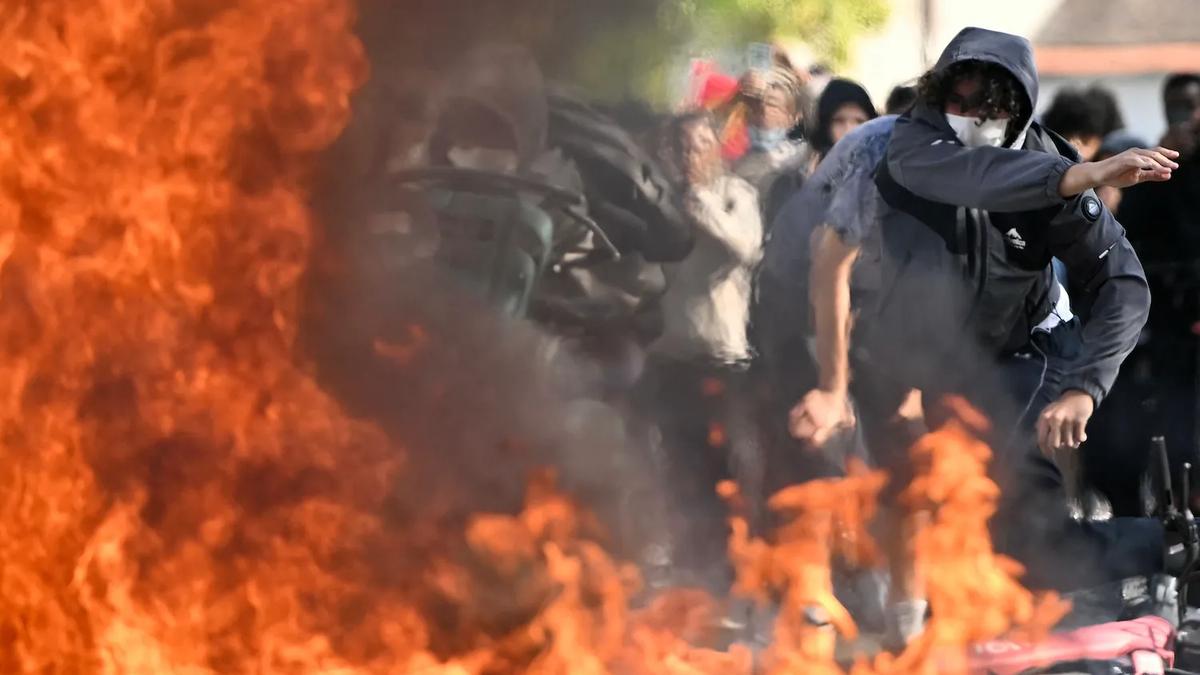
French Prime Minister Sébastien Lecornu unveiled the 2027 budget on October 1, 2026, proposing a defense boost to $71.2 billion, a freeze on public‑sector wages, and higher taxes to close a projected 5.4 %‑of‑GDP deficit. Within hours, students across the country set fire to school barriers, clashed with police, and hundreds were arrested as the education ministry ordered remote classes.
The budget sits at the crossroads of three competing imperatives. First, Emmanuel Macron's centrist coalition faces a looming no‑confidence vote; a credible fiscal plan is the quickest way to demonstrate parliamentary control. Second, the defense increase reflects Paris' desire to maintain strategic autonomy in a Europe where NATO spending is under scrutiny and the looming Taiwan flashpoint keeps the Atlantic‑Pacific balance fragile. Third, the austerity measures—wage freezes and tax hikes—are designed to appease bond markets that have pushed 10‑year yields toward 5 %, the highest level since 2002.
- Political survival: Lecornu’s proposal is a pre‑emptive strike against opposition lawmakers, especially the growing National Rally, which has leveraged public frustration to gain Senate seats. By framing the budget as a necessary consolidation, the government hopes to rally moderate deputies around a shared fiscal narrative.
- Economic trade‑offs: The $60.7 billion in projected savings hinges on cutting public‑sector payroll growth, a move that directly threatens the purchasing power of teachers, civil servants, and health workers. Simultaneously, higher taxes on businesses aim to broaden the fiscal base without deepening the deficit.
- Military doctrine: Raising the defense budget aligns with France’s ambition to stay at the forefront of European security, especially as the EU debates a common defense fund. The increase also signals to Washington that Paris remains a reliable partner amid rising U.S.–China tensions.
- Alliance math: Within the EU, France must balance its own fiscal discipline with the broader Stability and Growth Pact. A hard‑line budget risks triggering a cascade of similar measures in other member states, potentially destabilizing the eurozone’s recovery.
The protests began in Aubervilliers and quickly spread to secondary schools in Paris, Lyon, and Marseille. Young people, already burdened by overcrowded classrooms and dilapidated facilities, saw the wage freeze as a direct threat to the quality of their education. The decision to block school entrances and set fire to barriers resulted in dozens of injuries, many from tear‑gas canisters, and a wave of arrests that will likely lead to criminal records for a generation of activists.
Teachers, already protesting chronic understaffing, faced a sudden shift to remote instruction. Many lack reliable digital tools, forcing them to improvise lessons in cramped apartments. The abrupt transition erodes morale and threatens the continuity of learning for students from low‑income families who rely on school‑provided meals and childcare.
The wage freeze hits roughly 2 million civil servants, from hospital nurses to municipal employees. With inflation at 3.4 % year‑on‑year, real wages are set to decline, squeezing household budgets and increasing reliance on social assistance. The policy also fuels resentment among unions, which have historically been a bulwark against far‑right electoral gains.
Parallel to the student unrest, the French government let a bilateral migration deal with the United Kingdom lapse. The “one‑in, one‑out” scheme returned only 1,400 migrants out of more than 41,000 arrivals, leaving many asylum‑seekers in limbo. The decision shifts the burden of border control onto French local authorities, who already struggle with limited resources.
Official statements emphasize fiscal responsibility, but they downplay the National Rally’s strategic positioning. By capitalizing on public anger over austerity, the party has secured a record 14 Senate seats, enough to form its own caucus. This foothold allows it to influence legislative agendas, especially on immigration and law‑and‑order issues, without overtly appearing as the protest catalyst.
Paris frames the budget as a sovereign choice, yet the eurozone’s Stability and Growth Pact exerts a silent hand. The pact’s deficit ceiling forces member states to adopt similar austerity paths, creating a feedback loop that amplifies social unrest across the continent. The narrative of national responsibility masks a broader, supranational constraint.
The defense boost is presented as a security imperative, but it also serves as a political shield against criticism. By earmarking a visible portion of the budget for national security, the government can claim to protect French interests while diverting attention from domestic cuts. This maneuver also placates defense contractors, whose lobbying influence remains largely invisible to the public.
Higher taxes on corporations are portrayed as a fair contribution to the deficit. However, detailed breakdowns reveal that the bulk of the tax increase targets large multinational firms operating in France’s tech and automotive sectors. These companies have been negotiating tax concessions for years, and the new rates could trigger capital flight or relocation of research facilities, a risk the government downplays.
- 2027 presidential election: The budget’s fallout will be a litmus test for Macron’s centrist coalition. A surge in support for the National Rally could reshape the political landscape, especially if student protests intensify.
- Parliamentary confidence vote: Opposition parties may use the unrest to force a no‑confidence motion, potentially toppling the current government and prompting a reshuffle of the cabinet.
- EU fiscal oversight: The European Commission’s next assessment of France’s deficit trajectory will reveal whether Paris can maintain its budgetary autonomy or will be forced into deeper austerity.
- Student movement evolution: If arrests lead to harsher penalties, the protests could shift from spontaneous school blockades to organized nationwide strikes, echoing the 2019‑2020 pension protests.
- Defense procurement contracts: Watch for new contracts awarded to domestic defense firms; they will indicate how much of the budget increase translates into actual spending versus symbolic allocation.
By tracking these threads, readers can gauge whether France’s budget is a genuine attempt at fiscal health or a strategic gamble that trades short‑term stability for long‑term social fracture.
Students see the wage freeze and higher taxes as a direct threat to education funding, leading to overcrowded classrooms, unsafe facilities, and reduced support services.
If austerity fuels public discontent, the far‑right **National Rally** could gain momentum, challenging President **Emmanuel Macron**'s centrist coalition and reshaping the electoral field.
Source referenced: FOREIGNPOLICY
This brief was synthesized by our Editorial Engine and reviewed by The Ground Narrative team.