TRENDING

Monday, 5 October 2026
----------------------
24 Rabi' Al-Thani 1448 AH
The detention of Margaret Owen, a 94‑year‑old Jewish human‑rights lawyer, at a Liverpool rally spotlights the UK’s expanding terrorism label. The episode underscores who benefits, who suffers, and what is being left out of the official story.
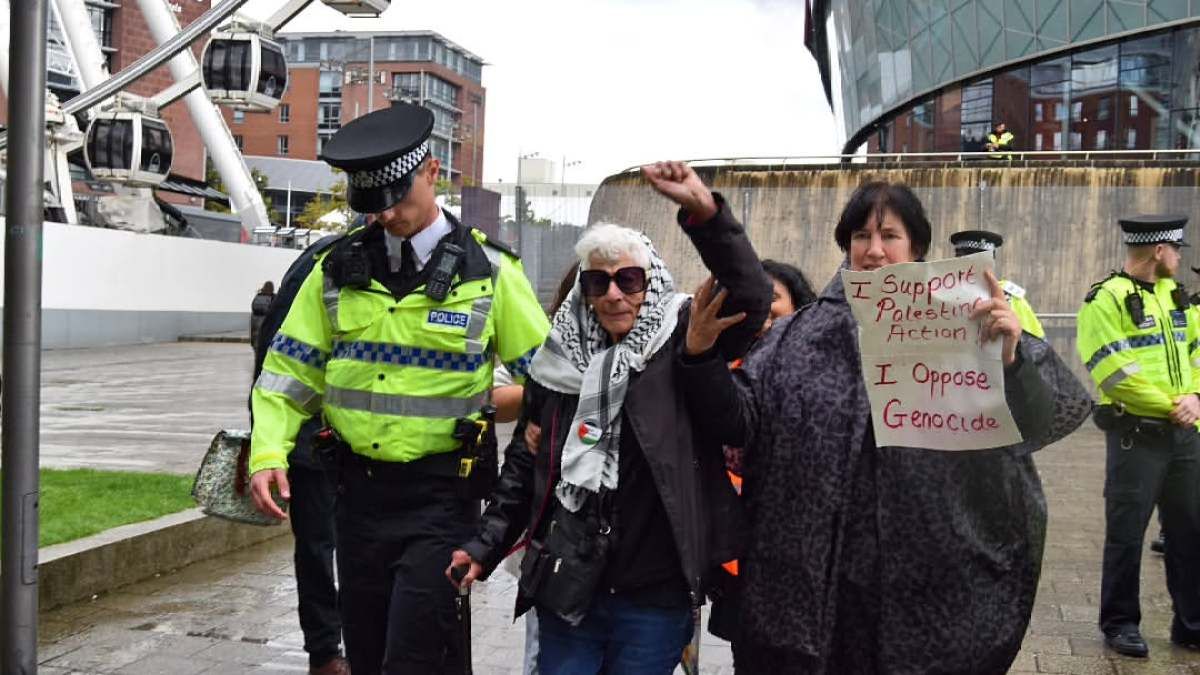
On 1 October 2026, Margaret Owen, a 94‑year‑old Jewish barrister known for her human‑rights work, was taken into police custody during a pro‑Palestine demonstration in Liverpool. She was holding a banner supporting Palestine Action, a group the UK government has listed as a proscribed terrorist organization. Owen later told reporters, “I’ve been trying to get arrested for quite some time,” underscoring the symbolic nature of her detention.
The arrest did not happen in a vacuum; it sits at the intersection of several structural forces. First, the UK Terrorism Act 2000 and its 2024 amendment broaden the definition of support for proscribed groups, allowing police to intervene even when the alleged support is symbolic. This legal elasticity serves the Home Office’s goal of projecting a tough stance on terrorism, especially after a series of high‑profile attacks in Europe that have heightened public anxiety.
Second, political survival drives the narrative. The ruling Conservative Party faces mounting criticism over its handling of the Israel‑Gaza conflict, with opposition parties and grassroots movements demanding a clearer stance on human‑rights violations. By framing pro‑Palestinian activism as a security threat, the government can deflect scrutiny and rally law‑and‑order voters.
Third, the police force itself has institutional incentives. Funding formulas increasingly tie resources to counter‑terrorism outcomes, and officers receive performance bonuses linked to arrests under the terrorism label. This creates a feedback loop where low‑risk, high‑visibility actions—such as detaining an elderly activist—become attractive targets for meeting quotas.
Fourth, international alliance math matters. The UK maintains a strategic partnership with Israel, including intelligence sharing and defense contracts. Demonstrating a hard line against groups perceived as supporting Palestinian resistance helps preserve that relationship, even as public opinion in Britain grows more sympathetic to the Palestinian cause.
Finally, media economics play a subtle role. Sensational stories about an elderly Jewish lawyer being arrested generate clicks and ad revenue, reinforcing a narrative that conflates legitimate protest with extremist activity. This commercial pressure nudges outlets toward headlines that emphasize the “terrorist” label rather than the legal nuances.
Margaret Owen’s age makes her case uniquely stark. At 94, she faces health risks that most younger detainees do not. The stress of police processing, potential loss of medication schedules, and the psychological impact of being treated as a security threat can exacerbate chronic conditions, leading to longer recovery times and increased medical expenses.
While Owen identifies as Jewish, her support for Palestinian rights challenges a monolithic portrayal of the community’s stance on the Israel‑Gaza conflict. Her arrest sends a warning to other Jewish activists who might wish to voice dissent, potentially silencing a segment of the community that already navigates complex identity politics.
Pro‑Palestine groups across the UK rely on visible, diverse participation to sustain public attention. The removal of a high‑profile figure like Owen can dampen morale, discourage older participants, and create a perception that the state will not tolerate cross‑generational activism. This could shrink the movement’s reach and limit fundraising and outreach efforts.
Defending a 94‑year‑old in a terrorism‑related case demands significant legal expertise and funding. Charitable law firms and human‑rights NGOs must divert scarce resources to a single case, leaving fewer funds for other vulnerable defendants facing similar charges.
Official statements from the Home Office focus on “national security” and the need to prevent “terrorist financing.” What is omitted is the fact that Owen’s actions were purely expressive—holding a banner and speaking at a rally—activities protected under the European Convention on Human Rights. By emphasizing the terrorist label, the government sidesteps a debate about the proportionality of the response.
Mainstream coverage largely mirrors the police narrative, mentioning Owen’s profession but rarely her age. This omission reduces public empathy; an elderly woman being treated as a security threat is more likely to provoke outrage than a younger activist. The lack of focus on her health and vulnerability serves to normalize the state’s heavy‑handed approach.
Organizations such as Amnesty International and the UN Human Rights Council have issued generic statements condemning the criminalization of peaceful protest, but they have not singled out the UK’s use of terrorism designations against symbolic speech. This silence may stem from diplomatic caution, as the UK is a key player in many multilateral forums, and overt criticism could jeopardize broader cooperation.
The UK’s defense industry, worth billions, benefits from a stable security narrative that justifies continued government spending on counter‑terrorism technologies. By expanding the scope of what counts as “terrorist support,” the state creates a market for surveillance tools, data‑analytics platforms, and private security contracts, feeding a lucrative industrial complex.
The next weeks will reveal whether Owen’s case becomes a flashpoint for legal challenges. Watch for a potential judicial review contesting the application of the terrorism label to non‑violent expression. Additionally, monitor parliamentary debates on the 2024 amendment to the Terrorism Act; opposition MPs have pledged to introduce a motion for a “rights‑impact assessment.” On the street level, note whether other senior activists step forward, testing the limits of the state’s willingness to arrest high‑profile, vulnerable individuals. Finally, keep an eye on diplomatic signals from Israel and the United States, as any shift in their public stance on the UK’s counter‑terrorism approach could influence future policy adjustments.
The arrest of a 94‑year‑old barrister is more than a headline; it is a lens through which the balance of security, civil liberties, and political expediency can be examined. Understanding who benefits, who suffers, and what is being left out helps ordinary citizens see the power dynamics shaping their democratic rights.
She was detained under the UK Terrorism Act because she displayed support for Palestine Action, a group listed as a proscribed terrorist organization, even though her actions were non‑violent expression.
Her legal team can seek a judicial review arguing that the terrorism label was misapplied to peaceful speech, and they may also invoke rights under the European Convention on Human Rights.
Source referenced: ALJAZEERA
This brief was synthesized by our Editorial Engine and reviewed by The Ground Narrative team.