TRENDING

Tuesday, 6 October 2026
----------------------
25 Rabi' Al-Thani 1448 AH
A media investigation has accused the chief election commissioner of unilateral roll changes, sparking protests led by a satirical movement and opposition parties. The clash reveals deep power tensions and a looming test for the Modi government.
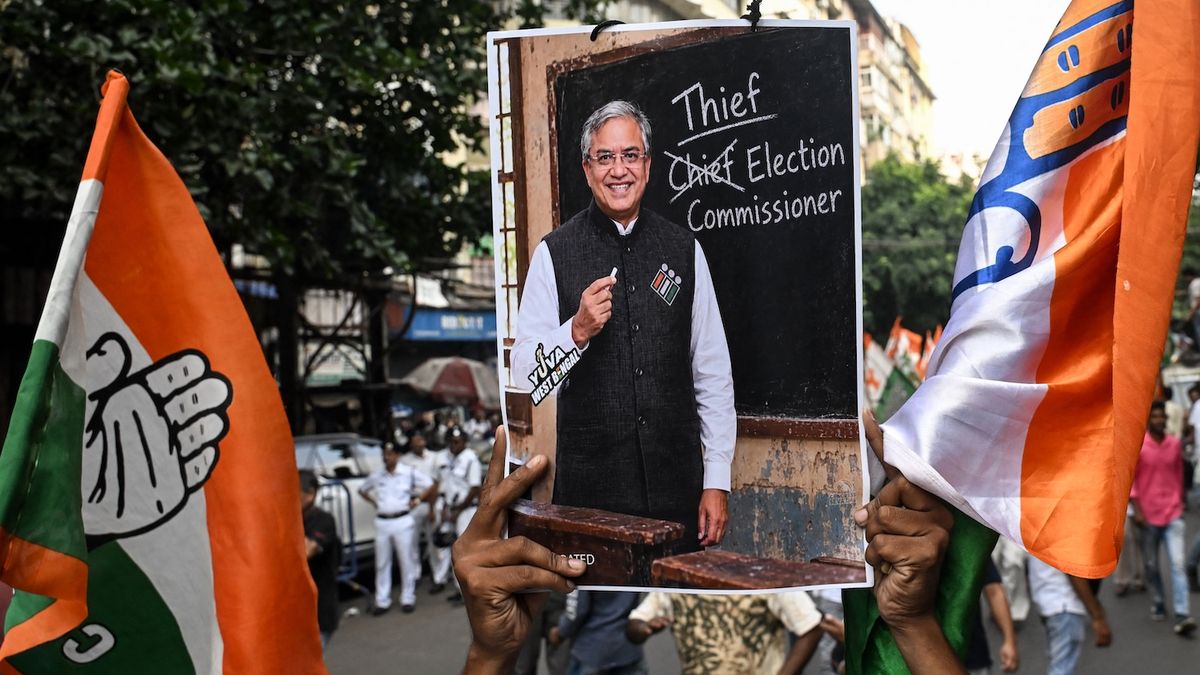
In late September 2026, The Indian Express published a damning report that the sitting chief election commissioner, Gyanesh Kumar, allegedly altered voter rolls without consulting his two deputies, violating the long‑standing unanimity rule. The revelations ignited a wave of street protests, most prominently organized by the so‑called Cockroach Janta Party, a satirical group that has recently turned into a rallying point for disaffected youth. The movement set an ultimatum for Kumar’s resignation by September 26 and threatened a massive demonstration in Mumbai on October 2, coinciding with Mahatma Gandhi’s birthday.
The Special Intensive Revision (SIR) of electoral rolls, launched in 2025, is officially framed as a cleanup to excise illegal immigrants and duplicate entries. However, the timing of the roll‑culling—aligned with state elections in Bihar, Tamil Tamil Nadu, and West Bengal—creates a direct political lever for the ruling BJP. By reducing the number of registered voters in opposition strongholds, the party can tilt marginal constituencies in its favor. The law passed in 2023 that altered the appointment mechanism for election commissioners further consolidates executive influence, allowing the prime minister’s office greater sway over the commission’s leadership.
Prime Minister Narendra Modi entered his third term with a record of electoral victories, yet his political capital is increasingly tied to the perception of a fair electoral process. Any hint that the election machinery is compromised threatens the narrative of a "clean" democracy that the BJP has cultivated. Consequently, the government’s public dismissal of the Express report as “baseless” serves to protect Modi’s image of invincibility while buying time to manage the fallout.
The opposition, led by the Congress party, lacks a unified front but shares a common interest in exposing alleged roll manipulation. By aligning with the Cockroach movement, Congress hopes to broaden its appeal beyond traditional party loyalists and tap into the youthful energy that propelled the recent resignation of Education Minister Dharmendra Pradhan. The movement’s demand for an independent investigation also forces the BJP to confront a legal challenge that could reach the Supreme Court, a venue where the party’s influence is comparatively weaker.
The fact that a mainstream newspaper could publish such a detailed investigation suggests a modest revival of investigative journalism in India. While state‑aligned outlets continue to echo the government line, independent media and digital platforms are amplifying the protest narrative, giving the Cockroach movement a megaphone that reaches urban and semi‑urban voters alike.
The SIR process has already removed more than nine million names, with a disproportionate share of those being from Muslim, Dalit, and low‑income communities who often lack the documentation to contest deletions. For a farmer in West Bengal whose name was struck off, the loss means not only a denied vote but also exclusion from welfare schemes tied to voter registration, such as subsidized electricity and crop insurance.
The Cockroach movement is largely composed of university students and recent graduates who face a bleak job market. Their participation in protests carries the risk of police detention, loss of scholarships, and future employment blacklisting. Families of protesters report heightened anxiety and financial strain as members miss work to attend rallies.
Large‑scale demonstrations in Mumbai and other metros threaten to stall commercial activity. Vendors in protest zones report lost sales, while transport operators anticipate reduced ridership. The uncertainty surrounding the upcoming state elections also discourages investment, as businesses await clarity on whether the electoral roll changes will be rolled back.
Official statements repeatedly label the allegations as politically motivated, emphasizing the commission’s “track record of integrity.” What is omitted is the strategic benefit the ruling party gains from a leaner voter list in opposition‑leaning states. By framing the issue as a partisan attack, the BJP seeks to delegitimize both the media expose and the protest movement.
Several large conglomerates have publicly pledged financial support to the BJP’s election campaigns. While not directly linked to the roll‑culling, the broader ecosystem of patronage creates an incentive for the party to maintain a favorable electoral map, a factor rarely discussed in official briefings.
The 2023 amendment that shifted the appointment authority for election commissioners from a bipartisan committee to a cabinet‑led panel is barely mentioned in public discourse. This change effectively reduces the commission’s independence, allowing the executive to install a compliant chief who can steer roll revisions without internal dissent.
- Supreme Court petitions: Both the two deputies and opposition parties have filed petitions demanding a judicial review of Kumar’s actions and the SIR process. The court’s timeline and any interim orders will signal how much legal space the BJP has to maneuver.
- October 2 protest: The scale and police response to the planned Mumbai demonstration will be a litmus test for the government’s tolerance of dissent. Heavy crackdowns could fuel further mobilization, while a permissive stance might be read as a concession.
- State election outcomes: Upcoming polls in Bihar, Tamil Nadu, and West Bengal will reveal whether the roll revisions have materially altered vote shares. Any unexpected swings toward the BJP could validate concerns about manipulation.
- International reactions: Foreign governments and multilateral bodies have begun monitoring the situation. Statements from the United States, European Union, and UN on electoral integrity could pressure the Modi administration to adopt more transparent reforms.
- Media coverage trends: The persistence of investigative reporting on the election commission will indicate whether the press can sustain pressure or will be eclipsed by state‑aligned narratives.
The coming weeks will determine whether the Cockroach movement remains a flash‑in‑the‑pan protest or becomes a catalyst for a broader re‑examination of India’s electoral architecture. For ordinary citizens, the outcome will decide whether their names stay on the list that determines who governs their daily lives.
SIR is a government‑led process that began in 2025 to remove duplicate, ineligible, or illegal entries from India's electoral rolls. Critics say it disproportionately targets minority and low‑income voters.
The chief commissioner is supposed to act with the consent of two deputies, a rule meant to safeguard independence. Bypassing that process undermines the commission’s credibility and raises questions about political interference.
While originally a satirical group, its recent mass mobilizations have forced mainstream parties to address its demands, showing that organized youth dissent can shape political agendas in India.
Source referenced: FOREIGNPOLICY
This brief was synthesized by our Editorial Engine and reviewed by The Ground Narrative team.