TRENDING

Tuesday, 6 October 2026
----------------------
25 Rabi' Al-Thani 1448 AH
Following a major regional conflict and a shift in leadership, Iran's nuclear program enters a critical phase marked by conflicting signals and a notable silence on its religious ban on nuclear weapons. The international community grapples with declining oversight and the potential for a hardened Iranian resolve.
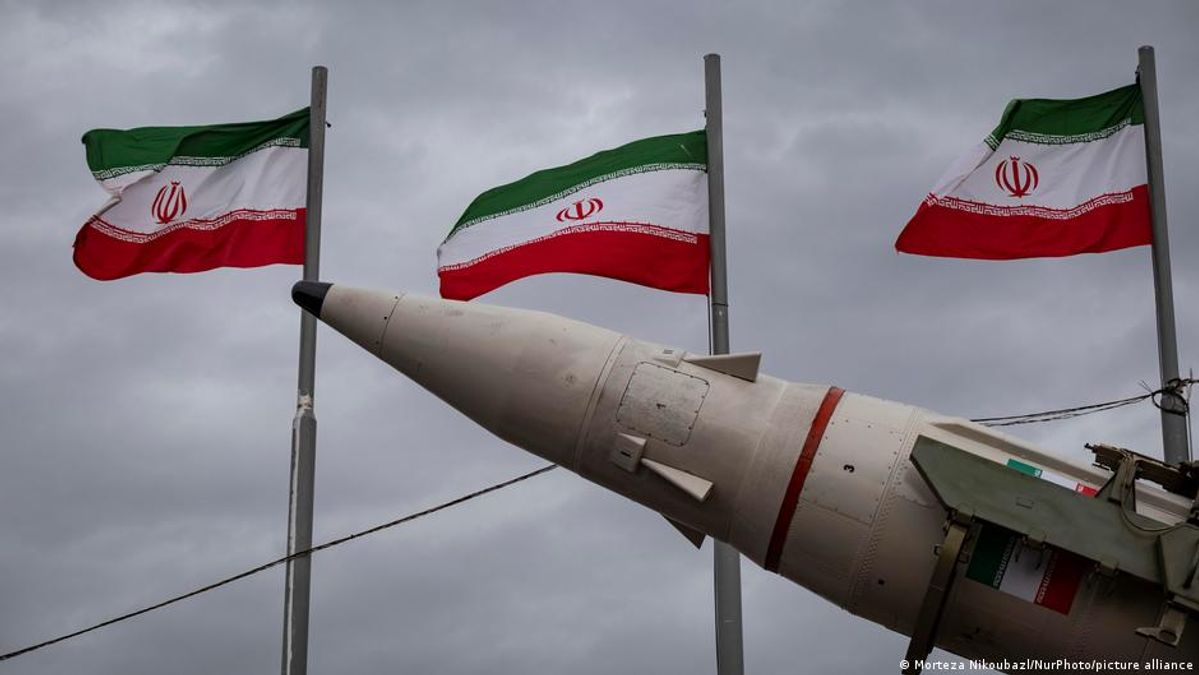
Iran's nuclear program is navigating its most critical period yet, following a significant US-Israel conflict in 2026, dubbed 'Operation Epic Fury' and 'Operation Roaring Lion,' which included airstrikes targeting Iranian nuclear facilities and the killing of Supreme Leader Ali Khamenei. In the aftermath, conflicting signals emerge: President Masoud Pezeshkian expresses readiness for international inspections and uranium dilution under a comprehensive agreement, while military figures like Mohsen Rezaei openly discuss withdrawing from the Treaty on the Non-Proliferation of Nuclear Weapons (NPT). Meanwhile, satellite imagery reveals active reconstruction of damaged underground sites, and the International Atomic Energy Agency (IAEA) reports dramatically accelerating enrichment to 60% purity, even as its oversight declines. A critical development is the silence of the new Supreme Leader, Mojtaba Khamenei, on his father's long-standing religious fatwa banning nuclear weapons.
The 2026 conflict and the targeting of Iran's leadership and scientists appear to have fundamentally reshaped Tehran's strategic calculus. Rather than deterring, these actions seem to have hardened Iran's resolve, pushing it towards a more assertive nuclear posture, driven by a perceived existential threat. The internal debate, as reflected in the differing statements from diplomatic and military figures, is less about a simple 'hardliner vs. moderate' split and more about the regime's survival strategy in a post-conflict environment. Mojtaba Khamenei's conspicuous silence on the nuclear fatwa is a powerful, deliberate signal. It suggests a weakening of the internal faction opposed to nuclear weapons and allows the regime strategic ambiguity, keeping its options open without a formal doctrinal shift. For the US and Israel, the long-standing policy of 'never allowing Iran to have a nuclear weapon' and the strategy of 'maximum pressure' are now seen by some analysts as having inadvertently accelerated Iran's nuclear ambitions, creating the very scenario they sought to prevent. The IAEA, with severely restricted access, finds itself increasingly unable to provide definitive assessments, creating a dangerous information vacuum that fuels speculation and further destabilizes the region.
The human cost of this escalating nuclear standoff is borne primarily by ordinary citizens, both within Iran and across the wider Middle East. Inside Iran, years of sanctions, exacerbated by the recent conflict, have crippled the economy, diverting resources from public welfare to military and nuclear programs. The constant threat of renewed conflict hangs over the population, impacting daily life, economic stability, and future prospects. Regionally, the prospect of a nuclear-armed Iran risks triggering a dangerous arms race, compelling other nations like Saudi Arabia to consider their own nuclear capabilities. This proliferation would exponentially increase the chances of future conflicts, with devastating consequences for civilian populations already reeling from decades of instability. The erosion of the global non-proliferation framework, a direct consequence of Iran's actions and the international community's inability to enforce compliance, makes the entire world a less secure place, raising the specter of nuclear conflict for generations to come.
What is often downplayed or omitted in official statements is the paradoxical outcome of deterrence strategies. The US and Israeli military actions and sanctions, intended to prevent Iran from acquiring nuclear weapons, may have inadvertently convinced Tehran that only a nuclear deterrent can guarantee its long-term survival against external threats. This narrative shift, from a 'peaceful' program to a potential 'existential' one, is a critical, unspoken consequence. Furthermore, the strategic ambiguity surrounding Mojtaba Khamenei's silence on the fatwa is not merely an oversight; it's a sophisticated play. It allows Iran to maintain the diplomatic facade of non-proliferation while simultaneously signaling a potential shift in doctrine to its internal hardliners and external adversaries. This deliberate uncertainty is a powerful tool, keeping the world guessing about Iran's true intentions. Finally, the limitations of intelligence, as highlighted by experts, mean that claims of absolute certainty about Iran's nuclear decision-making are often politically motivated, masking the dangerous reality that no one truly knows how close Iran is to a bomb without verifiable IAEA access.
Observers should closely watch for any formal statements or actions from Mojtaba Khamenei regarding the nuclear fatwa; its reaffirmation or explicit abandonment will be a definitive signal of Iran's future nuclear posture. Further, monitor Iran's engagement with the NPT – a formal withdrawal would escalate tensions dramatically, while continued non-compliance will test the limits of international patience. The IAEA's ongoing struggle for access to Iranian facilities will remain a key indicator of transparency, or lack thereof. Any new reports on the expansion or completion of Iran's underground nuclear infrastructure will signify continued progress. Finally, pay close attention to the reactions from regional powers, particularly Saudi Arabia and other Gulf states, as their responses to a potentially nuclear-armed Iran could dictate the future stability of the entire Middle East.
Source referenced: DW
This brief was synthesized by our Editorial Engine and reviewed by The Ground Narrative team.