TRENDING

Tuesday, 6 October 2026
----------------------
25 Rabi' Al-Thani 1448 AH
A recent summit between US and Chinese leaders signals a potential easing of tensions, prompting India to re-evaluate its strategic position and the foundational assumptions of its partnerships.
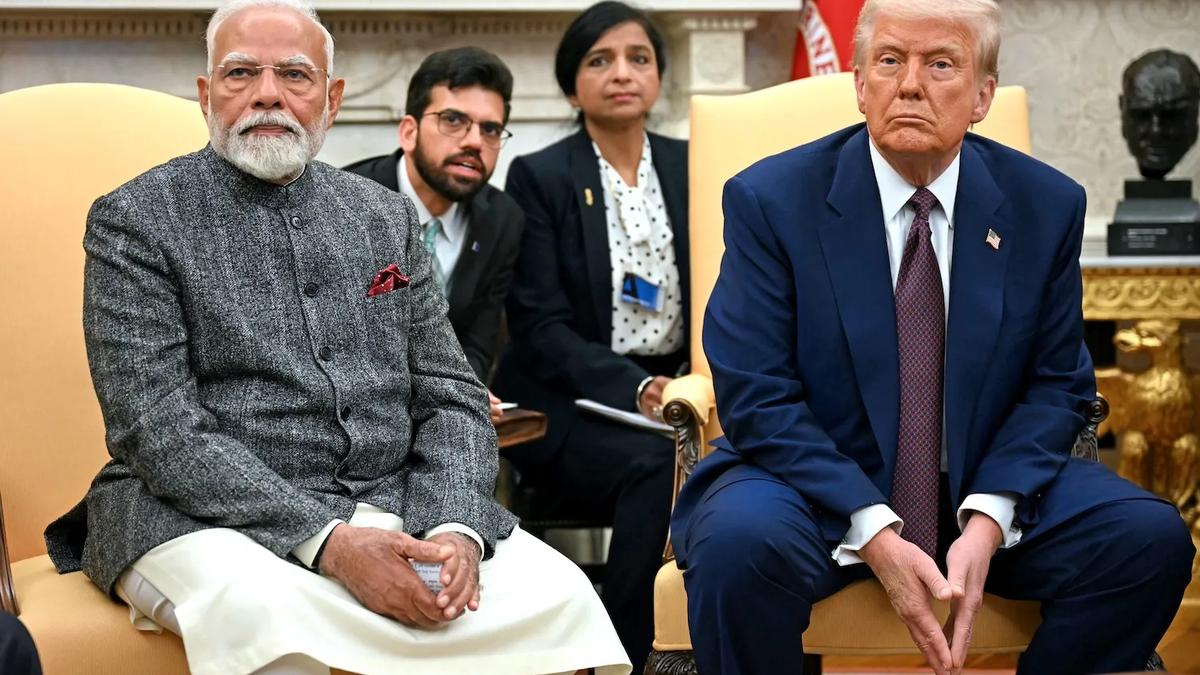
Last week, US President Donald Trump and Chinese President Xi Jinping met at the White House, agreeing to a partial detente. Their discussions led to commitments to lower some tariffs, explore cooperation in energy and trade, and maintain open lines of communication. This high-level engagement signals a mutual desire to de-escalate, or at least better manage, the intense bilateral tensions that have defined their relationship for years.
The prospect of more stable US-China relations fundamentally alters the geopolitical chessboard, particularly for India. For years, the strategic dimension of the US-India partnership has been heavily 'glued' by a shared perception of China as a primary security threat. This common concern fueled increased defense cooperation, revitalized the Quadrilateral Security Dialogue (Quad), and spurred collaborations in critical technologies. However, this new detente suggests that both Washington and Beijing, driven by their own domestic economic pressures and global ambitions, are seeking a tactical pause. For the United States, managing economic headwinds and potentially preparing for an election cycle could necessitate a less confrontational stance. For China, a breather from trade wars allows focus on internal development and long-term strategic goals. India, which has leveraged its position as a crucial counterweight to China for the US, now faces a recalibration. While the US-India relationship is multifaceted, encompassing trade, education, and space, a diminished strategic rationale could reduce India's leverage and require it to reassess its own hedging strategies, which have included parallel efforts to manage its own relationship with Beijing.
The human cost of shifting power dynamics often falls on those far from the negotiating tables. For India, a reduction in US-China tensions could paradoxically bring both relief and new anxieties. On one hand, a less confrontational China might reduce provocations along India's disputed border, offering a measure of peace to communities in regions like Ladakh who have borne the brunt of military standoffs, including the deadly 2020 clashes. On the other hand, the foundational assumptions of India's strategic alignment are being tested. If the US-India partnership becomes less about countering China and more about transactional economics, Indian industries and workers reliant on strategic defense ties or specific trade agreements could face uncertainty. Furthermore, the broader economic stability that comes from clear strategic alliances might be undermined, affecting investor confidence and long-term development plans. The Indian public, often caught between the rhetoric of strong alliances and the realities of great power maneuvering, must now navigate a world where its primary partners may find common ground with its primary rival, potentially leaving India to shoulder more of its own strategic burden.
What official statements from Washington and Beijing downplay is the fragility and transactional nature of this detente. This is not a fundamental shift in long-term rivalry but a temporary, politically expedient easing of tensions driven by immediate national interests, likely including domestic economic pressures and upcoming political cycles. Neither superpower is abandoning its core strategic objectives or its competition for global influence. For India, the unspoken truth is that its strategic value to the US as an explicit counter-China force might diminish, forcing Delhi to confront the 'trust gap' that has always existed beneath the surface of the partnership. Furthermore, the US's own domestic political landscape, particularly the unpredictable foreign policy of a potential second Trump administration, poses a significant, often unacknowledged, risk to India. The threat of US sanctions over India's continued imports of Russian oil, for instance, represents a more immediate and tangible threat to US-India ties than any US-China summit, yet it is rarely framed as such in official discourse. This highlights how domestic political imperatives in Washington can override broader strategic alignment, leaving allies like India in a precarious position.
Readers should watch for several key indicators. First, observe the durability of the US-China detente: Is this a sustained effort to manage competition, or a temporary truce that will quickly dissolve once immediate objectives are met? Second, monitor India's strategic recalibration: Will Delhi lean more heavily into its own multi-alignment strategy, strengthening ties with other partners beyond the Quad, or will it seek to re-emphasize its indispensable role in countering China? Third, pay close attention to economic friction points between the US and India, particularly regarding tariffs and energy imports, as these could become more prominent drivers of bilateral relations than shared security concerns. Finally, keep an eye on China's actions in the Indo-Pacific and along its border with India; any continued provocations would quickly expose the limits of the US-China detente and reaffirm India's strategic rationale.
Source referenced: FOREIGNPOLICY
This brief was synthesized by our Editorial Engine and reviewed by The Ground Narrative team.