TRENDING

Monday, 5 October 2026
----------------------
24 Rabi' Al-Thani 1448 AH
Pakistan's Foreign Minister engaged in a crucial phone call with his Bahraini counterpart, discussing an 'Islamabad MoU' that led to a regional ceasefire. This interaction highlights Pakistan's growing role as a diplomatic facilitator in the Middle East and signals deepening bilateral relations with Bahrain.
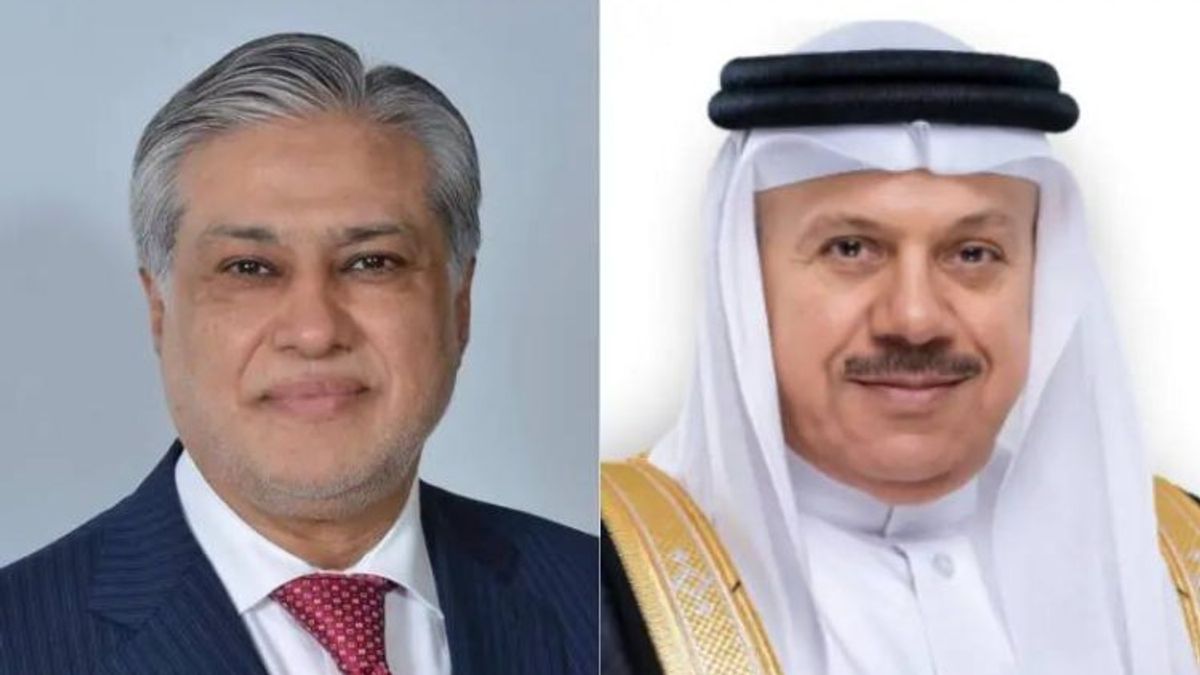
On Sunday, June 28, 2026, Pakistani Foreign Minister Mohammad Ishaq Dar held a significant telephone conversation with Bahraini Foreign Minister Abdullatif bin Rashid Al Zayani. The discussion, confirmed by the Pakistani Ministry of Foreign Affairs, centered on the "evolving regional situation" following the signing of a pivotal "Islamabad MoU" and Pakistan's instrumental efforts in achieving a subsequent ceasefire. This diplomatic exchange underscores Pakistan's proactive engagement in Middle Eastern affairs and signals a potential recalibration of regional influence dynamics.
The core of the discussion revolved around the recently concluded "Islamabad MoU," an agreement whose specific details remain undisclosed in the immediate reporting but is clearly understood to have been a significant diplomatic achievement. The Bahraini Foreign Minister's explicit gratitude for Pakistan's "efforts to achieve the ceasefire" strongly suggests that the MoU was a peace or de-escalation agreement, likely addressing a conflict or significant tension within the broader Middle East region. While the precise conflict remains unspecified, the involvement of Bahrain indicates its direct relevance to Gulf security and stability. Pakistan's role as a facilitator in this process positions it as a crucial mediator, capable of fostering dialogue and de-escalation in complex regional disputes.
Pakistan's engagement in facilitating such an agreement aligns with its broader foreign policy objectives, which often include promoting regional peace and stability, particularly in the Islamic world. By successfully mediating a ceasefire, Pakistan enhances its diplomatic capital and soft power, demonstrating its capacity to act as a constructive force beyond its immediate South Asian neighborhood. This move could also serve to diversify Pakistan's strategic partnerships and reduce its reliance on traditional alliances, fostering stronger ties with Gulf Cooperation Council (GCC) states like Bahrain. For Pakistan, a stable Middle East is crucial for its energy security, trade routes, and the welfare of its large expatriate workforce in the Gulf.
From Bahrain's perspective, the gratitude expressed by Foreign Minister Al Zayani and his stated intention to visit Pakistan "in the near future" highlight the critical importance of the ceasefire for the Kingdom's security and regional interests. Bahrain, a key member of the GCC, operates within a complex geopolitical landscape marked by various regional rivalries and security challenges. Any agreement that contributes to de-escalation and stability would be highly valued. The planned visit signifies a desire to solidify the newfound diplomatic momentum and potentially explore broader avenues of bilateral cooperation, extending beyond security to economic, cultural, and political spheres. This deepening engagement could provide Bahrain with an additional diplomatic partner and a voice that has demonstrated effectiveness in regional mediation.
The telephone conversation and the impending visit are indicative of a strengthening bilateral relationship between Pakistan and Bahrain. While both nations have historically maintained cordial ties, Pakistan's recent diplomatic success in facilitating the ceasefire appears to have elevated the relationship to a new strategic level. Such high-level diplomatic exchanges often pave the way for increased collaboration in various sectors, including defense cooperation, trade, investment, and cultural exchange. For Pakistan, strengthening ties with GCC states is vital for economic remittances, energy imports, and strategic alignment. For Bahrain, diversifying its diplomatic outreach and partnering with a nation like Pakistan, which possesses significant military and human resources, offers strategic advantages.
Looking ahead, the "Islamabad MoU" and the subsequent ceasefire could serve as a precedent for Pakistan's continued involvement in regional peace initiatives. The success of this mediation effort might encourage other regional actors to seek Pakistan's diplomatic assistance in resolving disputes. The upcoming visit by the Bahraini Foreign Minister will likely focus on consolidating the gains from the ceasefire, discussing mechanisms for its long-term sustainability, and exploring concrete steps to enhance bilateral cooperation. This event, though seemingly a single diplomatic interaction, represents a significant development in regional geopolitics, underscoring the dynamic nature of alliances and the evolving roles of various states in shaping the Middle Eastern security architecture. It highlights how effective diplomacy, even when details are scarce, can yield substantial geopolitical dividends for the mediating party and contribute to broader regional stability.
Editor's Note: The specific conflict addressed by the 'Islamabad MoU' and ceasefire is not mentioned in the article. The analysis proceeds on the assumption that it is a significant regional conflict relevant to Bahrain's security, without fabricating details.
Source referenced: CGTN
This brief was synthesized by our Editorial Engine and reviewed by The Ground Narrative team.


