TRENDING

Monday, 5 October 2026
----------------------
24 Rabi' Al-Thani 1448 AH
OPEC+ nations are increasing oil production as global energy markets stabilize following the US-Israel war on Iran and the reopening of the Strait of Hormuz. This strategic adjustment aims to balance supply with recovering demand while navigating potential oversupply.
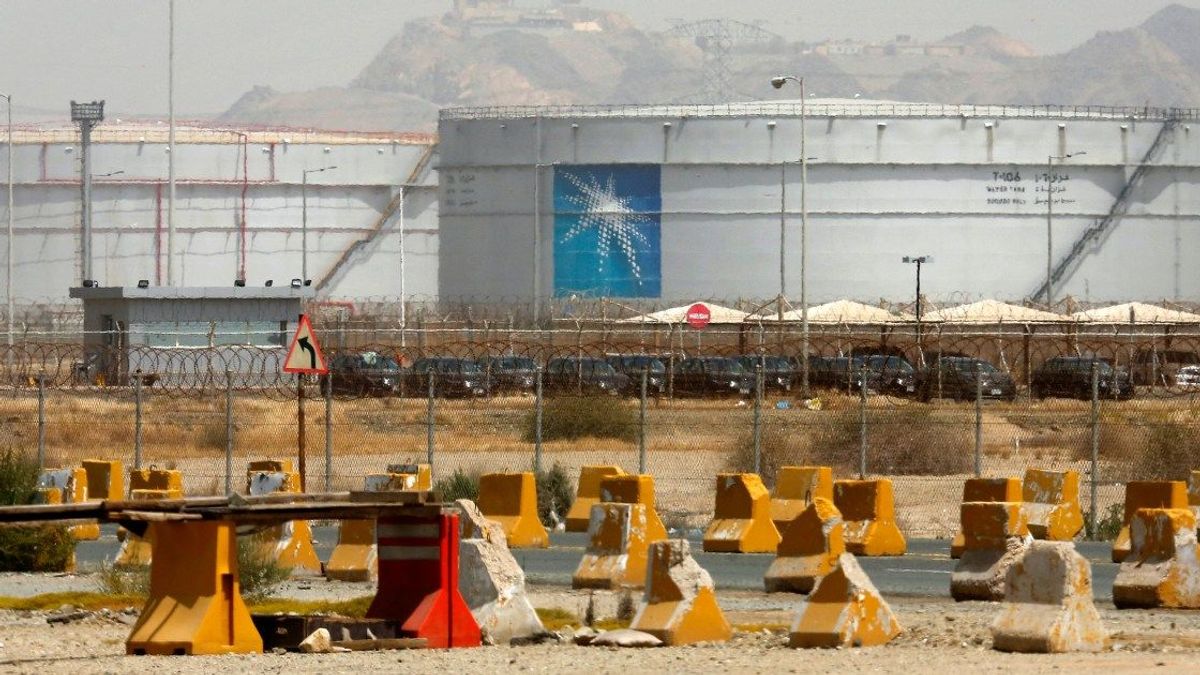
The Organization of the Petroleum Exporting Countries and its allies (OPEC+) have announced a decision to incrementally boost oil production, signaling a cautious response to the tentative stabilization of global energy markets following the recent US-Israel war on Iran. This move, detailed after a virtual meeting of officials on July 6, 2026, underscores the complex interplay between geopolitical events, supply chain disruptions, and the strategic decisions of major oil producers.
The Production Increase and Its Context
Seven key OPEC+ members—Saudi Arabia, Russia, Iraq, Kuwait, Kazakhstan, Algeria, and Oman—will collectively increase their output by 188,000 barrels per day (bpd) starting in August. This marks the fifth consecutive monthly increase, gradually unwinding the significant production cuts implemented in 2023. The initial cuts in April and November 2023 were a direct response to a period of global economic uncertainty, characterized by bank collapses and a subsequent sell-off in commodities, including oil. However, the more recent and severe market disruptions stemmed from the US-Israel war on Iran, which commenced on February 28, 2026.
The conflict led to Iran's effective closure of the Strait of Hormuz, a critical maritime chokepoint through which approximately one-fifth of global oil and liquefied natural gas supplies passed before the war. This blockade severely constrained global crude flows, forcing OPEC+ members to drastically reduce production as regional storage capacity became saturated with unshipped barrels. Total OPEC+ production plummeted from 42.77 million bpd in February to 33.13 million bpd in May, highlighting the profound impact of the conflict on global supply.
Geopolitical Shifts and Market Recovery
The decision to increase production comes as energy markets show signs of recovery, primarily driven by the de-escalation of tensions in the Persian Gulf. A significant turning point was the signing of a memorandum of understanding (MOU) between US President Donald Trump and Iranian President Masoud Pezeshkian on June 17, aimed at ending the war. This diplomatic breakthrough has fostered hopes for a permanent cessation of hostilities and a return to normal shipping operations in the Strait of Hormuz.
Since the MOU, traffic in the strait has begun to tick up, although it remains significantly below pre-conflict levels. For instance, on July 2, there were 38 confirmed transits, a notable increase from the period of the blockade but still far from the roughly 130 daily crossings observed before the war. This gradual reopening has allowed a substantial backlog of crude to reach the market. Saudi Arabia has reportedly more than doubled its shipping volume since June 17 compared to the preceding three months, and Iran has pushed nearly 50 million barrels of its crude to market since the US naval blockade of its ports was lifted.
Strategic Implications and Market Dynamics
The easing of supply constraints has had a direct impact on global oil prices. Brent crude oil prices, which briefly topped $126 a barrel in April during the height of the conflict, have now retreated to pre-war levels, with September futures trading around $72 a barrel. This price correction reflects the market's anticipation of increased supply and reduced geopolitical risk premium.
Market analysts, such as Fabien Yip of IG, suggest that OPEC+'s latest production increases are largely a “paper formality” in light of the real-world conditions affecting supply. Yip emphasizes that actual barrels were constrained for months by the Strait of Hormuz blockade, falling well short of quota. With that constraint now easing, the market is experiencing a surge of previously held-back crude. When combined with OPEC+'s incremental barrels, softer Chinese demand, and higher exports from the United States and Russia, the near-term outlook points towards a potential oversupply.
OPEC+'s statement reaffirms the organization's commitment to “closely monitor and assess market conditions,” emphasizing a “cautious approach” and “full flexibility to increase, pause or reverse” production adjustments. This cautious stance reflects the inherent volatility of the current geopolitical and economic environment. While the immediate crisis in the Strait of Hormuz appears to be receding, the long-term stability of the US-Iran peace agreement and the trajectory of global economic demand will be critical factors influencing future oil market dynamics. The organization's ability to adapt its supply strategy will be paramount in maintaining market equilibrium and preventing drastic price fluctuations that could destabilize the global economy.
The decision by OPEC+ to increase production, therefore, is not merely an economic adjustment but a strategic response to a rapidly evolving geopolitical landscape. It signals a move towards post-conflict normalization in global energy flows, yet it also highlights the delicate balance required to manage supply in an environment still recovering from significant disruptions and facing new challenges of potential oversupply.
Source referenced: ALJAZEERA
This brief was synthesized by our Editorial Engine and reviewed by The Ground Narrative team.


