TRENDING

Monday, 5 October 2026
----------------------
24 Rabi' Al-Thani 1448 AH
Iran holds a massive funeral for Supreme Leader Ali Khamenei, killed in a US-Israel war, as his son Mojtaba assumes leadership, signaling a critical juncture for the nation's internal stability and regional posture during an active conflict.
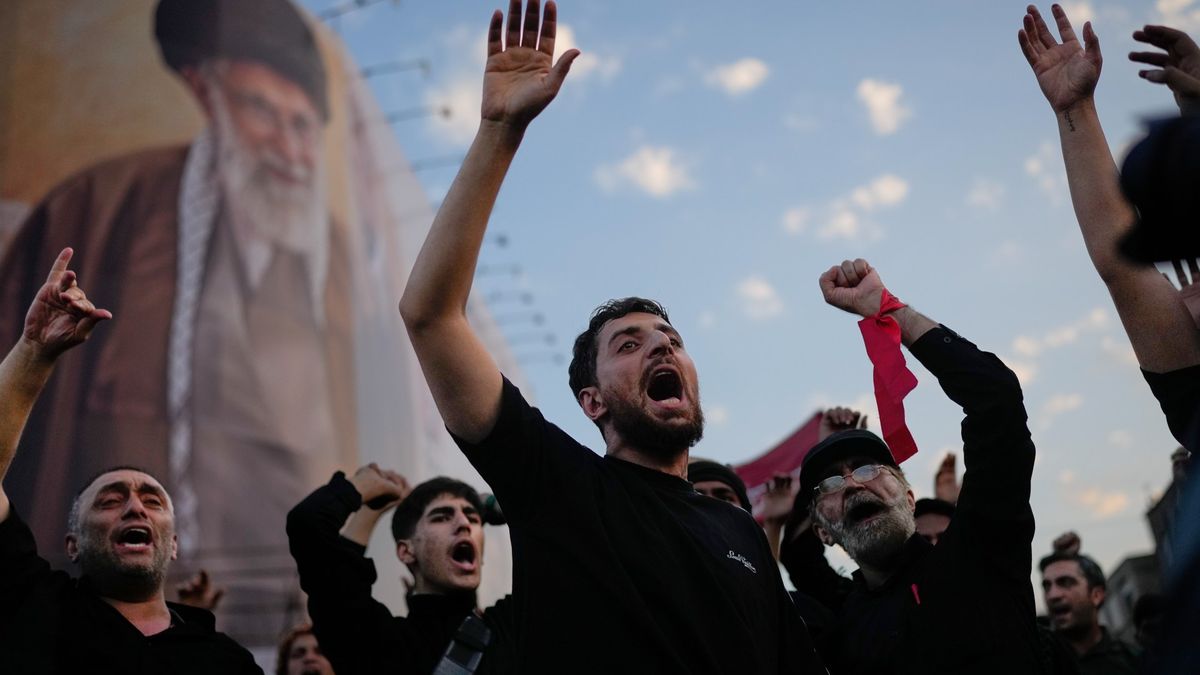
Iran is currently observing a period of profound national mourning and political transition following the death of its Supreme Leader, Ali Khamenei. Funeral processions, which commenced on July 6, 2026, in Tehran, have drawn immense crowds, with authorities taking extensive measures to manage the throngs of mourners. The scale of these events is reminiscent of the 1989 funeral for Khamenei's predecessor, Ruhollah Khomeini, which reportedly attracted 10 million people and resulted in significant casualties due to crowd surges. The current processions are not confined to the capital; they are scheduled to continue in the clerical hub of Qom on July 7, 2026, extend to the holy cities of Najaf and Karbala in Iraq on July 8, 2026, and culminate in Khamenei's burial in his hometown of Mashhad on July 9, 2026. This extensive itinerary underscores the religious and political significance of the leader and Iran's deep regional influence, particularly within the Shia world.
The circumstances surrounding Ali Khamenei's death are of paramount geopolitical importance. The Supreme Leader, along with four family members, was reportedly killed on February 28, 2026, in air strikes on his office in Tehran. Crucially, this event is described as occurring on the "first day of the United States-Israel war on Iran." This direct attribution of responsibility for the assassination of a sitting Supreme Leader to a joint US-Israeli military action marks an unprecedented escalation in regional tensions and international conflict. Such an act carries profound implications for state sovereignty, international law, and the rules of engagement in modern warfare. It transforms the funeral from a mere religious rite into a powerful symbol of national defiance, a rallying point for a nation actively engaged in conflict, and a stark reminder of the severe consequences of the ongoing war.
Amidst the national mourning and ongoing conflict, a critical political development has emerged: the ascension of Mojtaba Khamenei, Ali Khamenei's son, as the new Supreme Leader. This succession, indicated by mourners holding portraits of Mojtaba Khamenei, signals a potentially dynastic shift in Iran's leadership structure. The role of Supreme Leader, a position of ultimate religious and political authority, has historically been filled through a complex process involving the Assembly of Experts. A direct succession from father to son, while not entirely without precedent in other contexts, introduces new dynamics into the Islamic Republic's political system. It could signify a consolidation of power within the Khamenei family, potentially strengthening a particular faction within the Revolutionary Guard and the broader clerical establishment. The implications for Iran's internal political stability, the balance of power among various institutions, and the future direction of its domestic and foreign policies are substantial, especially as the nation navigates an active war.
The decision to extend the funeral processions to Iraq's holy cities of Najaf and Karbala is a clear demonstration of Iran's enduring regional influence and its strategic ties within the Shia crescent. These cities hold immense religious significance for Shia Muslims globally, and their inclusion in the funeral rites underscores Iran's role as a spiritual and political leader for many in the region. In the context of the US-Israel war on Iran, this move could be interpreted as an assertion of solidarity and a call for unity among Shia communities, potentially further entangling Iraq in the broader geopolitical conflict. The events serve as a powerful message to both internal and external audiences about the resilience of the Islamic Republic and its regional network, even in the face of extreme adversity.
The death of Ali Khamenei, particularly under the circumstances of an active war and alleged assassination, combined with the succession of his son, marks a pivotal moment for Iran and the wider Middle East. The new leadership under Mojtaba Khamenei faces immediate and immense challenges, including prosecuting an ongoing war with the United States and Israel, maintaining internal cohesion, and navigating complex regional dynamics. The funeral, while a period of mourning, also serves as a public display of strength and continuity for the regime. The world will be closely watching how the new Supreme Leader consolidates power, whether he maintains or shifts Iran's strategic posture, and how the nation responds to the profound geopolitical pressures it now faces. The trajectory of the US-Israel war on Iran, and indeed the stability of the entire region, will be significantly shaped by these unfolding developments.
Editor's Note: The analysis is based on the explicit statements in the provided article regarding the circumstances of Ali Khamenei's death ('killed on the first day of the United States-Israel war on Iran' in 'air strikes on his office in Tehran') and the succession of Mojtaba Khamenei ('Iran's new supreme leader, Mojtaba Khamenei, Ali Khamenei's son').
Source referenced: ALJAZEERA
This brief was synthesized by our Editorial Engine and reviewed by The Ground Narrative team.


