TRENDING

Sunday, 4 October 2026
----------------------
23 Rabi' Al-Thani 1448 AH
A powerful earthquake off Indonesia's Flores Island has claimed dozens of lives, exposing the enduring vulnerability of remote communities to seismic activity. This recurring tragedy highlights the systemic challenges of disaster preparedness and equitable development in one of the world's most tectonically active regions.
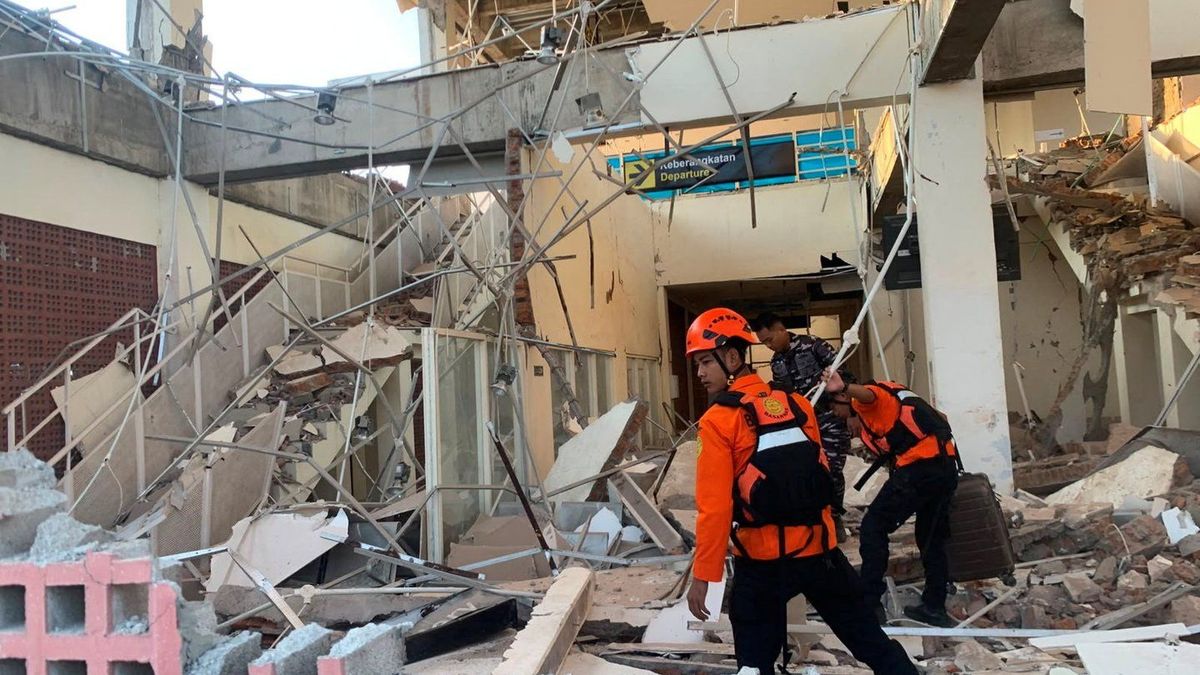
A powerful 7.7-magnitude earthquake struck off Indonesia's Flores Island, leading to dozens of confirmed fatalities. The seismic event triggered widespread panic and destruction, with rescue teams struggling to reach remote areas in East Nusa Tenggara amidst continuing aftershocks. The immediate aftermath has seen a desperate search for survivors and the grim assessment of damage to homes and infrastructure across the affected region.
Indonesia sits squarely on the Pacific Ring of Fire, a geological reality that dictates a constant cycle of earthquakes, tsunamis, and volcanic eruptions. This isn't an isolated incident but a predictable feature of life in the archipelago. The power dynamics at play involve the Indonesian government's perpetual struggle to balance rapid economic development with the immense, costly challenge of building resilient infrastructure and robust disaster preparedness systems across thousands of islands. Resources are finite, and the political imperative often leans towards visible growth projects rather than less glamorous, albeit critical, investments in earthquake-resistant building codes, early warning systems, and community-level readiness, particularly in far-flung regions. International aid often provides immediate relief but rarely addresses the underlying structural vulnerabilities that make each new disaster so devastating.
The human cost of this earthquake falls disproportionately on Indonesia's most vulnerable citizens. Those living in remote island communities, often reliant on informal housing constructed with limited resources, bear the brunt of the destruction. Lives are lost, families are displaced, and livelihoods rooted in fishing and subsistence agriculture are instantly shattered. Beyond the immediate casualties, the long-term impact includes psychological trauma, the disruption of education, and the erosion of already fragile local economies. These communities, often far from Jakarta's political and economic centers, have little voice in national policy discussions about infrastructure investment or disaster mitigation, yet they are the first to suffer when the earth moves.
What often goes unsaid in the immediate aftermath of such disasters is the systemic nature of the vulnerability. For many global audiences, each Indonesian earthquake appears as a standalone tragedy. However, for Indonesians, it's a recurring nightmare, and the international spotlight quickly fades. Governments and aid organizations focus on immediate response, but the deeper issues of uneven development, lax enforcement of building standards, and the sheer difficulty of reaching and supporting remote populations are often downplayed or framed as insurmountable challenges rather than solvable policy failures. There's also the silent toll of corruption, where funds allocated for resilient construction or disaster relief may be diverted, leaving communities even more exposed. The narrative rarely delves into how a nation perpetually rebuilding might finally break this cycle through sustained, equitable investment and stricter oversight.
Moving forward, observers should watch for the speed and equity of humanitarian aid distribution, particularly to the hardest-to-reach areas. Beyond immediate relief, the critical indicator will be the nature of the reconstruction efforts: Will they prioritize quick fixes to restore normalcy, or will there be a genuine, sustained commitment to building back better with resilient infrastructure and enforced safety standards? Furthermore, any shifts in national policy regarding disaster preparedness, especially for remote islands, will be telling. The true measure of power will not be in the immediate response, but in whether the powerful actors in Jakarta and the international community choose to address the systemic vulnerabilities that condemn Indonesia's poorest to repeatedly pay the highest price for its geological reality.
Source referenced: ALJAZEERA
This brief was synthesized by our Editorial Engine and reviewed by The Ground Narrative team.