TRENDING

Monday, 5 October 2026
----------------------
24 Rabi' Al-Thani 1448 AH
Hamas and Egyptian officials discuss a US-backed post-war plan for Gaza, but Israel's rejection of key terms leaves the proposal in uncertainty. The diplomatic stalemate prolongs the humanitarian crisis for millions of Palestinians.
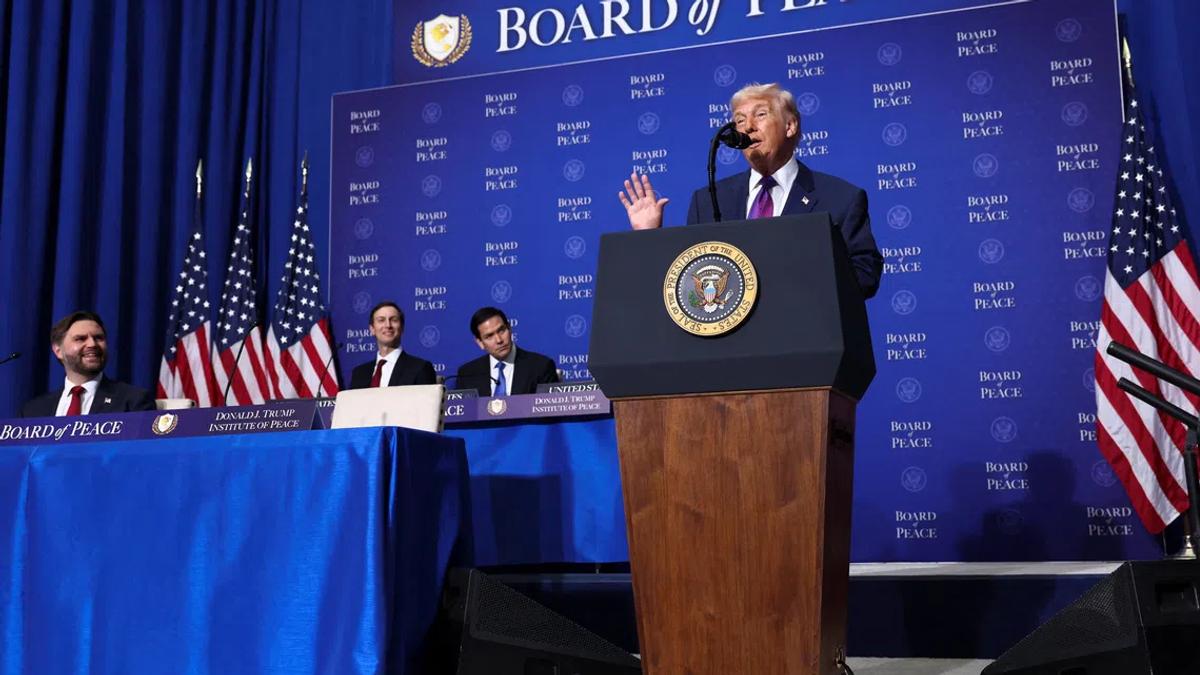
A Hamas delegation recently met with Egyptian intelligence chief Hassan Rashad in Cairo, engaging in discussions aimed at advancing a post-war plan for Gaza. This initiative, attributed to "US President Donald Trump’s Board of Peace," reportedly includes a provision for Hamas to disarm and transfer its weapons to a nascent technical committee tasked with governing the strip. However, Israeli Prime Minister Benjamin Netanyahu has publicly rejected the plan, vowing no Israeli withdrawal from Gaza until Hamas is fully disarmed.
At its core, this diplomatic dance is a negotiation of power and survival. Hamas, facing immense pressure and seeking to secure its political future, appears to be using the US-backed plan as a potential off-ramp from direct military confrontation. Their conditional offer to disarm, even if strategic, aims to shift the narrative and place the onus for peace on Israel, while simultaneously seeking international recognition or at least a path to de-escalation that preserves some form of their political influence. For Israel, Netanyahu's categorical rejection underscores a deep-seated distrust and a strategic objective to dismantle Hamas's military and political infrastructure entirely. His stance reflects domestic political pressures to deliver absolute security and avoid any outcome perceived as a victory for Hamas, making the demand for "full disarmament" a near-impossible precondition for negotiation. The United States, through its "Board of Peace" and envoy Jared Kushner, seeks to broker a deal that can be presented as a diplomatic achievement, aiming to stabilize a volatile region. However, its effectiveness is constrained by the fundamental divergence in the core demands of the primary actors. Egypt, along with Qatar and Turkey, acts as a critical mediator, driven by regional stability concerns and a desire to prevent further escalation that could spill over its borders. Their power lies in their ability to facilitate communication, but their capacity to compel concessions is limited.
The most profound cost of this diplomatic impasse is borne by the civilian population of Gaza. For millions, the promise of a "post-war plan" remains an abstract concept, while their daily reality is defined by continued displacement, destroyed infrastructure, and a severe lack of basic necessities. The political maneuvering in Cairo, Washington, and Jerusalem directly translates into prolonged suffering, with no clear end in sight to the humanitarian crisis. Children grow up amidst rubble, families struggle to access food and medical care, and the economy remains shattered. Each rejection, each stalled negotiation, means another day of uncertainty and hardship for those who have no voice in the high-level talks determining their fate. The hope for rebuilding and a return to normalcy is perpetually deferred, leaving an entire population in a state of limbo.
Several critical elements are either downplayed or omitted from official statements. Firstly, the precise composition and mandate of "US President Donald Trump’s Board of Peace" remain opaque. Is this a body with broad international backing or a more personalized initiative? Its perceived legitimacy and neutrality are crucial for any lasting solution, yet its structure and decision-making process are not transparent. Secondly, the term "disarmament" itself is a battleground. Hamas's stated readiness to "hand over its weapons" likely carries significant caveats and conditions for its political survival, which contrasts sharply with Israel's demand for complete and unconditional demilitarization. This semantic gap represents a fundamental chasm that current negotiations struggle to bridge. Finally, the proposed "nascent technical committee" for Gaza's governance lacks clear definition. Who would comprise it? What would be its authority, its funding, and its security guarantees? Without a robust, legitimate, and internationally supported governance structure, any disarmament deal risks creating a dangerous power vacuum.
All eyes will be on Jared Kushner's upcoming visit to the region. His ability to bridge the stated gaps between the parties will be a critical test of the plan's viability. Readers should also watch for any further disclosures regarding the 15-point plan's specifics, as these details will reveal the true extent of the concessions expected from each side. Crucially, the internal dynamics within both Hamas and the Israeli government will dictate their flexibility; any significant shifts in their domestic political landscapes could either open avenues for compromise or harden existing positions. Finally, the sustained engagement and leverage of regional mediators like Egypt, Qatar, and Turkey will be essential in keeping the diplomatic channels open and potentially offering incentives for de-escalation and agreement.
Source referenced: STRAITSTIMES
This brief was synthesized by our Editorial Engine and reviewed by The Ground Narrative team.


