TRENDING

Monday, 5 October 2026
----------------------
24 Rabi' Al-Thani 1448 AH
Keir Starmer's unexpected resignation as UK Prime Minister after just two years, despite a historic landslide victory, signals profound political instability in a major G7 nation. His downfall highlights challenges in leadership, vision, and economic management amidst a shifting global political landscape.
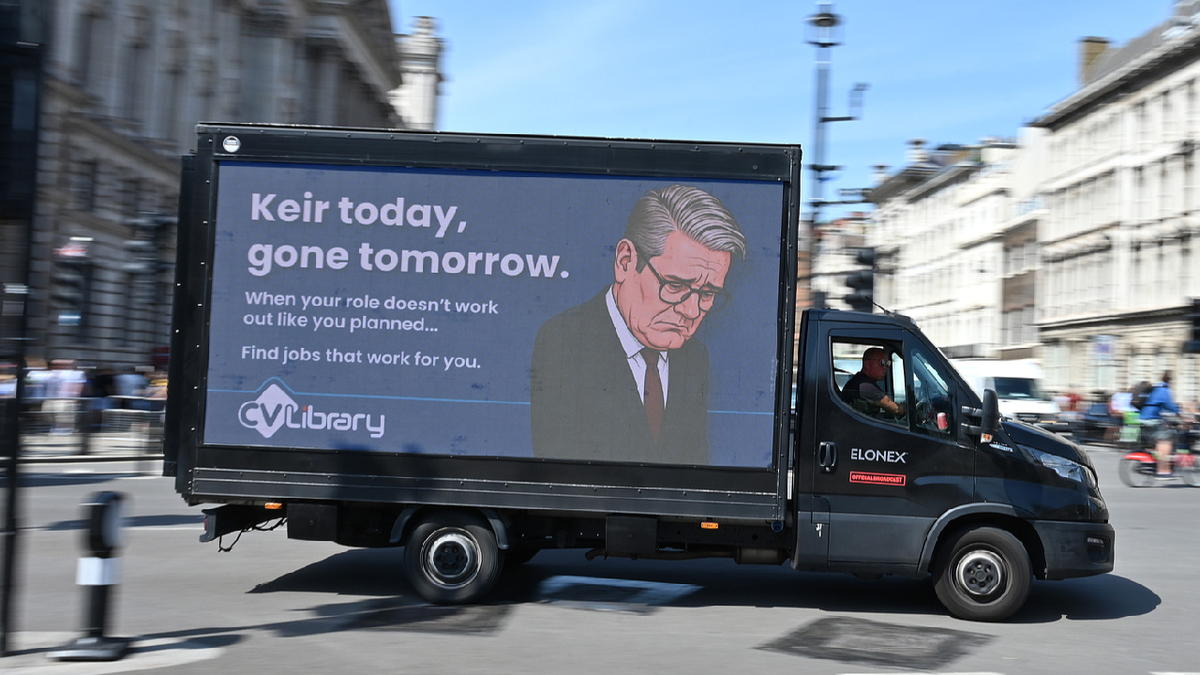
The political landscape of the United Kingdom has been rocked by the unexpected resignation of Prime Minister Keir Starmer, a mere two years after leading the Labour Party to one of its most significant electoral victories in July 2024. His departure on June 22, 2026, marks him as potentially the shortest-serving prime minister in the party's history, a stark contrast to the initial euphoria of his landslide win. This rapid decline from a position of immense power to political oblivion underscores profound challenges within modern democratic governance and the complexities of leading a major global economy.
Starmer's swift downfall, as observed by many commentators, was not a sudden collapse but rather a "stuttering downfall" rooted in several interconnected issues. Despite a record of delivery on key promises such as increasing the minimum wage, improving employment rights, and addressing hospital waiting lists, his premiership struggled to capture public imagination or secure deep-seated loyalty.
A primary factor was Starmer's perceived lack of a cohesive vision or guiding ideology. Unlike his potential successor, Andy Burnham, who champions "Manchesterism" – a clear platform of local politics, public control, and regional investment – Starmer famously rejected the notion of "Starmerism." This absence of a compelling narrative left many voters, and even members of his own party, unclear about his ultimate objectives. Polling data from the 2024 election indicated that only 9% of voters were very clear on what he stood for, highlighting a significant communication deficit from the outset.
Furthermore, Starmer faced considerable challenges in internal party management and public communication. Described as a technocrat rather than a "retail politician," he reportedly struggled to engage with backbench MPs and junior ministers, fostering a sense of detachment. This internal disconnect, combined with an inability to effectively articulate the complexities of national challenges to the wider public, left him vulnerable to more media-savvy populist rivals. His resignation speech, reportedly emphasizing "I did this… because of me," further underscored a perceived individualistic approach in a political system that often demands collective leadership.
The nature of his 2024 electoral victory also played a crucial role in what some have termed a "majority mirage." While securing a substantial 174-seat majority, Labour's vote share was historically low at 33.7%, coupled with a turnout of just 59.7%. This suggests that the victory was more a rejection of the previous Conservative government than an enthusiastic endorsement of Starmer's Labour. Such a mandate, while numerically strong in Parliament, lacked the deep popular legitimacy needed to weather subsequent storms, making the government susceptible to shifts in public sentiment.
Finally, the persistent economic headwinds facing the UK proved to be an insurmountable obstacle. Grappling with high national debt (equivalent to 95% of GDP), ballooning welfare payments, and significantly lower economic growth compared to pre-2008 levels, Starmer's government was constrained by the imperative to "reassure the markets." The annual cost of servicing debt had surged by £50 billion since 2021, with welfare payments also increasing by a similar amount. These fiscal pressures limited the government's room for maneuver, making it difficult to deliver transformative change and forcing tough compromises that were poorly communicated to a public struggling with a rising cost of living. As approval ratings plummeted to net negative 40% or worse, the public's "vitriol" towards the Prime Minister became a defining theme in local elections.
Starmer's short and tumultuous premiership carries significant implications for the UK and potentially for broader democratic trends. Domestically, his resignation signals a period of heightened political volatility in a major G7 nation. The rapid turnover of leadership, even after a decisive election, can erode public trust in political institutions and create uncertainty for investors and international partners.
The rise of Andy Burnham, with his emphasis on "rewiring the state" through deeper devolution and a more localized approach, could mark a significant shift in the UK's governance model. This focus on regional empowerment, if implemented, could alter the balance of power between Westminster and local authorities, potentially impacting the UK's internal cohesion and its response to issues like regional economic disparities.
Internationally, while Starmer was praised for his "calm outreach," his domestic struggles and short tenure may lead to a period where the UK's foreign policy is less assertive or more internally focused as the new leadership consolidates power. A stable and predictable government is often a prerequisite for effective diplomacy and a strong global presence.
More broadly, Starmer's downfall highlights the global challenge faced by centrist, technocratic leaders in an era increasingly defined by populist movements. His inability to articulate a compelling vision or effectively manage public expectations amidst economic hardship allowed populist narratives, both from the left and right, to gain traction. This underscores a critical lesson for established democracies: that competence and procedure alone may not be sufficient without a powerful, unifying story for the future. The UK's experience serves as a case study in the ongoing tension between pragmatic governance and the public's demand for inspiring leadership and clear direction, especially during times of profound economic and social stress. The path forward for the UK will likely be shaped by how its next leader navigates these complex domestic and international currents.
Source referenced: CGTN
This brief was synthesized by our Editorial Engine and reviewed by The Ground Narrative team.


