TRENDING

Sunday, 4 October 2026
----------------------
23 Rabi' Al-Thani 1448 AH
China has vehemently rejected negative certifications from the US National Oceanic and Atmospheric Administration regarding its distant-water fishing practices, labeling the move as 'political manipulation.' This dispute highlights growing geopolitical friction over maritime resources and international governance, with both nations accusing the other of unsustainable fishing.
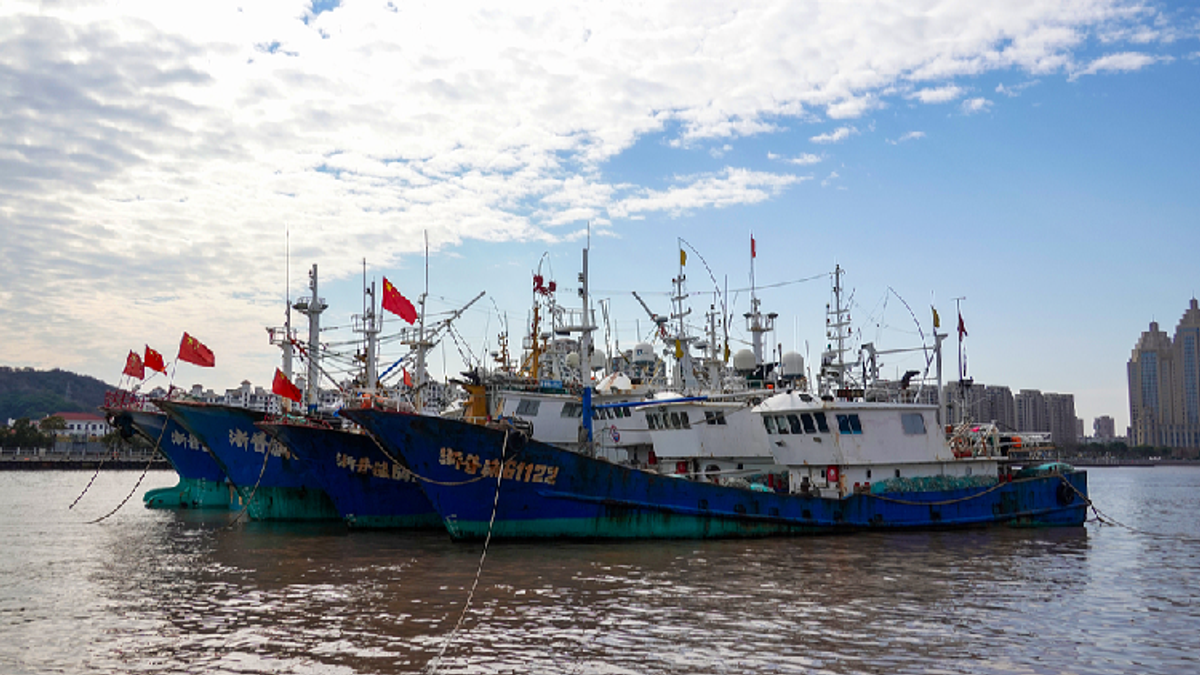
On Friday, July 3, 2026, China publicly denounced a report by the US National Oceanic and Atmospheric Administration (NOAA), which had issued negative certifications against China concerning alleged illegal, unreported, and unregulated (IUU) fishing and other related issues. Chinese Foreign Ministry spokesperson Guo Jiakun characterized the US action as "stark political manipulation" aimed at hindering the development of China's distant-water fishing industry, asserting that the certifications lacked both factual evidence and a basis in international law.
This diplomatic exchange underscores a deepening layer of geopolitical competition between the United States and China, extending beyond traditional domains of trade, technology, and security into the critical realm of global resource management and environmental governance. The dispute over distant-water fisheries is not merely an environmental or economic issue; it is intrinsically linked to maritime power projection, food security, and the broader contest for influence in international regulatory frameworks.
China, through its spokesperson, presented itself as a responsible fishing nation, citing its sound legislation, strict enforcement, and rigorous judicial oversight. Guo Jiakun highlighted China's consistent high ranking in compliance assessments by regional fisheries management organizations (RFMOs) and its accession to the Agreement on Port State Measures to Prevent, Deter and Eliminate Illegal, Unreported and Unregulated Fishing in April 2025. These points serve to bolster China's image as a constructive participant in global fisheries governance and marine resource protection.
Conversely, Beijing launched a counter-accusation, asserting that the United States itself possesses a "deplorable track record" in illegal fishing, marine resource depletion, and ocean pollution. Specifically, China accused the US of overfishing tuna beyond established quotas in the Western and Central Pacific Ocean, citing numerous violations identified by the Inter-American Tropical Tuna Commission. This tit-for-tat rhetoric is a common feature of US-China relations, where each side seeks to undermine the other's moral authority and deflect criticism by highlighting perceived hypocrisy.
From a strategic perspective, the US certifications can be interpreted as an attempt to curb China's expanding maritime footprint and influence. China operates the world's largest distant-water fishing fleet, which has been a source of concern for many nations regarding sustainability, sovereignty infringements, and labor practices. By issuing these certifications under its domestic law, the US potentially lays the groundwork for future economic or diplomatic pressures, aiming to compel changes in China's fishing practices or to rally international support against them. For China, the distant-water fishing industry is vital for food security, economic development, and projecting its presence across global oceans, making any perceived threat to this sector a significant national interest.
This incident highlights the ongoing tension between national sovereignty and international environmental stewardship, particularly when domestic laws of powerful nations are applied extraterritorially. China's argument that the US certifications lack a basis in international law points to a fundamental disagreement over the legitimacy and scope of such unilateral actions. The broader implication is a fragmentation of global governance efforts if major powers cannot agree on common standards or respect existing multilateral frameworks.
The dispute also carries significant weight for the future of marine resource conservation. Effective management of global fisheries requires robust international cooperation, data sharing, and adherence to scientific advice. When the two largest economies and maritime powers are at loggerheads over these issues, it complicates efforts to address overfishing, protect marine biodiversity, and ensure the long-term sustainability of ocean ecosystems. The accusations and counter-accusations risk politicizing scientific assessments and undermining the credibility of international bodies.
Ultimately, this confrontation over distant-water fisheries is more than just an environmental spat; it is a microcosm of the broader geopolitical rivalry between the US and China. It reflects their competition for resources, influence, and the right to define international norms and rules. While China expressed its readiness to work with all parties to improve global fisheries governance, the current exchange suggests that cooperation on this front will remain challenging, deeply intertwined with the complex and often adversarial nature of their bilateral relationship.
Source referenced: CGTN
This brief was synthesized by our Editorial Engine and reviewed by The Ground Narrative team.


