TRENDING

Monday, 5 October 2026
----------------------
24 Rabi' Al-Thani 1448 AH
Amidst escalating domestic political polarization and international conflicts, major sporting events like football matches appear to offer a temporary diversion, highlighting the complex interplay between global affairs and national cohesion in the United States.
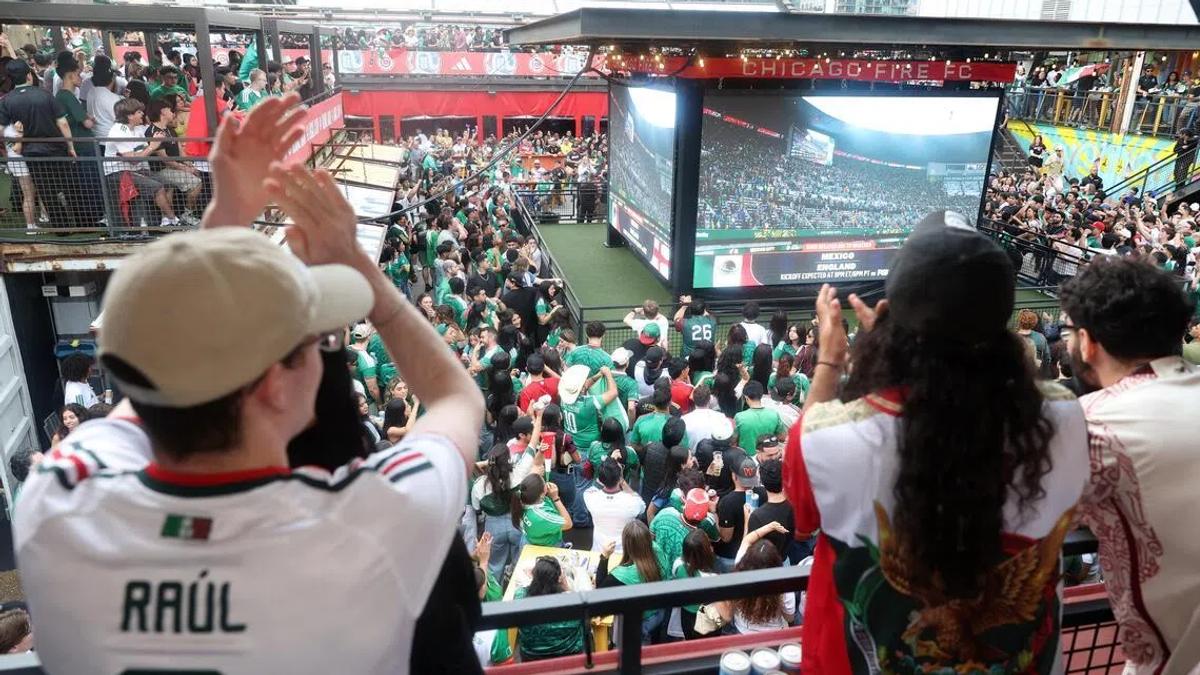
The United States is currently navigating a period of profound domestic political polarization, exacerbated by a range of pressing issues that resonate from local communities to the international stage. Reports from locations such as Lawrence, Kansas, illustrate a consistent pattern of public dissent, with protests occurring regularly on Sundays. These demonstrations are fueled by a diverse array of grievances, including discontent over the 'Iran war,' the ongoing conflict in the Gaza Strip, broader dissatisfaction with the White House administration, and contentious immigration enforcement policies. This sustained public unrest underscores a significant challenge to national cohesion, as various factions express their concerns, often met with both support and opposition from different segments of society.
The mention of the 'Iran war' and the 'Gaza Strip war' as primary drivers for domestic protests highlights a critical geopolitical dynamic: the direct impact of international conflicts on the internal stability and public sentiment within the United States. These global flashpoints are not merely distant events but are actively shaping the political landscape at home, mobilizing citizens and contributing to a sense of urgency and division. The protests reflect a public deeply engaged with, and often critical of, US foreign policy decisions and their perceived moral or strategic implications. Furthermore, issues surrounding immigration enforcement touch upon both domestic policy and international relations, particularly with neighboring countries, adding another layer of complexity to the nation's internal debates.
Against this backdrop of political and social fragmentation, cultural phenomena, particularly major sporting events, appear to play a unique role. The observation that the 'beautiful game' of football is 'deflecting America’s political turmoil' suggests that these events can temporarily redirect public attention and energy. For instance, the enthusiasm surrounding a match between Mexico and England, as evidenced by cheering Mexican fans in Chicago on July 5, 2026, illustrates the capacity of sport to transcend political divides. For many, especially within diaspora communities, national team football offers a powerful sense of identity, belonging, and collective celebration that can momentarily overshadow the anxieties and divisions of daily political life. This shared experience, rooted in cultural pride and sporting passion, provides a communal outlet that is distinct from the often-contentious realm of politics.
The phenomenon of sport acting as a 'deflector' carries several important implications. From a societal perspective, it underscores the human need for collective identity and shared experiences, particularly during times of stress. Football, with its global appeal and strong community ties, serves as a powerful cultural unifier, capable of bringing together diverse groups under a common banner, even if only for the duration of a game. Politically, this deflection can be viewed in multiple ways. On one hand, it might offer a healthy, albeit temporary, release valve for societal tensions, preventing them from boiling over. On the other hand, it could also be seen as a mechanism that temporarily masks deeper, unresolved issues, potentially delaying necessary political engagement or reform. The enthusiasm for international football, particularly among immigrant communities, also highlights the evolving demographic and cultural landscape of the United States, where global identities increasingly intersect with national ones.
While the immediate effect of major sporting events like the World Cup is to provide a temporary respite from political strife, the long-term implications remain a subject of analysis. It is unlikely that such cultural events can fundamentally resolve deep-seated geopolitical or domestic policy disagreements. However, they do offer a valuable lens through which to understand the dynamics of public sentiment and the search for common ground in a polarized nation. The ability of football to momentarily unite diverse populations, even amidst significant political and international discord, speaks to its enduring power as a cultural force. Whether this 'deflection' is merely a fleeting distraction or indicative of a broader societal coping mechanism in an era of persistent global and domestic challenges will continue to be a critical area of observation for geopolitical analysts and social scientists alike.
Source referenced: STRAITSTIMES
This brief was synthesized by our Editorial Engine and reviewed by The Ground Narrative team.


