TRENDING

Sunday, 4 October 2026
----------------------
23 Rabi' Al-Thani 1448 AH
Iran-backed militant groups Hezbollah and Hamas attended the funeral ceremonies of slain Iranian supreme leader Ali Khamenei, highlighting Tehran's unwavering support for its regional allies.
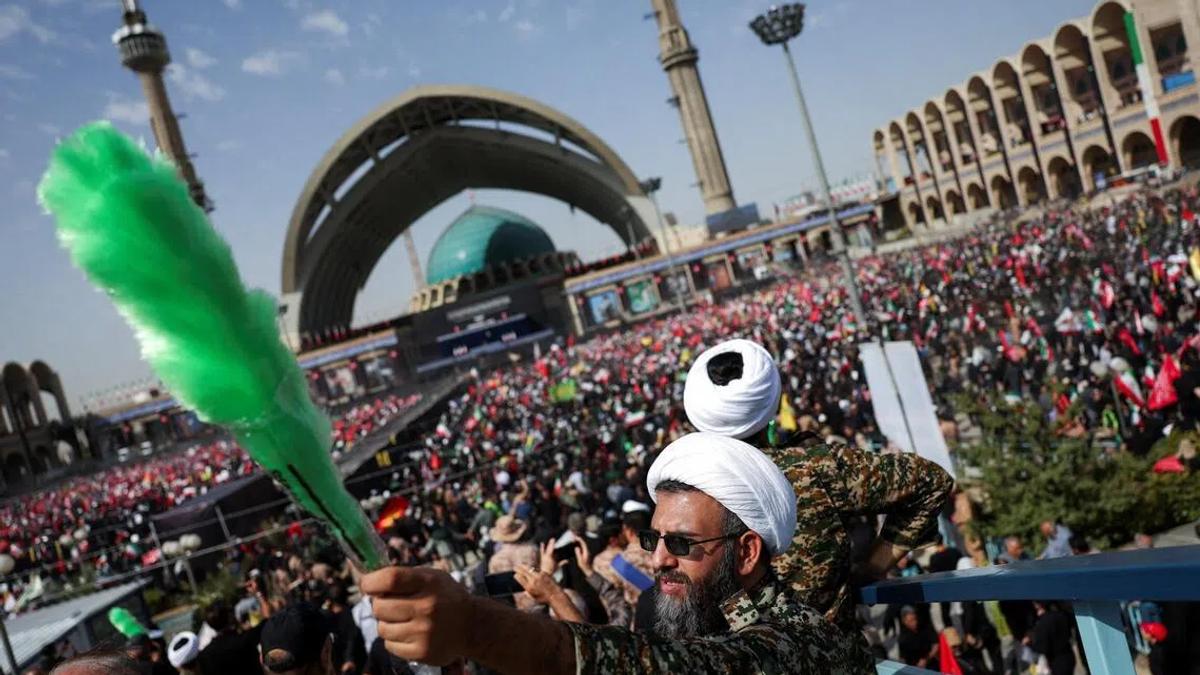
The recent funeral ceremonies for slain Iranian supreme leader Ali Khamenei have underscored Tehran's commitment to its 'axis of resistance' – a network of militant groups and proxies that have been the cornerstone of Iran's regional influence.
Representatives from Hezbollah, Hamas, Islamic Jihad, and the Houthis attended the funeral ceremonies, meeting with Iranian officials, including Foreign Minister Abbas Araghchi. The Hezbollah delegation was headed by senior official Mohammed Fneish, while Hamas was represented by its head of the political bureau, Mohammed Darwish.
Iran's support for its militant allies has been a longstanding concern for the international community, with the US and other Western nations designating these groups as terrorist organizations. Tehran's backing of these groups has led to international sanctions and heightened tensions in the region.
Iran's 'axis of resistance' has its roots in the 1980s, when Tehran began to support Palestinian militant groups, including Hamas and Islamic Jihad. This support has continued to the present day, with Iran providing financial, military, and logistical aid to its allies.
The funeral ceremonies have sent a clear message that Iran remains committed to its regional allies, despite the recent death of Khamenei. This has significant implications for regional stability, as Iran's support for militant groups continues to fuel conflict and instability in the Middle East.
The continued support of Iran's 'axis of resistance' will likely lead to further tensions with the international community, particularly with the US and Israel. This may result in increased sanctions and military action against Iran, which could have far-reaching consequences for regional stability.
The funeral ceremonies for Khamenei have highlighted the enduring nature of Iran's 'axis of resistance.' As the international community continues to grapple with the implications of Tehran's support for militant groups, it is clear that this issue will remain a major point of contention in the years to come.
Source referenced: STRAITSTIMES
This brief was synthesized by our Editorial Engine and reviewed by The Ground Narrative team.


