TRENDING

Sunday, 15 November 2026
----------------------
5 Jumada Al-Thani 1448 AH
A global Microsoft cloud failure left most of the world scrambling, yet China barely noticed. The episode exposes the power dynamics behind data localisation and the hidden human toll of digital monocultures.
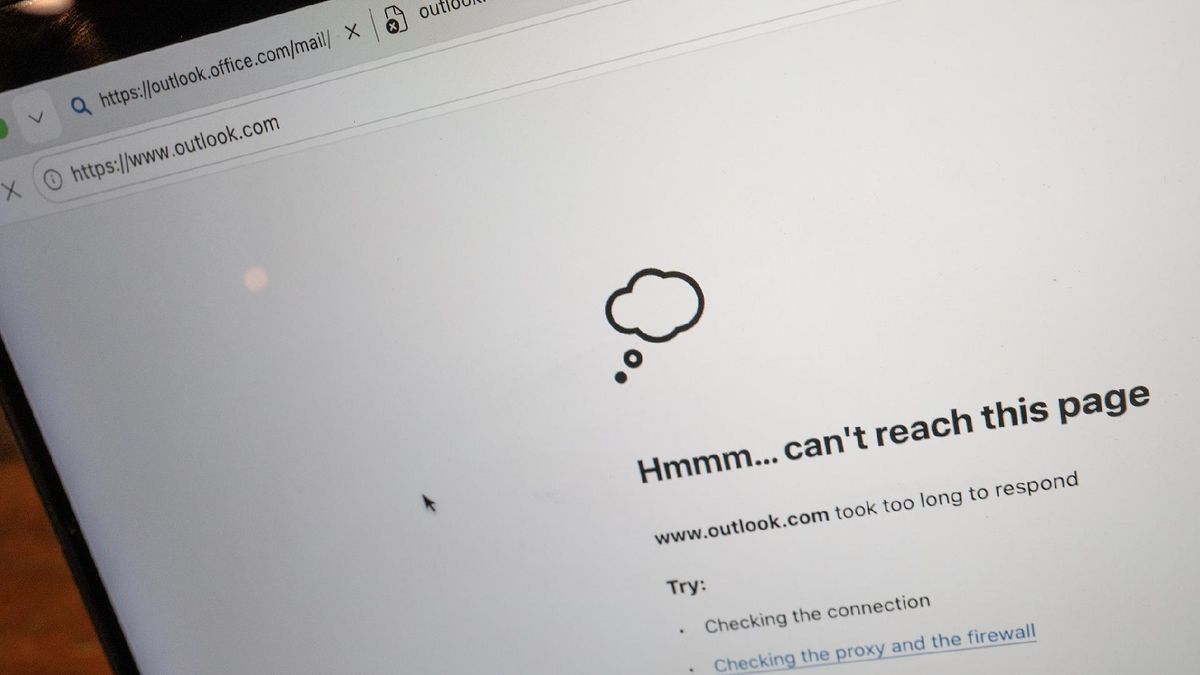
On November 12, 2026, Microsoft suffered a massive service disruption that knocked out Outlook, Teams, SharePoint, OneDrive and its new Copilot AI across at least 74 countries for more than ten hours. The outage originated from the Redmond data centre and rippled through the company’s global cloud infrastructure, prompting emergency alerts from governments in Germany, Australia, Japan and the Philippines. In stark contrast, mainland China reported almost no interruption because its domestic users rely on a separate, locally‑hosted version of Microsoft 365 operated by 21Vianet.
The incident laid bare three intersecting forces that shape today’s digital landscape. First, the economic incentive for multinational cloud providers to centralise hardware, software and support in a handful of mega‑data centres creates unparalleled efficiency but also a single point of failure. Microsoft’s business model depends on economies of scale; spreading a single outage across its global network maximises profit while minimising marginal costs.
Second, political survival drives governments to demand rapid remediation when critical services falter. In Germany, the Federal Office for Information Security (BSI) entered direct talks with Microsoft, signalling that a prolonged outage could be framed as a breach of national security. Australia’s Home Affairs Minister invoked emergency powers to force the company to prioritise recovery for law‑enforcement agencies, turning a private‑sector glitch into a sovereign issue.
Third, China’s long‑standing data‑sovereignty framework turns the same centralisation risk into a strategic advantage. Over the past decade, the Chinese state has layered the Cybersecurity Law, Data Security Law and Personal Information Protection Law to force foreign cloud operators to partner with domestic hosts. By licensing Microsoft’s suite to 21Vianet, the government ensured that all data for Chinese customers resides on servers physically and logically isolated from the global pool. This legal architecture not only shields the country from external outages but also gives Beijing leverage over multinational tech firms that must comply with on‑shore security reviews, certifications and standard‑contract clauses before any cross‑border data flow.
Companies in the United States, Europe and Australia faced immediate revenue loss as sales teams could not access client communications, and supply‑chain managers lost visibility into inventory systems. A mid‑size European logistics firm estimated a €250,000 hit from delayed shipments and missed invoicing during the outage.
Australian federal police officers were forced back to land‑line phones, slowing investigations into cybercrime. Japanese ministries reported that critical inter‑agency coordination reverted to manual processes, increasing the risk of miscommunication during a period when rapid response is essential.
Customer‑service agents in multinational call centres, many of whom are hourly workers, spent extra hours fielding frustrated callers and manually logging tickets that would normally be auto‑captured by cloud‑based CRM tools. In the United Kingdom, a union survey found that 38 % of affected agents reported overtime without additional pay.
While the outage did not cripple Chinese firms, those that had already migrated critical workloads to domestic platforms such as Alibaba Cloud or Tencent Cloud still faced the broader market shock. Export‑oriented manufacturers relying on foreign partners’ Outlook accounts experienced delayed order confirmations, nudging them to diversify communication channels—a cost that will be absorbed by thin profit margins.
Microsoft framed the event as a “technical anomaly” and emphasized its rapid restoration timeline, sidestepping the deeper question of why a single point of failure can affect billions of users. The company’s public statements omitted any discussion of the concentration of cloud infrastructure in a few geographic zones, a factor that regulators in the United States and Europe are beginning to scrutinise.
Chinese officials highlighted the incident as proof of the nation’s “digital sovereignty” achievements, showcasing the 21Vianet partnership as a model for other sectors. This messaging downplays the fact that domestic cloud giants—Alibaba, Huawei, Tencent—are themselves highly centralised, sharing the same vulnerability of a limited number of massive data centres.
By mandating that data stay onshore, China reduces exposure to foreign outages but also creates a captive market for local providers, limiting competition and potentially inflating prices for enterprises. The legal requirement for security reviews adds bureaucratic layers that can delay innovation, a trade‑off rarely mentioned in official statements.
Neither Microsoft nor Chinese regulators spoke about contractual rights for customers to migrate data quickly after a failure. Interoperability standards, audit clauses and transparent outage reporting remain peripheral topics, even though they are essential for organisations that cannot afford prolonged downtime.
Analysts should monitor three developing threads. First, the European Union’s Digital Services Act and forthcoming cloud‑regulation proposals may force providers like Microsoft to decentralise critical workloads or disclose redundancy plans, reshaping the market for data‑center locations. Second, China’s Ministry of Industry and Information Technology is expected to release updated guidelines on “core‑infrastructure cloud resilience,” which could tighten requirements for domestic providers and potentially open a window for foreign firms that can meet the new standards. Finally, the private sector is likely to accelerate the diversification of collaboration tools, with more firms adopting multi‑cloud strategies or hybrid‑on‑prem solutions to avoid single‑point failures. Watching corporate procurement policies, regulatory filings and the next wave of outage disclosures will reveal whether the lesson of the November crash translates into concrete shifts in digital power.
Chinese users access Microsoft 365 through a locally licensed version run by 21Vianet, which is physically and logically separated from the global Microsoft cloud that failed.
Heavy concentration creates single points of failure, meaning a technical glitch can disrupt services worldwide, affect economies, and expose governments to security and operational vulnerabilities.
Authorities in the EU and possibly the US are considering rules that require greater transparency, redundancy and interoperability from large cloud operators to reduce systemic risk.
Source referenced: CGTN
This brief was synthesized by our Editorial Engine and reviewed by The Ground Narrative team.