TRENDING

Sunday, 15 November 2026
----------------------
5 Jumada Al-Thani 1448 AH
A senior Hamas commander, identified as a key planner of the October 7, 2023, attack, has been killed in an Israeli air strike in Gaza, despite an October 2025 ceasefire. This event highlights the ongoing, fragile nature of the conflict and its devastating human toll.
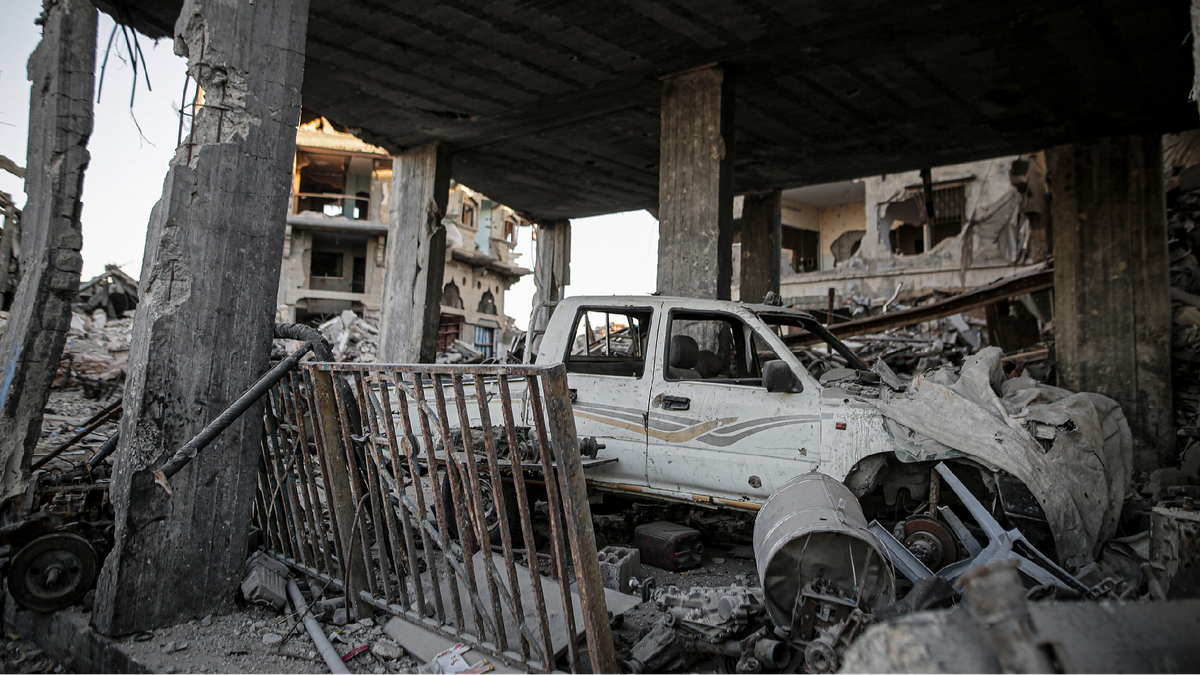
On November 15, 2026, Hamas's armed wing, the Al-Qassam Brigades, announced the death of Samir Abu Younis, 53, a senior commander of its Rafah brigade. Abu Younis was reportedly killed in an Israeli air strike on Saturday in the Mawasi area of Khan Younis in the southern Gaza Strip. Hamas identified him as a key figure who helped plan and oversee the October 7, 2023, attack on Israel. The Israeli military confirmed striking a senior Hamas commander but did not name him. This targeted killing occurred despite an October 2025 ceasefire that had officially paused major hostilities but has demonstrably failed to halt Israeli military operations or achieve Hamas's disarmament.
The killing of Samir Abu Younis illuminates the deeply asymmetric power dynamics defining the conflict in Gaza, even under a nominal "ceasefire." For Israel, this strike is a consistent application of its policy: to degrade Hamas's military capabilities and eliminate its leadership. This strategy, rooted in disrupting command structures and eroding operational effectiveness, underscores Israel's overwhelming military and intelligence superiority. It demonstrates a continued commitment to counter-terrorism operations, regardless of broader ceasefire agreements.
For Hamas, the death of a senior commander like Abu Younis, particularly one involved in the October 7, 2023, attack, is a significant blow. However, the organization's decentralized structure is designed to absorb such losses. Leadership succession is often swift, and the ideological commitment of its members ensures the organization's core objectives of resistance and governance in Gaza persist. The public announcement of Abu Younis's death, followed by a funeral, serves to acknowledge sacrifice while rallying support and reinforcing the narrative of ongoing struggle.
The October 2025 ceasefire is a critical element in these power mechanics. It was never a peace treaty but a tactical pause, likely brokered under significant international pressure. For Israel, it provides a degree of international legitimacy for "targeted" operations, framing them as necessary actions against a terrorist organization. For Hamas, the ceasefire offers a limited opportunity to regroup and reorganize, while maintaining influence among the Palestinian population. The terms, which have not secured Hamas's disarmament, reflect the fundamental irreconcilability of the two sides' core demands: Israel seeks complete dismantling of Hamas's military wing, while Hamas views armed resistance as existential.
Domestic political pressures heavily influence these actions. Israeli leaders face demands to ensure security, making targeted killings politically expedient. Similarly, Hamas's leadership must demonstrate resilience to maintain legitimacy among a suffering population. The strike in Mawasi, a humanitarian zone, while strategically significant, carries a calculated risk of international condemnation, which Israel appears willing to absorb. This highlights a perceived cost-benefit analysis where strategic gain outweighs diplomatic fallout.
The killing of Samir Abu Younis casts a long, dark shadow over the lives of ordinary Palestinians in Gaza, exposing the brutal reality of a "ceasefire" that offers no true respite. The raw intelligence reveals a staggering toll: at least 1,600 Palestinians have been killed since the October 2025 ceasefire, adding to the more than 74,000 killed since Israel's military campaign began in October 2023. These numbers represent shattered families, decimated communities, and a generation scarred by relentless violence.
The strike that killed Abu Younis occurred in the Mawasi area of Khan Younis, a region explicitly designated as a humanitarian zone. This detail is profoundly significant, shattering any illusion of safety for Gaza's civilians. Humanitarian zones are meant to be safe havens, yet targeting a commander within such a zone demonstrates that no place is truly off-limits. For hundreds of thousands of Palestinians seeking shelter in Mawasi, often living in overcrowded tents with inadequate resources, this incident reinforces their terrifying vulnerability. The psychological toll of living under constant threat, even in supposed safe zones, is immense, leading to widespread trauma and hopelessness.
A genuine ceasefire would pave the way for massive reconstruction, allowing millions displaced to rebuild their lives. However, a "ceasefire" punctuated by targeted killings means such efforts remain largely stalled. Homes, infrastructure, schools, and hospitals lie in ruins, and without sustained peace, necessary international investment for reconstruction cannot materialize. This perpetuates dependency on humanitarian aid, denying Gaza's population the dignity of self-sufficiency. The lack of reconstruction progress means survivors continue to suffer from displacement, poverty, and a collapsed social fabric.
The announcement of Abu Younis's funeral in Khan Younis is another poignant reminder of the unending cycle of grief. Each funeral, whether for a commander or a civilian, becomes a public expression of loss and defiance. For families, it is an intensely personal tragedy. For the broader Palestinian community, it is a collective wound that deepens existing grievances and fuels a desire for justice. The fact that five Israeli soldiers have also been killed since the ceasefire underscores the reciprocal nature of this violence, trapping both populations in a relentless spiral of sorrow and retribution. The human cost extends far beyond immediate casualties, encompassing the erosion of trust and the perpetuation of a conflict offering no end in sight.
The narrative surrounding the killing of Samir Abu Younis and the broader state of the Gaza "ceasefire" is rife with omissions and strategic downplaying by powerful actors. What is often left unsaid or deliberately reframed is the true nature of this cessation of hostilities and the underlying motivations perpetuating the conflict.
Governments and international bodies often present the October 2025 ceasefire as a significant diplomatic achievement. However, the reality on the ground, evidenced by Abu Younis's death and ongoing casualty figures, is that it is a highly conditional and fragile arrangement. It is not a peace agreement resolving fundamental grievances, but a tactical pause in *major* fighting. Israel uses this pause for targeted operations, asserting its right to self-defense. Hamas, in turn, uses the relative lull to regroup and maintain internal control. What is downplayed is that this "ceasefire" is less about peace and more about managing conflict at a lower intensity, allowing both sides to pursue objectives without full-scale international condemnation. The public is led to believe significant de-escalation has occurred, when the shadow war continues unabated.
The specific terms of the October 2025 ceasefire are rarely fully disclosed. While Israel demands Hamas's disarmament, it is improbable Hamas would agree without a comprehensive political solution addressing occupation and Palestinian rights. The international community often echoes Israel's call for disarmament without acknowledging Hamas's entrenched role as both a resistance movement and governing authority. This creates an intractable dilemma: Israel cannot achieve security without Hamas's capitulation, and Hamas cannot abandon its armed wing without losing legitimacy. The omission here is the lack of a viable political pathway to bridge this chasm, leaving military action as the default.
Beyond the immediate parties, external actors often benefit from the perpetual low-intensity conflict. Regional powers might use the Israeli-Palestinian conflict to distract from domestic issues or project influence. The flow of arms, intelligence, and financial support often continues discreetly, shaping the conflict's trajectory without public scrutiny. Defense corporations also benefit from instability. These dynamics, often operating in the shadows, are crucial to understanding why lasting peace remains elusive. The public is rarely privy to the full extent of these geopolitical chess games, where Gaza's suffering can become a pawn in larger regional power struggles.
The killing of Samir Abu Younis is not an isolated incident but a critical data point in the ongoing, volatile equation of the Gaza conflict. What happens next will reveal much about the true state of the October 2025 ceasefire and the broader trajectory of regional power dynamics.
Firstly, observe Hamas's immediate response. Will the organization retaliate, or opt for a more strategic, less overt form of retribution? The nature and timing of any response will indicate Hamas's current operational capacity, internal cohesion, and assessment of escalation costs. A swift, visible response would signal defiance, while a delayed or covert response might suggest caution.
Secondly, pay close attention to the scope and intensity of Israeli military operations. Will this strike be followed by a series of similar targeted killings, signaling a renewed campaign to dismantle Hamas's leadership under the "ceasefire"? Or will Israel scale back? The location of the strike in Mawasi, a humanitarian zone, will test international norms. How will Israel justify such actions, and will significant international pressure influence future decisions? The balance between perceived security needs and international humanitarian law will be under renewed scrutiny.
Thirdly, monitor the humanitarian situation in Gaza. Any escalation will inevitably exacerbate catastrophic conditions. With hundreds of thousands displaced, infrastructure in ruins, and basic necessities limited, even slight hostilities could push the population to breaking point. Watch for increased calls from humanitarian organizations for greater protection of civilians and unhindered aid access, as well as signs of further displacement.
Finally, the viability of the October 2025 ceasefire itself is now in question. The killing of a commander involved in the October 7, 2023, attack places immense strain on the fragile agreement. How much more can this "ceasefire" bend before it breaks entirely, leading to another full-scale military confrontation? The international community, especially mediators, will face renewed pressure to either reinforce its terms or acknowledge its failure. The coming weeks will be a critical indicator of whether the region heads towards de-escalation or another devastating cycle of violence.
Samir Abu Younis was a senior commander of Hamas's Rafah brigade, identified as a planner of the October 7, 2023, attack on Israel. His death signals Israel's continued targeted operations against Hamas leadership, even under a fragile ceasefire, and is a blow to the organization's command structure.
The October 2025 ceasefire halted major fighting but has not stopped Israeli targeted strikes or secured Hamas's disarmament. It is a highly fragile agreement, characterized by ongoing violence and a significant human toll, with thousands of Palestinians killed since its inception.
The strike, occurring in the Mawasi area of Khan Younis, a designated humanitarian zone, underscores the lack of safety for civilians. It perpetuates displacement, stalls reconstruction, and adds to the immense psychological trauma and economic devastation experienced by the population.
Editor's Note: Analysis based on provided raw intelligence, adhering strictly to TGN editorial doctrine and structure.
Source referenced: CGTN
This brief was synthesized by our Editorial Engine and reviewed by The Ground Narrative team.


