TRENDING

Sunday, 15 November 2026
----------------------
5 Jumada Al-Thani 1448 AH
The Sudanese Armed Forces have made significant advances in Kordofan, wresting control of strategic areas from the Rapid Support Forces. This shift could redefine the conflict, but the human toll remains devastating as the battle for Sudan's resources intensifies.
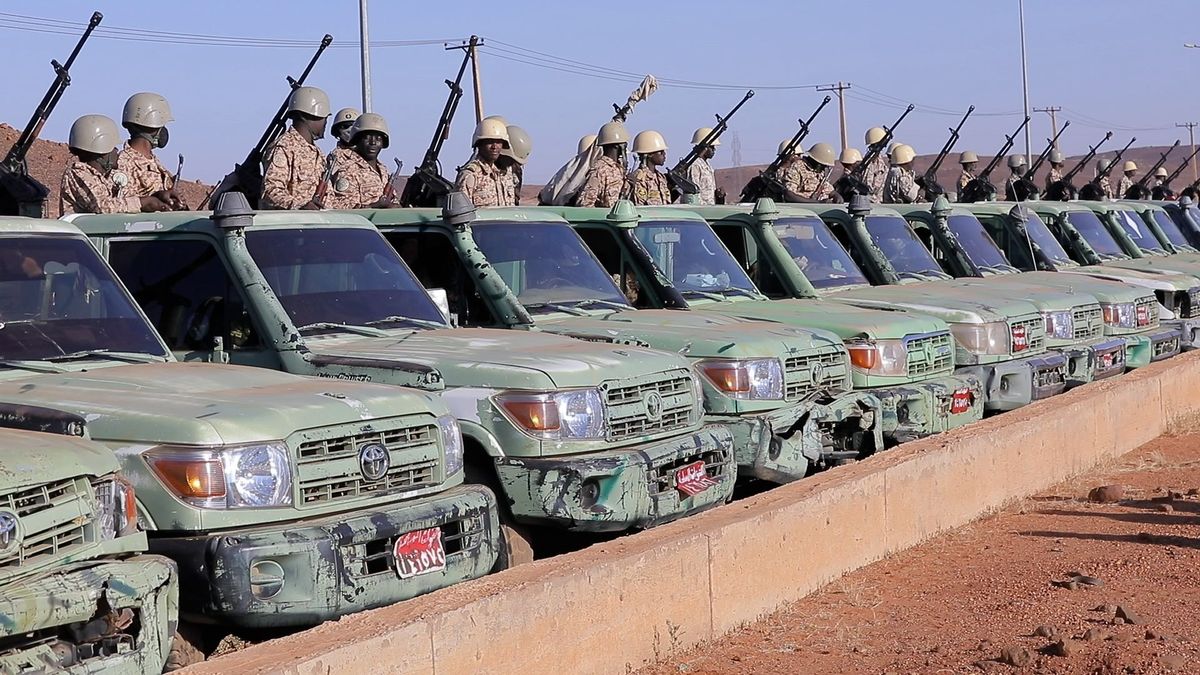
The Sudanese Armed Forces (SAF) have recently secured control over several strategically vital villages and localities in West Kordofan, marking a significant turning point in their protracted conflict with the rival Rapid Support Forces (RSF). This offensive successfully broke the RSF's long-standing siege on al-Obeid, the capital of North Kordofan, and established new logistical and military routes across central and southwest Sudan. The most notable gain was the capture of al-Khuwai, a key town in West Kordofan, which has paved the way for further SAF advances towards South Kordofan and the approaches to North Darfur. These developments indicate a shift in momentum, forcing the RSF into a defensive posture after months of offensive operations.
The ongoing conflict in Sudan is fundamentally a struggle for control over the state's apparatus, its territory, and critically, its resources. The recent SAF gains in Kordofan illuminate the intricate web of military doctrine, economic incentives, and fluid alliances that define this brutal power struggle. For the SAF, led by General Abdel Fattah al-Burhan, the objective is clear: to reclaim national sovereignty over every inch of Sudanese territory. This is not merely a symbolic ambition but a practical necessity for the military leadership to legitimize its rule and secure the economic foundations of the state.
The SAF's strategy in Kordofan has leveraged its growing air superiority and extensive use of drones, allowing for advances along unexpected routes and the consolidation of gains in central Sudan. This air power, combined with changing ground tactics and alliances with various Darfur forces, has proven effective against the RSF's historically mobile, decentralized structure. The ability to open new routes is crucial, not just for military resupply but for projecting state power and control over key arteries connecting Sudan's central regions with the western provinces and beyond.
Conversely, the RSF, under Mohamed Hamdan “Hemedti” Dagalo, built its military composition on demanding rapid tribal support and a highly adaptable, offensive posture. Kordofan, however, is not a traditional social stronghold for the RSF, unlike parts of Darfur. This lack of deep-rooted tribal allegiance makes their alliances in the region more transactional and vulnerable. As the tide turns, these alliances, often forged out of military necessity rather than long-standing social integration, are showing signs of fracturing, with defections reported. The RSF's shift from attack to defense fundamentally alters its ability to mobilize and sustain its forces, making it harder to co-opt local groups and maintain cohesion.
Economically, Kordofan is a prize of immense value. The region is a breadbasket, rich in agricultural products like sesame seeds, groundnuts, hibiscus, and gum arabic. More critically, it holds significant gold mines, such as those around al-Nuhud, and is home to the strategically vital Heglig and Balila oilfields in West Kordofan. These fields alone account for 90% of Sudan's oil production and are major processing and transit hubs for both Sudanese and South Sudanese crude. Control over these resources translates directly into national revenue, reduced dependence on imported petroleum, and a stronger hand in international relations. For any faction aspiring to govern Sudan, securing these assets is paramount for economic recovery and political legitimacy.
Furthermore, Kordofan's geographical position grants significant strategic leverage. Its proximity to South Sudan means control over key border crossings, trade routes, and pastoral corridors. South Sudan's economy is heavily dependent on its oil exports transiting through Sudanese territory to Bashayer Port. This interdependency creates a shared strategic interest in the stability and security of Kordofan's oil infrastructure and border areas. Whoever controls Kordofan therefore gains considerable influence not only within Sudan but also over its southern neighbor, potentially shaping regional dynamics and future alliances. The fight for Kordofan is thus not just a territorial dispute; it is a battle for the very economic and political future of Sudan, with profound regional implications.
The shifting battle lines in Kordofan represent a strategic gain for one faction and a tactical setback for another, but for the ordinary citizens of Sudan, it means only the deepening of an already catastrophic humanitarian crisis. The conflict, which ignited in April 2023, has already claimed approximately 150,000 lives and displaced an staggering 14 million people out of a population of 53 million. This makes it one of the world's worst displacement crises, with millions fleeing to neighboring countries like Chad, Egypt, and South Sudan.
Civilians in Kordofan and other contested regions are caught in a relentless crossfire. Both the SAF and the RSF have been accused of indiscriminate attacks, with drones targeting civilian infrastructure, including homes, schools, health facilities, and vital power and water plants. In October alone, around 160 people were killed in drone attacks in western regions of Sudan, a stark reminder that technology meant for precision warfare often results in widespread civilian casualties in practice. The destruction of essential services means communities are left without access to clean water, electricity, or medical care, pushing an already vulnerable population to the brink.
The humanitarian situation is dire, with basic services collapsing across the country. Factories struggle to restart after wartime losses, exacerbating food insecurity. Parents face immense challenges in feeding their children amidst war and climate change-induced hardships. Teachers, crucial for the future generation, are on strike over meagre salaries and dilapidated schools, highlighting the systemic breakdown of public services. The United Nations has specifically identified Kordofan as an epicentre of the conflict, where continued fighting severely complicates humanitarian assistance operations.
Delivering aid in this environment has become an increasingly perilous undertaking. Aid organizations and their personnel face constant threats, with reports of aid workers being captured, beaten, tortured, and even killed. Omer Yousif, an aid delivery driver, recounted being captured and beaten, with colleagues tortured and killed. This extreme danger means that humanitarian assistance, desperately needed by millions, is often halted or severely restricted. While some hope that SAF control might improve aid delivery, the reality is that the conflict's shifting geography often just moves the obstacles, creating new zones of inaccessibility and danger for those trying to help.
The experience of Darfur serves as a grim precursor to the potential future of Kordofan. When el-Fasher, the capital of North Darfur, fell to the RSF in October 2025, it was followed by a brutal siege and bloody reprisals. Thousands of civilians were killed, tortured, detained, or raped. This history underscores the extreme violence and human rights abuses that accompany shifts in territorial control, leaving deep and lasting scars on communities and individuals. The fight for resources and power is consistently paid for with the lives and suffering of ordinary Sudanese citizens.
As the Sudanese Armed Forces (SAF) celebrate their advances in Kordofan and articulate their strategic objectives, several critical dimensions of this conflict are consistently downplayed or omitted from official narratives. These omissions are not accidental; they serve to simplify a complex reality, legitimize actions, and obscure the true beneficiaries and costs of the ongoing war.
The SAF frames its campaign as a noble effort to "reclaim control of the entire country and restore Sudan's sovereignty over every inch of its territory." While sovereignty is a foundational concept for any state, this narrative subtly obscures the internal nature of the conflict. This is not primarily a war against an external aggressor, but a brutal internal power struggle between two factions that were once allies. The fight for "sovereignty" is, in essence, a fight for *who* controls the state's vast resources and institutions, rather than a unified national defense. This framing allows the SAF to cast its actions as patriotic and necessary, deflecting scrutiny from the immense human cost borne by the very citizens it claims to protect.
Official statements emphasize that restoring control over Kordofan's oil fields and agricultural lands will enable Sudan to "regain control of its natural resources, revive exports, restore oil production, increase foreign currency revenues, and lay the foundations for sustainable economic recovery." While these outcomes are desirable for the state, the narrative often omits the critical question: recovery for whom? The benefits of increased oil revenues and agricultural exports are unlikely to trickle down equitably to the ravaged local communities in Kordofan or the millions displaced by the conflict. The history of resource-rich developing nations often shows that control over such assets enriches political elites and military factions, while local populations continue to suffer from poverty, environmental degradation, and a lack of basic services. The long-term impact of resource exploitation in a post-conflict environment, including issues of land rights, environmental justice, and equitable wealth distribution, is rarely part of the powerful actors' public discourse.
The raw intelligence highlights South Sudan's critical dependence on Sudan's oil infrastructure, with its oil exports relying entirely on transit through Sudanese territory. This economic umbilical cord implies a significant, albeit often unstated, interest from external actors—not just Juba, but also international energy companies and states with energy security concerns. While Professor Mohamed al-Nayer notes a shared strategic interest in securing oil infrastructure, the extent of quiet diplomacy, financial incentives, or even covert support from these external players to influence the conflict's outcome in Kordofan is rarely acknowledged. The narrative of an internal Sudanese conflict often overlooks the complex web of regional and international economic interests that inevitably shape its trajectory, turning a domestic struggle into a proxy battleground for resources.
Both the SAF and the RSF rely on alliances with various tribal groups and other armed factions. The intelligence explicitly states that the RSF's alliances in Kordofan were "arrangements driven by military and political necessity, rather than necessarily reflecting the longstanding social and historical integration." This transactional nature of alliances is a critical, often downplayed, aspect of the conflict. Powerful actors present these as stable fronts, but their fluidity means that allegiances can shift rapidly based on battlefield fortunes, financial inducements, or perceived advantage. This inherent instability prolongs the conflict, as no single alliance is truly cohesive enough to enforce a lasting peace, and local groups are often forced to choose sides for survival, only to switch again when circumstances change. This cycle of shifting loyalties perpetuates violence and undermines any genuine efforts towards reconciliation.
While both sides have been accused of using drones, the narrative often subtly differentiates their impact. The RSF's use of drones is framed as part of a "strategy of intimidation and economic disruption, aimed at spreading fear and paralysing daily life." In contrast, the SAF's "growing air superiority" and "extensive use of drones" are presented as enabling "advances" and "reducing the RSF's chances of regaining lost territory." This distinction, while perhaps reflecting tactical objectives, downplays the universal human cost of drone warfare. Regardless of who deploys them, drones contribute to civilian casualties, infrastructure destruction, and psychological trauma. The powerful often highlight the military efficacy of their own advanced weaponry while condemning the destructive impact when used by adversaries, creating a skewed perception of responsibility and suffering.
The recent shifts in Kordofan mark a critical juncture, but the path forward for Sudan remains fraught with uncertainty. The immediate future will reveal much about the durability of the SAF's gains and the RSF's capacity to adapt.
First, observers should closely monitor the RSF's response. Will they indeed withdraw from Kordofan and reposition their forces in Darfur, as suggested by analysts? Such a move would likely intensify the conflict in Darfur, potentially making it the new epicentre of violence and exacerbating an already dire humanitarian situation in a region with a long history of conflict. The cohesion of their tribal alliances will also be crucial; further defections could severely cripple their fighting capacity.
Second, the impact on humanitarian access and aid delivery will be a critical indicator. While some hope that SAF control could improve the situation, the history of this conflict suggests that territorial shifts often merely relocate the challenges. Will the SAF prioritize securing aid routes and facilitating humanitarian operations, or will the ongoing military objectives continue to impede assistance to millions in need?
Third, the security and operational status of Kordofan's vital oil infrastructure, particularly the Heglig and Balila oilfields, warrant close attention. Successful restoration of oil production under SAF control would significantly bolster the central government's revenues and international standing. Any disruption or further damage, however, could prolong Sudan's economic woes and impact South Sudan's oil exports, potentially drawing in more regional and international actors.
Finally, the broader political implications of these military gains are paramount. Can the SAF leverage its battlefield successes into a more stable political framework, or will this simply perpetuate a war of attrition? The long-term stability of Sudan hinges not just on military victories but on a credible path towards inclusive governance and genuine reconciliation, which remains elusive amidst the ongoing violence. The world must watch whether the control of Kordofan's resources translates into a foundation for peace or merely fuels the next phase of a devastating war.
Source referenced: ALJAZEERA
This brief was synthesized by our Editorial Engine and reviewed by The Ground Narrative team.


