TRENDING

Sunday, 15 November 2026
----------------------
5 Jumada Al-Thani 1448 AH
Denmark's Supreme Court is deliberating a controversial law that allows forced evictions of residents based on a 'Western' or 'non-Western' classification, sparking a legal battle over housing rights and national identity. This landmark case challenges the state's power to define belonging and reshape communities through demographic engineering.
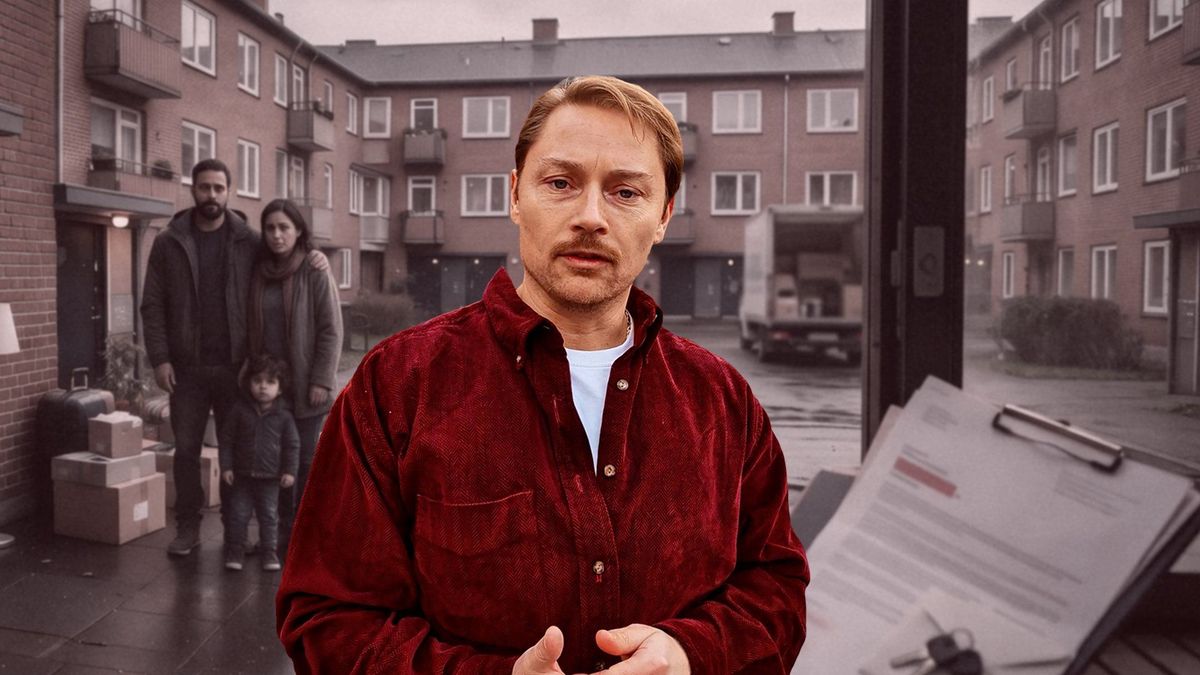
Denmark's Supreme Court is poised to deliver a critical ruling on a contentious law that permits the forced eviction of residents from their homes, based on a state-mandated distinction between “Western” and “non-Western” backgrounds. This legal challenge, initiated by residents facing displacement from majority “non-Western” housing estates in Copenhagen, directly confronts the state's authority to define citizenship and belonging through demographic criteria. The outcome will determine the legality of a policy that fundamentally alters the social fabric of communities and sets a precedent for how nations manage diversity and integration.
The law at the heart of this Supreme Court case, often colloquially referred to as the “ghetto law,” is a stark manifestation of political anxieties and strategic policy choices. Its very existence is rooted in a political climate where successive Danish governments, spanning the ideological spectrum, have grappled with perceived challenges in integration and social cohesion. The prevailing narrative often frames certain urban areas as “parallel societies” or “ghettos,” characterized by statistics on unemployment, crime rates, and a perceived lack of adherence to Danish societal norms. For political parties, adopting a stringent stance on immigration and integration policies offers a clear, albeit controversial, pathway to resonate with a significant segment of the electorate. The political incentive is to project an image of control, assert national identity, and address voter concerns about cultural shifts and the perceived strains of immigration.
The “non-Western” classification is not merely an administrative label; it is a deliberate tool for demographic engineering. By imposing quotas on the percentage of “non-Western” residents allowed in specific areas, the state explicitly aims to dismantle concentrations of particular ethnic or national groups. The underlying assumption is that forced dispersal and a more diverse demographic mix will automatically yield superior integration outcomes. This approach reveals a state-centric philosophy of social engineering, where the government actively intervenes in the residential composition of communities, seeking to sculpt society from the top down. It reflects a belief that social problems are best solved by reorganizing populations rather than addressing systemic issues.
Beyond social engineering, the law deeply intersects with broader housing policy and economic incentives. Many of the affected estates are public or semi-public housing projects, granting municipal authorities substantial control over their management and future. Arguments are frequently advanced that these areas are ripe for revitalization and that a change in resident composition is essential for economic upliftment and social stability. This rationale often aligns with urban renewal agendas, where older, often neglected, housing stock becomes targets for redevelopment. Such projects can significantly increase property values, attract new demographics, and potentially generate substantial profits for developers and local governments, cloaked under the guise of social improvement.
The Danish Supreme Court's impending ruling carries immense weight, as it will establish a significant legal precedent not just for Denmark but potentially for other European nations. The case will rigorously test the boundaries of Danish constitutional law, particularly concerning fundamental rights such as property rights, non-discrimination, and the universal right to adequate housing. Furthermore, the decision will inevitably cast a spotlight on Denmark's adherence to international human rights conventions, which unequivocally prohibit discrimination based on ethnicity or national origin. The legal battle extends beyond the immediate fate of individual evictions; it challenges the foundational principles of equality and human dignity within a sovereign state, potentially influencing how other nations balance national identity with international legal obligations.
Denmark, like its Nordic neighbors, has historically championed a welfare state model predicated on social equality, universal access to services, and robust collective rights. However, the increasing complexities of immigration and integration have placed this cherished model under considerable strain. The “ghetto law” represents a significant departure from traditional social democratic ideals, signaling a shift towards more restrictive, identity-focused, and often assimilationist policies. It underscores a growing tension between the universalistic principles that once defined the Nordic welfare state and the particularistic demands of national identity and cultural preservation, reflecting a broader European trend towards more exclusionary approaches to diversity.
For the thousands of residents designated as “non-Western,” the most immediate and profound cost of this law is the loss of their homes. These are not merely physical structures; they are the anchors of family life, the bedrock of established routines, and the nexus of deep-seated community ties. Children are abruptly uprooted from their schools and friends, elderly individuals lose vital support networks, and entire families are forced to navigate unfamiliar environments, often with limited resources and profound uncertainty. The emotional toll of displacement, the relentless stress of finding new, affordable housing, and the severance from familiar surroundings are immense and often underestimated.
The very act of being classified as “non-Western” and subsequently subjected to different rules based on one's origin creates a profound sense of othering and institutionalized discrimination. This can lead to pervasive feelings of alienation, stigmatization, and a diminished sense of belonging within the broader Danish society. Such state-sanctioned discrimination erodes trust in public institutions and exacerbates existing social divisions, contributing to significant psychological stress, anxiety, and a deep-seated sense of injustice among affected communities. It fundamentally challenges an individual's sense of identity and place in their own country.
Forced evictions invariably trigger substantial economic disruption. Families incur considerable costs associated with moving, securing new housing—which is often more expensive or located further from their places of employment—and re-establishing their lives from scratch. For those in precarious employment, the upheaval can directly lead to job loss or increased financial instability, pushing already vulnerable households deeper into economic hardship. Furthermore, local businesses within these targeted communities suffer as their customer base disperses, potentially leading to closures and further economic decline in areas already struggling.
Paradoxically, policies designed to promote integration can often achieve the opposite. When the state is perceived as actively discriminating against a segment of its own population, it inevitably erodes trust between minority communities and the majority society. This can trigger a backlash, fostering resentment, and making genuine, voluntary integration efforts significantly more difficult. Such policies reinforce a divisive narrative of “us versus them,” fundamentally undermining the very social cohesion and shared identity that they ostensibly aim to create.
Children born and raised in these communities, many of whom are Danish citizens by birth, suddenly find their homes and futures dictated by a classification based on their parents' or grandparents' origins. This experience can profoundly shape their burgeoning identities, forcing them to question their place in Danish society and fostering a sense of being second-class citizens, irrespective of their legal birthright. Their educational trajectories and social development can be severely disrupted by the trauma and instability of forced relocation, impacting their long-term prospects.
Elderly residents, many of whom have lived in these housing estates for decades, face immense and often insurmountable challenges in adapting to new environments. Their health, mobility, and established social networks are frequently fragile, rendering displacement particularly traumatic. Similarly, individuals with disabilities or chronic illnesses, who rely heavily on established support systems, accessible housing, and familiar healthcare providers, are disproportionately affected by forced relocation, facing heightened risks to their well-being and stability.
The official narrative surrounding the “ghetto law” often presents “Western” as a clear, objective, and universally understood category. However, what remains largely unsaid is that this definition is fluid, politically constructed, and inherently biased. It implicitly excludes certain European groups while embracing others, revealing that “Western” in this context is less about geography and more about a perceived cultural or ethnic alignment with a dominant Danish identity. The law's deliberate ambiguity allows for broad interpretation, effectively creating a legal framework for discrimination based on origin rather than individual behavior or citizenship. The inherent biases and profound implications for citizens who have lived in Denmark for generations are rarely, if ever, openly debated.
Governments consistently frame the challenges in these areas as primarily demographic or cultural, necessitating population dispersal as the primary solution. What is systematically downplayed, however, is the profound role of long-term socio-economic neglect, chronic underinvestment in public services, limited educational opportunities, and pervasive systemic discrimination in the labor market. These are the root causes that contribute significantly to the very challenges observed in these communities. By fixating on “non-Western” populations, the state skillfully deflects scrutiny from its own policy shortcomings in adequately addressing poverty, unemployment, and deep-seated social inequality. The problem is thus framed as an issue inherent to “them,” rather than a failure of inclusive state policy.
Forcing residents to relocate does not, in fact, resolve the underlying issues of integration or social cohesion; it merely shifts them geographically. Displaced families will inevitably require housing elsewhere, potentially leading to the creation of similar “concentrations” in new locations or pushing them into less desirable, more expensive private rental markets. The policy is presented to the public as a decisive solution, but in practice, it often functions as an externalization of a complex societal problem, effectively making it someone else's responsibility without ever addressing its fundamental causes. It's a shell game with human lives.
The prevailing narrative frequently emphasizes the necessity of “special measures” to tackle “ghetto” issues, subtly but effectively eroding the fundamental principle of universal rights and equal treatment under the law for all citizens. By creating a distinct legal category for “non-Western” residents, the state implicitly suggests that certain fundamental rights, such as the right to choose where one lives, can be conditional based on ethnic origin. This sets a dangerous precedent for future policies that could further segment society, creating a tiered system of citizenship where rights are not universally guaranteed but are instead contingent on one's background.
While publicly presented as initiatives for social integration and cohesion, there are often significant, unspoken economic motives underpinning urban renewal projects in these areas. Neighborhoods designated as “ghettos” are frequently situated in prime urban locations or represent valuable land ripe for redevelopment for higher-income residents. The “ghetto law” can, therefore, serve as a highly convenient and legally sanctioned mechanism to clear out existing, lower-income populations, thereby paving the way for gentrification and substantial increases in property values. This process primarily benefits developers and local authorities, often at the direct expense of the original residents, whose displacement is framed as a social necessity rather than an economic opportunity for others.
The upcoming ruling from the Danish Supreme Court will be a pivotal moment, and its specific legal arguments and justifications will be crucial. Will the court prioritize fundamental property rights and the principles of non-discrimination, or will it uphold the state's prerogative to implement broad social engineering policies based on demographic criteria? The nuanced reasoning behind the ruling will provide critical insights into the future direction of Danish jurisprudence on identity, citizenship, and human rights, influencing legal interpretations for years to come.
A ruling that upholds the controversial law would likely embolden proponents of similar policies not only in Denmark but potentially across other European nations grappling with complex integration challenges. Conversely, a rejection of the law could compel Denmark to fundamentally rethink its integration strategies, potentially prompting a shift towards more inclusive approaches. International human rights organizations and institutions like the European Union will be closely monitoring the outcome, and their reactions could exert significant diplomatic and political pressure on Denmark's international standing and reputation.
Beyond the abstract legal and political rhetoric, it is imperative to observe the tangible, real-world outcomes for families who are ultimately forced to relocate. Will they successfully find adequate and affordable housing? Will their children's education and well-being suffer from the disruption? Will they be able to rebuild their shattered communities and social networks in new, unfamiliar environments? The long-term human consequences and the resilience of these displaced populations will serve as the ultimate, most poignant measure of this policy's true cost and effectiveness.
Regardless of the Supreme Court's decision, the intense debate surrounding integration in Denmark will undoubtedly continue. Watch closely for new policy proposals that emerge in direct response to the court's ruling. Will there be a discernible shift towards more inclusive, socio-economic approaches that address root causes, or will the focus remain narrowly on demographic control and cultural assimilation? The direction of future policy will indicate whether lessons have been learned or if the cycle of displacement will continue.
Denmark's approach to integration and national identity is not an isolated phenomenon. Many European countries are currently engaged in similar, often heated, debates about migration, integration, and the very definition of national identity in an increasingly diverse continent. The Danish case could therefore serve as a critical bellwether for how other nations might attempt to reconcile the presence of diverse populations with the demands of national cohesion, particularly in an era marked by rising nationalism and identity politics across the continent. Its outcome will resonate far beyond Danish borders.
It's a series of policies aimed at reducing the percentage of 'non-Western' residents in certain public housing areas, allowing for forced evictions to change the demographic composition. The law is intended to promote integration and reduce what the government perceives as 'parallel societies'.
Primarily residents of public housing estates designated as 'ghettos' who are classified as 'non-Western' based on their country of origin or that of their parents. Many affected individuals are **Danish** citizens who have lived in these communities for decades.
The ruling will set a crucial legal precedent regarding property rights, non-discrimination, and the state's power to implement social engineering policies based on ethnic or national origin. It will also test **Denmark's** adherence to international human rights standards.
Editor's Note: The raw intelligence is a future-dated news report (Nov 2026). The analysis treats this scenario as unfolding, drawing on existing knowledge of similar policies and debates in Europe to provide context and foresight.
Source referenced: ALJAZEERA
This brief was synthesized by our Editorial Engine and reviewed by The Ground Narrative team.


