TRENDING

Saturday, 3 October 2026
----------------------
22 Rabi' Al-Thani 1448 AH
The US is caught in a complex web of power struggles in Libya, where the Haftar and Dbeibah families are vying for control. A proposed deal could legitimize family rule, undermining democratic aspirations.
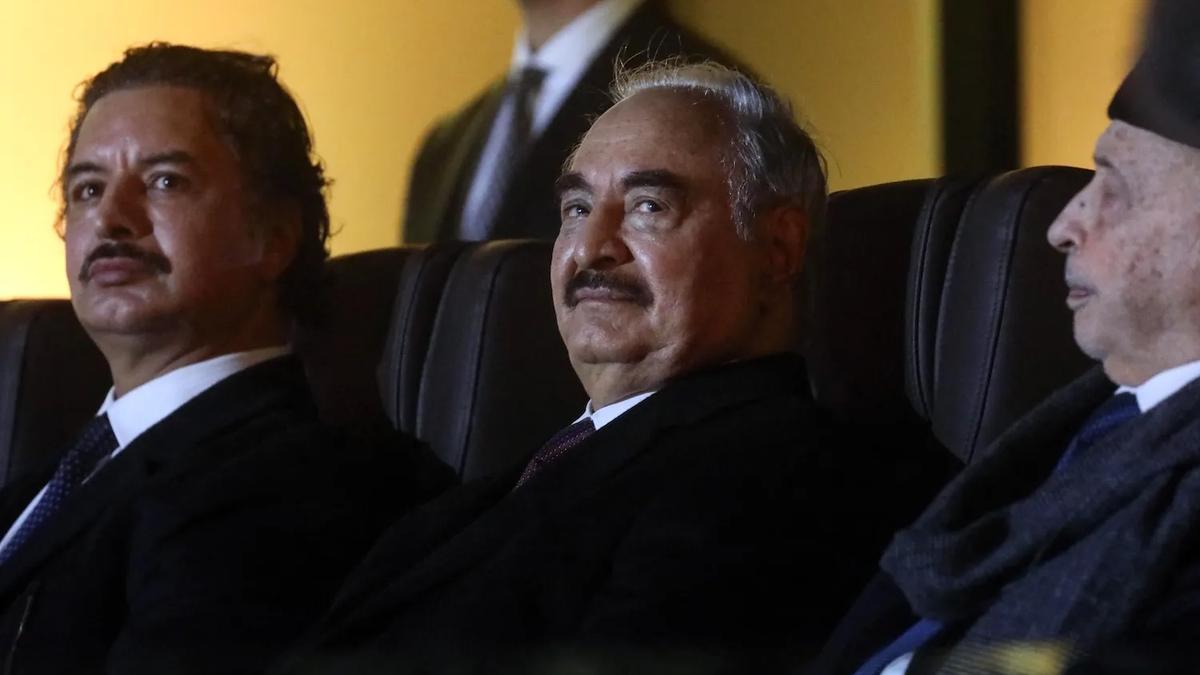
Libya has been mired in dysfunction for years, with rival governments and factions vying for control. The country's east is dominated by the Haftar family, while the west is controlled by the Dbeibah family. The United States is seeking to end this division through a diplomatic deal, but the proposed arrangement could legitimize family rule and undermine democratic hopes.
The Haftar family has a long history of seeking power in Libya. Khalifa Haftar, the current strongman, has been a key player in the country's politics since the 2011 overthrow of Muammar al-Qaddafi. His son, Saddam Haftar, is now the heir apparent and has been meeting with US officials to discuss a proposed deal. The Dbeibah family, on the other hand, has sought to centralize authority in the prime minister's office since entering office in 2021.
The proposed deal, brokered by the US, would see the Dbeibahs retain the prime minister's office and the Haftars take leadership of the Presidency Council. While this may seem like a compromise, it would actually legitimize family rule and undermine democratic aspirations. The Haftars would gain control of the Presidency Council, which would give them a springboard to expand their influence into western Libya. The Dbeibahs, meanwhile, would retain control of the executive and would need guarantees that the Haftars would remain in their barracks.
The US is caught in a complex web of interests in Libya. On the one hand, the US wants to see a unified government in Libya, which would be a major achievement in the region. On the other hand, the US is also keen to see the Haftars and Dbeibahs included in any deal, which would legitimize family rule and undermine democratic aspirations. The US has a history of backing individuals in conflict-affected states, and it's likely that the US sees the Haftar-Dbeibah deal as the only deal that can be done in the present circumstances.
For many Libyans, the proposed deal is a recipe for disaster. They see it as a return to family rule and a betrayal of their democratic aspirations. The Libyan people have been crying out for democracy and stability for years, but the proposed deal would only serve to entrench the power of the Haftars and Dbeibahs. The US should heed its own track record of backing individuals in conflict-affected states and reject the proposed deal.
The proposed deal in Libya is a complex and contentious issue. While it may seem like a compromise, it would actually legitimize family rule and undermine democratic aspirations. The US should reject the deal and instead work towards a more inclusive and democratic solution. The Libyan people deserve better than a return to family rule and a betrayal of their democratic aspirations.
Editor's Note: The proposed deal is a complex and contentious issue, and its outcome is uncertain.
Source referenced: FOREIGNPOLICY
This brief was synthesized by our Editorial Engine and reviewed by The Ground Narrative team.


