TRENDING

Saturday, 26 September 2026
----------------------
15 Rabi' Al-Thani 1448 AH
A recently signed framework agreement between Lebanon and Israel, aimed at ending decades of conflict and disarming non-state actors, faces immediate rejection from Hezbollah. The Iran-backed group warns of potential internal conflict, highlighting deep divisions over national sovereignty and regional security.
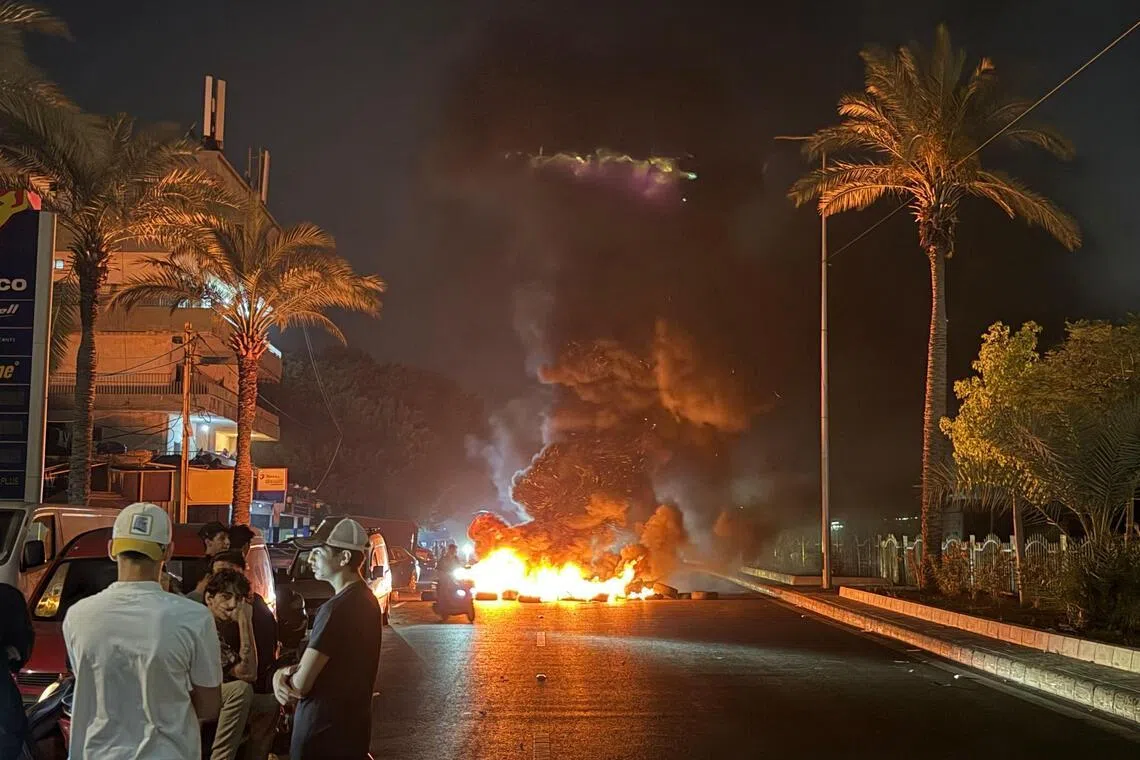
A landmark framework agreement between Lebanon and Israel, signed in Washington on June 26, 2026, aimed at paving the way for peace and formally concluding their state of war, has immediately encountered significant internal opposition within Lebanon. The deal, which notably includes provisions for the disarmament of non-state armed groups, has been vehemently rejected by Hezbollah, the powerful Iran-backed militant group, which warns of potential "internal conflict" if the agreement proceeds.
The agreement, brokered after five rounds of talks, represents a significant diplomatic effort to stabilize a historically volatile border. It outlines a process for Lebanon's military to "restore effective sovereign authority over all Lebanese territory, pending the verified disarmament of non-state armed groups." This clause directly targets Hezbollah, which maintains a substantial military arsenal independent of the Lebanese state. Lebanese President Joseph Aoun had reportedly assured US President Donald Trump of the state's commitment to implementing the framework agreement, signaling a willingness to embrace the terms of the deal.
Hezbollah's rejection of the agreement is unequivocal and deeply rooted in its ideological and strategic posture. Hassan Fadlallah, a Hezbollah lawmaker, publicly denounced the deal as an "agreement of humiliation and disgrace," predicting its non-implementation and threatening internal strife. Similarly, Hezbollah leader Naim Qassem declared the deal "null and void," describing it as a "surrender of sovereignty." The group's leadership has vowed to keep its "finger on the trigger" and continue its "path of resistance," asserting its "legitimate right to defend our people."
Hezbollah's motivations are multifaceted. As a powerful non-state actor with significant political and military influence, its continued existence as an armed force is central to its identity and power base. Disarmament would fundamentally undermine its role as a 'resistance' movement against Israel and its strategic alignment with Iran, which views Hezbollah as a crucial proxy in the broader regional power struggle. The group's rhetoric suggests it perceives any attempt by the Lebanese state to implement the disarmament clause as an act of "sedition" aimed at shifting the conflict from an external one with Israel to an internal Lebanese confrontation.
From Israel's perspective, the disarmament of Hezbollah is a paramount security concern. The group has historically launched attacks against Israel and maintains a significant rocket arsenal capable of reaching Israeli population centers. The recent escalation in March, where Hezbollah fired rockets into Israel following the killing of Iran's supreme leader in alleged US-Israeli strikes, and Israel's subsequent heavy air and ground responses, underscore the persistent threat. Israeli Defence Minister Israel Katz has explicitly stated that Israeli troops would remain in Lebanon as long as Hezbollah remains armed, highlighting Israel's skepticism about the immediate effectiveness of the agreement without concrete disarmament.
The broader regional context is critical. Lebanon and Israel have been officially at war for decades, with intermittent conflicts and proxy engagements. The presence of Hezbollah, heavily armed and ideologically aligned with Iran, complicates any peace efforts and serves as a key component of Iran's regional influence. The agreement, if successful, could significantly alter the regional balance of power by diminishing Iran's leverage on Israel's northern border.
The most immediate and concerning implication of Hezbollah's stance is the potential for severe internal conflict within Lebanon. The country is already grappling with a profound economic crisis, political instability, and deep sectarian divisions. A direct confrontation between the Lebanese state, attempting to assert its sovereignty and implement the agreement, and Hezbollah, determined to maintain its arms, could plunge Lebanon into further chaos. Hezbollah's warning of shifting the conflict from an external enemy to an internal one is a stark reminder of the fragility of Lebanese statehood and the enduring challenge posed by powerful non-state actors.
For the Lebanese state, the agreement presents a profound dilemma. Embracing the deal could offer a path to international legitimacy, stability, and potentially much-needed economic relief. However, enforcing its terms against Hezbollah risks igniting a civil conflict that the state may not be equipped to handle. The outcome will test the very fabric of Lebanese sovereignty and its capacity to govern its own territory free from the dictates of armed factions. The international community, particularly the United States which brokered the deal, now faces the challenge of navigating this complex internal Lebanese dynamic to ensure the agreement's viability and prevent further regional destabilization.