TRENDING

Saturday, 24 October 2026
----------------------
13 Jumada Al-Awwal 1448 AH
Kenya’s health ministry confirmed a second Ebola death, insisting the virus remains contained within quarantine. The announcement reveals how political survival, donor funding, and ordinary citizens intersect in a continent‑wide health crisis.
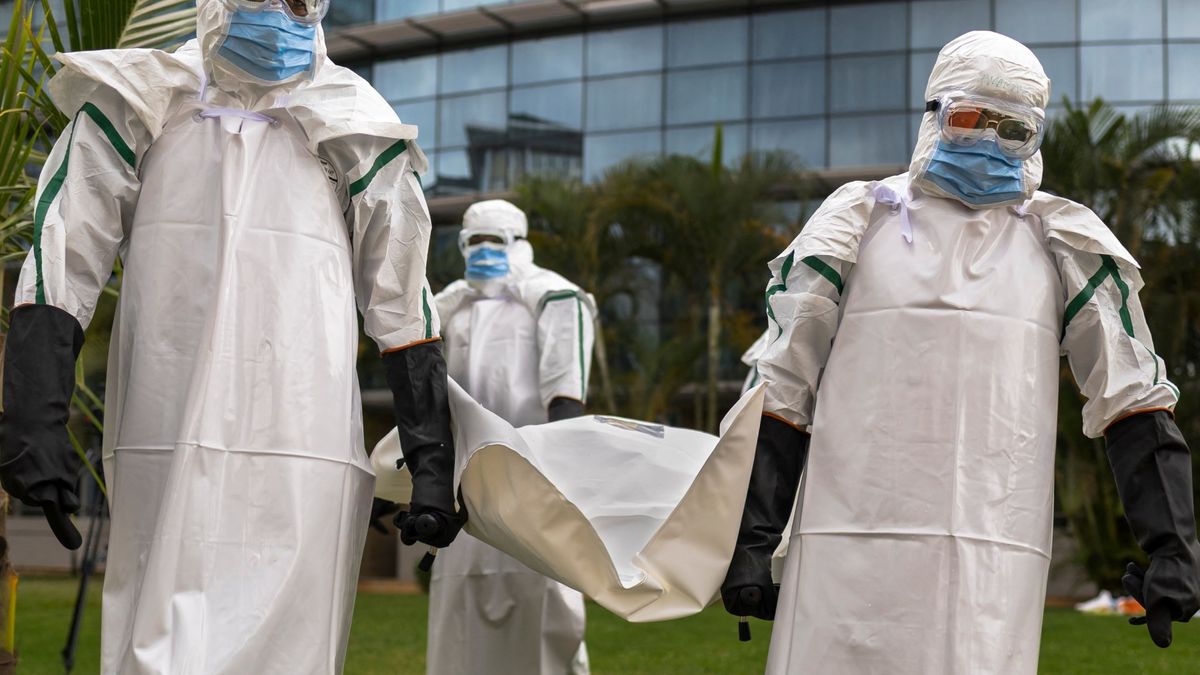
Kenya’s Ministry of Health announced on 23 October that a 65‑year‑old woman died from Ebola while under quarantine, marking the country’s second fatality in the current outbreak. The death follows the earlier passing of a Kenyan man who had travelled from the Democratic Republic of Congo (DRC) and died in Nairobi on 5 October. Health officials say all seven confirmed cases are confined to a single cluster, with no evidence of community spread despite 135 contacts being traced and isolated.
The outbreak’s trajectory is shaped by a web of incentives that stretch from local hospitals to global donors. First, the Kenyan government faces a political calculus: admitting community transmission could trigger costly border closures and erode public confidence ahead of the 2027 general elections. By emphasizing containment, officials protect both their domestic legitimacy and the flow of trade through Nairobi’s bustling ports.
Second, international aid flows are tied to measurable outcomes. World Health Organization (WHO) and bilateral donors such as the United States and the European Union allocate emergency funds based on reported case numbers and the perceived effectiveness of quarantine protocols. Declaring the situation “under control” helps Kenya retain a favorable funding narrative, even as health facilities strain under limited isolation beds.
Third, regional security considerations loom large. The DRC outbreak, now its 17th since May, has already crossed into Nigeria, Uganda, and Kenya, creating a de‑facto health‑security corridor across East and West Africa. Neighboring states are quick to impose travel bans or health checks, actions that can disrupt cross‑border commerce and fuel nationalist rhetoric. Kenya’s tight‑rope walk—tightening quarantine while downplaying spillover—serves to keep trade routes open while placating regional partners demanding swift action.
Finally, the private sector’s role cannot be ignored. Pharmaceutical companies eye the outbreak as a market for experimental vaccines and monoclonal antibodies. Their involvement is often couched in humanitarian language, yet pricing and distribution agreements are negotiated behind closed doors, influencing who ultimately receives life‑saving treatment.
The two deaths have left grieving families facing more than emotional loss. In Kenya, funeral customs involve large gatherings, but public health orders now restrict attendance, forcing relatives to mourn in isolation. The deceased woman’s relatives, already coping with the loss of her brother earlier in the month, must navigate bureaucratic hurdles to claim burial permits, often incurring out‑of‑pocket expenses for transport and personal protective equipment.
Kenyan nurses and Red Cross volunteers are operating in full protective gear for hours on end, a physically exhausting routine that increases the risk of fatigue‑related errors. Despite receiving hazard pay, many report shortages of essential supplies such as gloves and disinfectants, forcing them to reuse equipment—a practice that heightens infection risk for both staff and patients.
Nairobi’s informal economy, which employs roughly 60 % of the city’s workforce, is feeling the ripple effects. Market stalls near the isolation facilities have seen a sharp decline in foot traffic as residents avoid perceived hotspots. Vendors report daily revenue drops of up to 40 %, pushing many toward food insecurity at a time when the national safety net is already stretched thin.
Official statements highlight that WHO is coordinating vaccine distribution, yet the details remain vague. Kenya has secured a limited batch of the rVSV‑ZEBOV vaccine, but allocation criteria are not publicly disclosed. Critics argue that frontline health workers and high‑risk contacts are prioritized, while broader community vaccination is postponed until donor shipments arrive—potentially leaving vulnerable populations unprotected for months.
Uganda’s decision to bar travelers with any DRC travel history is presented as a precautionary health measure. However, the move also shields its tourism sector from a potential surge in cases that could deter visitors. By framing the restriction as a health imperative, the government sidesteps criticism for protecting revenue streams tied to wildlife safaris and cross‑border trade.
State‑run media outlets repeatedly echo the ministry’s claim of “no community spread,” a narrative that downplays the possibility of undetected cases. Independent journalists, meanwhile, face limited access to quarantine sites, leading to a reliance on official press releases. This information asymmetry curtails public debate about the adequacy of testing capacity and the transparency of contact‑tracing data.
Observers should monitor three key developments. First, the speed and scale of vaccine deliveries to Kenya and neighboring states will indicate whether donor commitments translate into on‑the‑ground protection. Second, any shift in the Ministry of Health’s language—from “no evidence of community spread” to acknowledgment of localized transmission—could trigger stricter public health measures and reshape the political narrative ahead of elections. Third, the economic fallout in Nairobi’s informal markets will likely surface in household surveys, offering a tangible gauge of how health crises reverberate through everyday livelihoods. Tracking these signals will help citizens understand who truly benefits from the official story and who bears the hidden costs.
Kenya has confirmed seven Ebola cases, including two deaths, all of which are reported to be contained within a single quarantine cluster.
The government has traced 135 contacts, placed them in quarantine, and operates two isolation facilities while publicly stating there is no evidence of community transmission.
Vaccine supplies are limited and allocation criteria are not fully disclosed, leading to concerns that frontline workers may be prioritized while broader community access remains uncertain.
Source referenced: ALJAZEERA
This brief was synthesized by our Editorial Engine and reviewed by The Ground Narrative team.