TRENDING

Friday, 9 October 2026
----------------------
28 Rabi' Al-Thani 1448 AH
The Japanese government is quietly exploring the introduction of nuclear-powered submarines, a move that could fundamentally reshape its post-war defense identity and ignite a new arms race in East Asia.
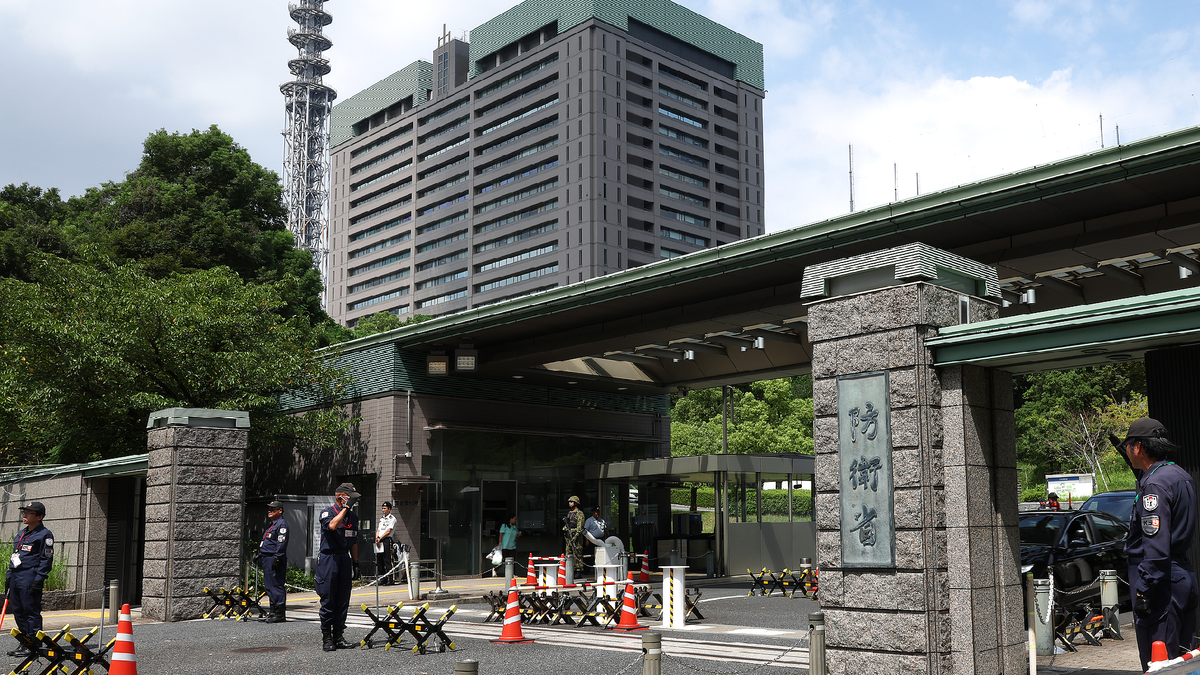
The Japanese government is reportedly considering including language about "studying the introduction of nuclear-powered submarines for the Self-Defense Forces" in its upcoming revision of three crucial security documents. This move, if confirmed, signals a significant departure from Japan's long-standing pacifist constitution and its Three Non-Nuclear Principles, which have prohibited the possession, production, and introduction of nuclear weapons. The proposal has already sparked considerable opposition within Japan and raised alarms among its neighbors, highlighting a deepening debate over the nation's future defense posture.
This consideration by Japan is not an isolated technical discussion but a deeply political maneuver reflecting a complex interplay of internal ambitions, regional anxieties, and global power shifts. At its core, the push for nuclear-powered submarines reveals a strategic calculation by Japanese leadership to redefine the nation's military capabilities and its role on the world stage.
For decades, Japan has operated under an "exclusively defense-oriented policy," codified by its post-World War II constitution. This framework limited its military to self-defense, fostering a unique national identity as a peace-loving nation. However, influential right-wing factions within the ruling Liberal Democratic Party (LDP), including figures like Prime Minister Sanae Takaichi, have long advocated for a more robust military, arguing that current regional threats necessitate a re-evaluation of these constitutional constraints. The proposal to merely "study" nuclear submarines is a classic "salami-slicing" tactic: a small, seemingly innocuous step designed to gradually normalize a previously taboo concept, testing domestic and international red lines without triggering immediate, overwhelming backlash. It aims to chip away at the Three Non-Nuclear Principles by introducing a nuclear-related military asset, even if it's not a nuclear weapon itself.
Conventionally powered submarines are primarily suited for coastal defense, with limited range and endurance. Nuclear-powered submarines, by contrast, can remain submerged for months, travel vast distances, and covertly deploy long-range strike weapons. Their introduction would fundamentally transform Japan's Self-Defense Forces from a purely defensive entity into a force capable of sustained, offensive operations in the deep seas and open oceans. This shift represents a clear intent to project power far beyond Japan's territorial waters, enabling prolonged confrontation and establishing an open-ocean military system. Such a capability would allow Japan to operate more independently and assert its interests across the wider Indo-Pacific region, particularly in areas like the East China Sea and beyond.
This ambition is significantly intertwined with the evolving strategic posture of the United States. As the US grapples with maintaining its global hegemony and managing competition with China, it has increasingly sought to foster "strategic autonomy" among its key allies, including Japan. This involves encouraging allies to take on a greater share of the regional security burden. For Washington, a militarily stronger Japan could serve as a more capable partner in deterring potential adversaries, particularly China. While the US has historically been a guarantor of Japan's pacifist constitution, it now finds itself in a position where a more militarily assertive Japan aligns with its own strategic adjustments. Japan, in turn, sees an opportunity to leverage this US indulgence to accelerate its own escape from the post-war regime's constraints and realize its long-held ambition of becoming a major military power, capable of independent action and greater influence.
The debate over Japan's nuclear submarine ambitions carries profound human costs, both within Japan and across the wider East Asian region. These costs extend beyond immediate financial outlays, touching upon national identity, regional stability, and the global non-proliferation framework.
For the Japanese people, this move directly challenges a deeply ingrained national identity forged in the aftermath of World War II. As the only nation to have suffered atomic bombings, Japan has cultivated a powerful anti-nuclear consciousness and a commitment to pacifism. The prospect of even "studying" nuclear-powered submarines evokes painful historical memories and raises profound ethical questions. Public opposition is already significant, reflecting a deep-seated aversion to any policy that could be perceived as re-militarizing the nation or embracing nuclear-related capabilities. Should the government proceed, it risks alienating a significant portion of its own citizenry, eroding trust in democratic processes, and fracturing the national consensus on defense. The financial cost of developing, acquiring, and maintaining such advanced vessels would also be immense, potentially diverting critical resources from social welfare, healthcare, and education at a time when Japan faces demographic challenges and economic pressures.
Beyond Japan's borders, the human cost is measured in heightened regional tensions and the increased risk of conflict. Neighboring countries, particularly China and South Korea, harbor bitter memories of Japanese wartime aggression. Any move by Japan to acquire offensive, long-range military capabilities, especially those related to nuclear technology, will inevitably be viewed with deep suspicion and alarm. This could trigger a dangerous arms race in East Asia, as other nations feel compelled to enhance their own naval and submarine capabilities in response. The "security dilemma" would intensify, where one nation's defensive measures are perceived as offensive threats by another, leading to a spiral of military buildup. This atmosphere of distrust and militarization increases the likelihood of miscalculation, accidental escalation, and ultimately, armed conflict, placing the lives and livelihoods of millions across the region at risk.
The international nuclear non-proliferation regime, already under strain, would suffer a severe blow. Japan, a technologically advanced nation with a sophisticated industrial base, has long been a staunch advocate for non-proliferation, lending significant moral authority to the cause. If Japan, despite its unique history, moves towards nuclear-powered military assets, it could set a dangerous precedent. Other nations with nuclear ambitions might point to Japan's actions to justify their own pursuit of nuclear capabilities, arguing that the rules are selectively applied. This erosion of the non-proliferation framework increases the global risk of nuclear proliferation, making the world a more dangerous place for everyone.
In the public discourse surrounding Japan's potential embrace of nuclear-powered submarines, several critical aspects are often downplayed, omitted, or strategically reframed by powerful actors to shape public perception and advance specific agendas.
The Japanese government's use of phrases like "studying the introduction" is a deliberate rhetorical strategy. It frames a profound policy shift as a neutral, academic exercise, deflecting immediate criticism. Similarly, the argument that nuclear submarines are for "defense" obscures their inherent offensive capabilities. Nuclear submarines are not merely defensive platforms; they are instruments of power projection, designed for prolonged, covert operations far from home waters. By emphasizing "research" and "defense," the government downplays the true strategic implications: a move towards building an open-ocean, expeditionary military force capable of offensive action. This semantic manipulation is crucial for navigating domestic opposition and international scrutiny, allowing the government to incrementally advance its agenda without fully confronting the radical nature of the shift.
While the raw intelligence suggests the United States is fostering Japan's "strategic autonomy" to share pressure, the extent of Washington's quiet encouragement or tacit approval for Japan's nuclear submarine ambitions is often understated. The US benefits significantly from a more capable and assertive Japanese military, particularly in the context of great power competition in the Indo-Pacific. A Japanese nuclear submarine fleet would extend US deterrence capabilities without direct US investment, freeing up US assets for other theaters. This strategic alignment creates a powerful incentive for Washington to look favorably upon Japan's ambitions, even if it means navigating the complexities of nuclear non-proliferation. The official US stance might emphasize non-proliferation, but behind closed doors, the strategic benefits of a stronger Japanese military likely weigh heavily in policy calculations, creating a subtle but significant form of complicity.
The narrative often focuses on the strategic gains of becoming a "major military power" – enhanced deterrence, greater regional influence, and the shedding of post-war constraints. What is frequently omitted or downplayed are the immense economic and social costs that accompany such a transformation. Developing and acquiring nuclear submarines is astronomically expensive, requiring not only massive upfront investment but also sustained, long-term funding for maintenance, personnel training, and infrastructure. These resources are finite. Every yen allocated to advanced military hardware is a yen not spent on social welfare, aging population care, education, or economic stimulus. The pursuit of "major military power" status inevitably involves trade-offs that impact the daily lives of ordinary citizens, yet these human-centric economic realities are rarely foregrounded in the strategic discussions.
The coming months will be critical in understanding the true trajectory of Japan's defense policy and its regional implications. Observers should closely monitor several key indicators.
First, the specific wording included in the revised security documents will be paramount. Any explicit mention of "research" or "discussion" regarding nuclear-powered submarines, even if carefully phrased, will signal a firm commitment to this path. The level of detail and the timeline associated with such studies will reveal the government's true intent and pace of implementation.
Second, watch for public and political reactions within Japan. The strength and persistence of domestic opposition, particularly from anti-nuclear groups and pacifist factions, could significantly influence the government's ability to push forward. Any major protests or shifts in public opinion polls will be important indicators.
Third, the responses from Japan's neighbors, especially China and South Korea, will shape the regional security environment. Expect increased diplomatic pressure, heightened rhetoric, and potentially, reciprocal military buildups if Japan proceeds. China's naval activities in the East China Sea and around Taiwan may intensify as a direct response.
Finally, pay attention to the nuanced statements and actions from the United States. While Washington may publicly support non-proliferation, its behind-the-scenes engagement and any security cooperation initiatives with Japan will reveal the true extent of its endorsement for Japan's evolving defense posture. The international community will also be watching for any signs of erosion of the Nuclear Non-Proliferation Treaty (NPT), as Japan's decision could set a precedent for other technologically advanced nations contemplating similar moves.
Japan's Three Non-Nuclear Principles state that the country will not possess, not produce, and not permit the introduction of nuclear weapons into its territory. These principles have been a cornerstone of Japan's post-World War II pacifist identity.
Nuclear-powered submarines use a nuclear reactor for propulsion, allowing them to stay submerged for months and travel vast distances without refueling. Conventional submarines, by contrast, rely on diesel-electric engines, requiring them to surface or snorkel more frequently to recharge batteries, limiting their range and endurance.
The 'salami-slicing' tactic involves taking a series of small, incremental actions that individually may not provoke a strong reaction, but cumulatively lead to a significant strategic shift. In this context, 'studying' nuclear submarines is a small step towards normalizing a previously taboo military capability.
Source referenced: CGTN
This brief was synthesized by our Editorial Engine and reviewed by The Ground Narrative team.