TRENDING

Sunday, 27 September 2026
----------------------
16 Rabi' Al-Thani 1448 AH
The first Budapest Pride march since Viktor Orban's electoral defeat signals a potential shift in Hungary's political and social landscape. Over 10,000 participants expressed optimism for greater freedoms and equal rights, highlighting a pivotal moment for the nation's future direction and its relationship with the European Union.
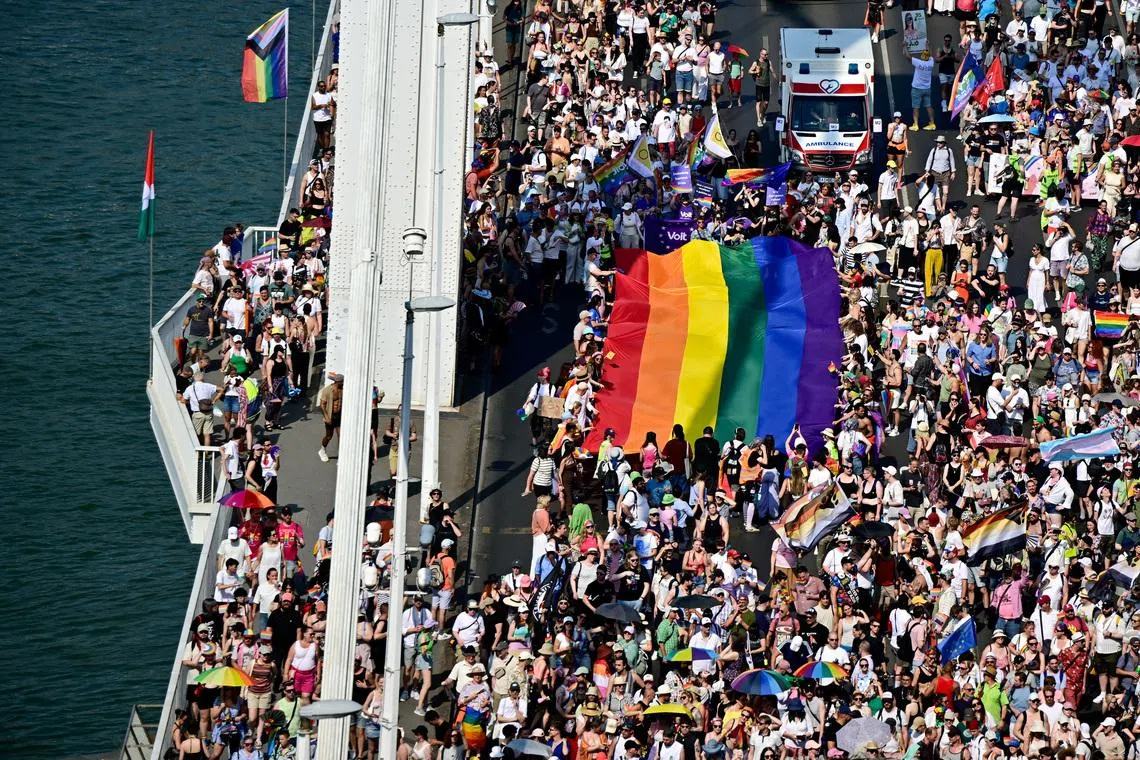
The recent Budapest Pride march, held on June 27, 2026, marked a significant moment in Hungary's evolving political landscape, drawing over 10,000 participants. This year's event was particularly notable as it was the first since the electoral defeat of long-serving right-wing leader Viktor Orban in April, signaling a potential shift away from his government's conservative and often illiberal policies. The march, characterized by a vibrant display of rainbow and European Union flags, unfolded in a mood of palpable optimism, contrasting sharply with the restrictive atmosphere of previous years.
Under Viktor Orban's leadership, Hungary had increasingly diverged from mainstream European liberal democratic norms. Orban, who consistently framed his policies as a defense of "Christian values" against "Western liberalism," implemented a series of legislative measures that significantly curtailed the rights of the LGBTQ+ community. These included laws preventing the legal change of gender in personal documents, banning adoption by same-sex couples, and prohibiting educational materials deemed to promote homosexuality or gender transition in schools. His administration had also attempted to ban the annual Pride march, which in 2025 transformed into a large-scale anti-government demonstration, attracting tens of thousands and underscoring deep societal divisions. These actions frequently placed Hungary at odds with the European Union, leading to disputes over the rule of law, human rights, and the democratic principles underpinning the bloc.
The political landscape shifted dramatically with Orban's defeat to Peter Magyar's centre-right Tisza party in April 2026. This electoral outcome led to the lifting of the ban on the Pride march, allowing it to proceed without government obstruction. The change in political leadership has evidently fostered a renewed sense of hope and freedom among many Hungarians. Participants like 18-year-old student Fanni Fajth expressed a more uplifted mood, articulating hopes for future equal rights, including those related to adoption and marriage. Similarly, 51-year-old chemist Mate Tarnai noted a personal feeling of greater freedom and a more relaxed national atmosphere compared to the previous year. These sentiments highlight the immediate psychological and social impact of the political transition.
From a geopolitical perspective, Orban's electoral defeat and the subsequent atmosphere surrounding the Pride march carry broader implications for Hungary's international standing and its relationship with the European Union. Orban's Fidesz government had cultivated an image of an "illiberal democracy," often challenging Brussels on issues of sovereignty, migration, and judicial independence. The presence of EU flags at the Budapest march is symbolic, suggesting a desire among a segment of the Hungarian populace to realign with broader European values and potentially mend strained ties with the bloc. A shift towards more inclusive policies under the new government could alleviate some of the tensions that characterized Hungary's relationship with the EU, potentially unlocking previously frozen funds and improving its diplomatic standing.
However, the path forward is not without its complexities. While Peter Magyar's victory represents a departure from Orban's entrenched power, Magyar himself is described as a conservative. When questioned by Hungarian media about potentially changing legislation that curtailed LGBTQ+ rights, he reportedly "asked for patience." This indicates that while the immediate oppressive atmosphere may have lifted, significant legislative reforms granting full equal rights might not be immediate or guaranteed. The new government will face the challenge of balancing the expectations of a society yearning for greater freedoms with its own conservative leanings and the need to consolidate power after a significant political upheaval.
The Budapest Pride march, therefore, serves as more than just a celebration of LGBTQ+ rights; it is a barometer of Hungary's post-Orban trajectory. It reflects a society grappling with its identity, navigating between deeply ingrained conservative traditions and a growing aspiration for liberal democratic values. The event underscores the enduring power of public mobilization in advocating for human rights and democratic principles, even in the face of political resistance. The coming months will be crucial in observing how the new government under Peter Magyar addresses these societal demands and whether Hungary truly embarks on a path of greater inclusivity and closer alignment with its European partners.