TRENDING

Monday, 12 October 2026
----------------------
1 Jumada Al-Awwal 1448 AH
A recent Houthi missile strike on Riyadh's King Khalid International Airport resulted in the death of a Pakistani national, marking a significant escalation in the Yemen conflict. This incident highlights the devastating human cost when proxy wars spill beyond their immediate battlefields.
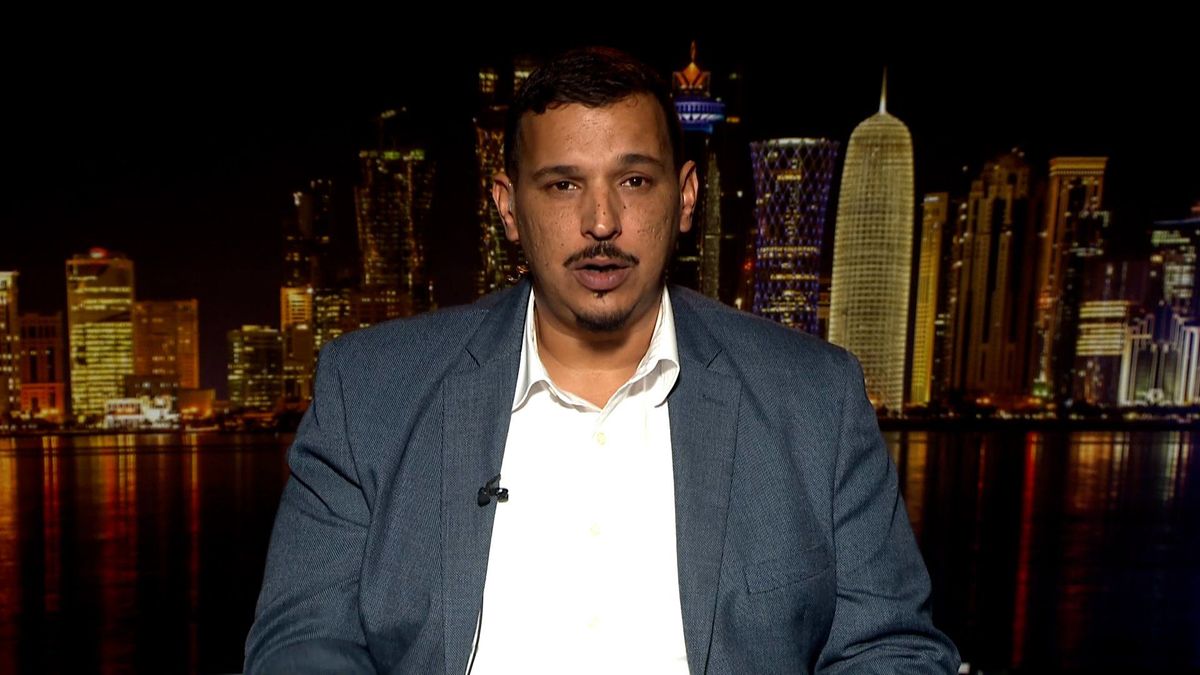
On October 11, 2026, Riyadh's King Khalid International Airport became the target of a second missile strike attributed to Yemen's Houthi rebels. This attack tragically resulted in the death of a Pakistani national and injured several others. The incident followed a prior strike just a day earlier, which had already claimed 12 lives and left over 300 injured. These successive attacks on the Saudi capital's primary civilian airport underscore a dangerous expansion of the Yemen conflict, bringing the war directly to the heart of Saudi Arabia and exposing the vulnerability of its infrastructure and the diverse population residing within its borders.
The Houthi strikes on Riyadh are not random acts of violence; they are calculated moves within a broader regional power struggle, primarily between Saudi Arabia and Iran. For the Houthis, these attacks serve multiple strategic purposes. Firstly, they demonstrate their growing capability to bypass Saudi Arabia's advanced air defense systems, including Patriot missile batteries, thereby challenging the kingdom's perceived invincibility and security guarantees. This capability, largely attributed to Iranian technological assistance in drone and missile development, transforms an asymmetric conflict into one where the weaker party can inflict damage on the stronger's homeland.
Secondly, the strikes are a direct response and a form of retaliation against the Saudi-led coalition's ongoing military campaign in Yemen. By bringing the war to Riyadh, the Houthis aim to increase the domestic political and economic pressure on the Saudi leadership, forcing them to reconsider their involvement in Yemen. It’s a clear message: if Yemen suffers, so too will Saudi Arabia.
For Iran, the Houthis serve as a critical proxy in its regional rivalry with Saudi Arabia. A strong, capable Houthi movement that can threaten Saudi territory keeps Riyadh bogged down, distracts from other regional fronts, and asserts Iran's influence without direct military confrontation. The strikes also signal to the international community that the Yemen conflict cannot be ignored or contained indefinitely, potentially disrupting global energy markets and shipping lanes if it escalates further.
Saudi Arabia, on the other hand, finds itself in a precarious position. Its military doctrine, heavily reliant on air superiority and advanced Western weaponry, has struggled to achieve a decisive victory in Yemen and now faces a persistent, low-tech, yet effective, threat to its own cities. The kingdom's leadership, particularly Crown Prince Mohammed bin Salman, has invested heavily in the Vision 2030 economic diversification plan, which hinges on stability and investor confidence. Attacks on Riyadh's airport directly undermine this vision, creating uncertainty and potentially deterring foreign investment and tourism.
The international community's role is also a critical power mechanic. Major global powers, including the United States and European nations, continue to supply Saudi Arabia with advanced weaponry and intelligence, effectively enabling its campaign in Yemen. While diplomatic calls for peace are frequent, the economic incentives of arms sales and strategic alliances often outweigh the political will to impose genuine pressure for a comprehensive resolution. This dynamic perpetuates the conflict, allowing the proxy war to fester and escalate.
The most immediate and tragic consequence of the Houthi strikes on Riyadh is the human cost, vividly illustrated by the death of the Pakistani national. This individual, like millions of other migrant workers in the Gulf States, was likely in Saudi Arabia seeking economic opportunity, far removed from the geopolitical machinations of regional powers. They are not combatants, nor do they have a political stake in the Yemen conflict, yet they are increasingly becoming collateral damage in a war that has spilled beyond its original borders.
Saudi Arabia relies heavily on a vast expatriate workforce, predominantly from South Asia, Southeast Asia, and various African nations, to power its economy, from construction and services to healthcare and infrastructure. These workers often live in challenging conditions, with limited legal protections and virtually no political voice. When missiles strike civilian infrastructure like airports, it is often these vulnerable populations who bear the brunt, caught in a crossfire they did not create and cannot escape. Their deaths and injuries are not just statistics; they represent shattered families, lost livelihoods, and a stark reminder of how global power struggles disproportionately impact those with the least power.
While the Riyadh strikes bring the war home for Saudis and expatriates, it is crucial to remember the catastrophic human cost within Yemen itself. The Saudi-led coalition's air campaign, coupled with blockades, has created one of the world's worst humanitarian crises. Millions face famine, cholera outbreaks, and a collapsed healthcare system. The strikes on Riyadh are a direct consequence of this protracted conflict, yet the suffering of ordinary Yemenis continues on a scale far greater, often out of sight and out of mind for much of the international community. The death of a Pakistani national in Riyadh is a tragic symptom of a much larger, ongoing human catastrophe in Yemen.
Beyond direct casualties, the repeated attacks on Riyadh inflict a psychological toll on its residents, both citizens and expatriates. The constant threat of missile or drone attacks fosters fear, anxiety, and a sense of insecurity. Economically, such incidents disrupt travel, deter foreign investment, and can impact the daily operations of businesses, further complicating Saudi Arabia's efforts to diversify its economy and attract global talent. The cost extends from immediate emergency responses to long-term economic instability and a decline in quality of life.
What governments and powerful actors often downplay or omit in their public statements about such incidents reveals a great deal about their true objectives and vulnerabilities. Saudi Arabia's official narrative typically frames Houthi attacks as acts of terrorism, emphasizing Iranian backing and the need for international condemnation. This framing serves to rally international support, justify its military actions in Yemen, and deflect scrutiny from the humanitarian consequences of its own campaign. What is often omitted is the extent of civilian casualties caused by Saudi-led coalition airstrikes in Yemen, the effectiveness of the Houthi's asymmetric warfare capabilities, and the kingdom's struggle to achieve its stated objectives in the conflict.
For years, Saudi Arabia and its allies projected an image of control over the Yemen conflict, often portraying it as a contained operation. The repeated strikes on Riyadh, particularly on critical civilian infrastructure like the airport, shatter this illusion. They expose the limits of even advanced military technology against determined, adaptable adversaries employing low-cost, high-impact weaponry. The powerful narrative of Saudi security and stability, crucial for its economic ambitions, is directly challenged by these events, yet officials rarely acknowledge this vulnerability publicly.
The international community, particularly Western powers, often issues condemnations of Houthi attacks while simultaneously maintaining lucrative arms deals with Saudi Arabia. The untold story here is the implicit complicity in perpetuating the conflict. The focus is often on managing the symptoms (like missile strikes) rather than addressing the root causes or applying consistent pressure on all parties to genuinely seek peace. The economic and strategic interests of powerful nations often overshadow the moral imperative to protect civilian lives and promote stability, leading to a selective outrage that downplays the suffering in Yemen while highlighting attacks on Saudi soil.
Iran, for its part, consistently denies direct involvement or material support for Houthi attacks, portraying the Houthis as an indigenous resistance movement. This narrative allows Tehran to exert significant regional influence without direct accountability, effectively leveraging a proxy conflict to bleed its rival without incurring the full costs of open warfare. The strategic gains Iran makes from a bogged-down Saudi Arabia are rarely discussed openly by Iranian officials.
The immediate aftermath of these Houthi strikes on Riyadh will likely see a period of heightened tension and potential escalation. Readers should watch for several key indicators:
- Saudi Retaliation: Will Saudi Arabia respond with more intense or widespread airstrikes within Yemen? Any significant escalation could further destabilize the region and worsen the humanitarian crisis.
- Houthi Capabilities: Observe whether the Houthis continue to demonstrate advanced capabilities in their drone and missile attacks, both in terms of range and precision. This will indicate the level of ongoing external support and their strategic intent.
- Impact on Saudi Vision 2030: Monitor statements from Saudi officials and international investors regarding the security situation in Riyadh. Any signs of investor hesitation or changes in tourism projections could signal a significant blow to the kingdom's economic transformation plans.
- Diplomatic Push: Look for renewed efforts from the United Nations, Oman, or other mediators to push for a ceasefire or a comprehensive peace agreement in Yemen. The increased risk of regional spillover might finally galvanize more serious diplomatic action.
- International Response to Migrant Worker Safety: While unlikely to be a primary focus, any specific calls from Pakistan or other labor-sending countries for increased protection or accountability for their citizens working in Saudi Arabia would be noteworthy.
- Iranian Posture: Pay attention to any shifts in Iran's rhetoric or actions regarding the Yemen conflict, particularly in response to international pressure or Saudi reactions. The proxy dynamics are fluid and highly sensitive to external factors.
The death of a Pakistani national in Riyadh is a stark reminder that the Yemen conflict is not contained. Its human and economic consequences are expanding, and the mechanics of power are ensuring that ordinary people, far removed from decision-making tables, continue to pay the ultimate price. The Ground Narrative.
A Pakistani national was killed in the second Houthi missile strike on Riyadh's King Khalid International Airport on October 11, 2026. This incident also followed a previous attack that killed 12 people and injured over 300.
Houthi rebels target Riyadh to demonstrate their military capabilities, retaliate against the Saudi-led coalition's military campaign in Yemen, and pressure Saudi Arabia to withdraw from the conflict. These strikes also serve Iran's strategic interests in its regional rivalry with Saudi Arabia.
The Yemen conflict is a complex civil war that escalated into a regional proxy war between Saudi Arabia and Iran. It has led to one of the world's worst humanitarian crises, with widespread famine, disease, and displacement, and now increasingly impacts civilian areas in Saudi Arabia.
Editor's Note: Analysis is based on the provided raw intelligence, treating the future date of October 11, 2026, as a factual event for the purpose of this exercise.
Source referenced: ALJAZEERA
This brief was synthesized by our Editorial Engine and reviewed by The Ground Narrative team.


