TRENDING

Monday, 12 October 2026
----------------------
1 Jumada Al-Awwal 1448 AH
A Russian missile slammed into a Kharkiv grocery store, killing three and wounding twenty, including children. The incident spotlights how ordinary civilian spaces are weaponised in the ongoing conflict.
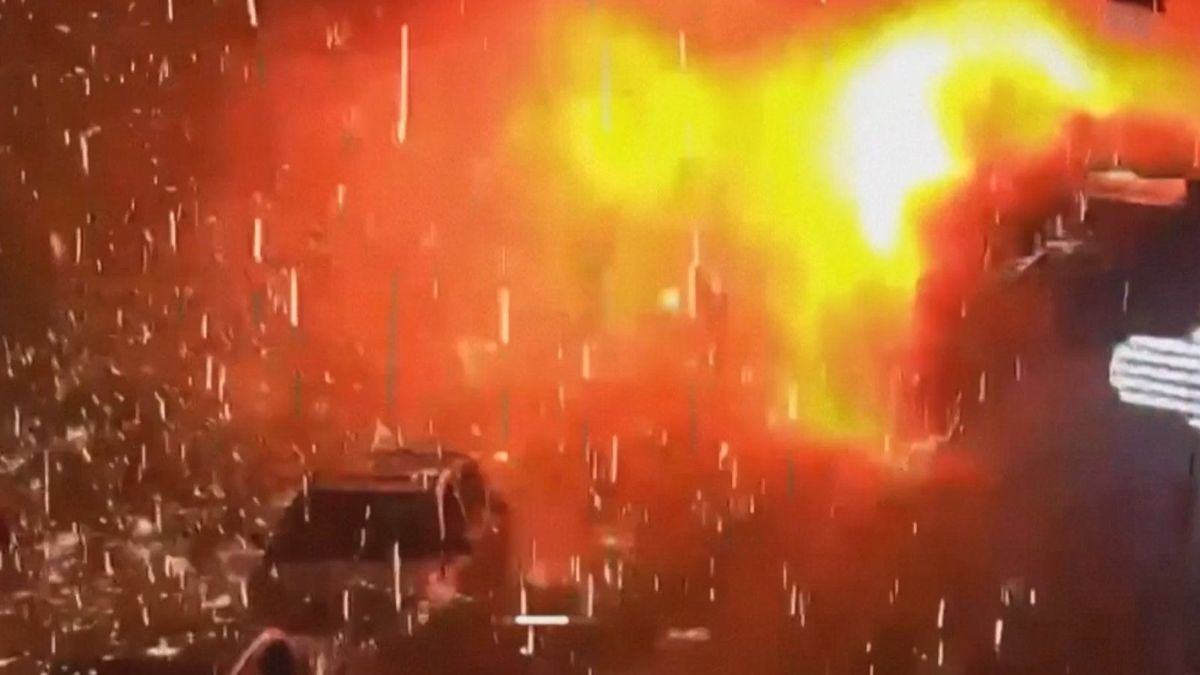
On 11 October 2026, CCTV footage captured a Russian missile striking a grocery store on a residential street in Kharkiv, Ukraine. The explosion ignited flames, sent debris scattering, and left three dead and twenty injured, among them two children. Local officials confirmed the casualties and described the scene as a stark reminder that no civilian venue is safe from the war’s reach.
The choice to hit a grocery store is not random. Since the war began in 2014, Russia has blended kinetic strikes with information warfare, seeking to erode civilian morale while signalling to both domestic and international audiences that its offensive capabilities remain intact. Hitting a place where families procure daily necessities amplifies fear, pressuring local authorities to divert resources to emergency response rather than frontline logistics.
Every missile expended on a civilian node forces the Ukrainian defence apparatus to allocate medical, fire‑fighting, and reconstruction assets away from the front. This indirect attrition is a calculated cost‑benefit exercise: the financial and human expense of rebuilding a neighbourhood can outweigh the tactical gain of a single strike, yet it serves a broader strategy of stretching the opponent’s budget and stamina.
The incident arrives as NATO allies debate additional air‑defence aid. By demonstrating that Russia can still reach deep urban areas, the strike pressures Western capitals to accelerate deliveries of Patriot and SAMP/T systems, while also testing the resolve of partner nations that may be wary of escalating their own involvement.
The three victims were a mother, her teenage son, and an elderly shopkeeper who owned the store. Their loss reverberates through a tight‑knit community that relied on the shop for affordable food. Neighbours now face longer queues at distant markets, higher prices, and the psychological trauma of hearing the explosion replayed in their heads.
Two children, aged six and nine, were among the injured. Beyond their physical wounds, they now carry anxiety that can impair schooling and future employment prospects. Studies from previous conflicts show that children exposed to such violence exhibit higher dropout rates and long‑term mental‑health issues, feeding a cycle of poverty and instability.
Local vendors lost inventory worth an estimated €150,000. The disruption also forced nearby street vendors to close temporarily, cutting daily earnings for dozens of households. In a city already grappling with war‑induced inflation, the loss of a single commercial hub tightens the squeeze on already fragile household budgets.
Both Russian and Ukrainian officials have framed the strike as a “mistake” or a “targeting error.” However, satellite imagery released by independent analysts shows a pattern of strikes on markets, schools, and transport hubs over the past year, suggesting a deliberate strategy to destabilise civilian life rather than isolated accidents.
Recent reports indicate that Russia has increasingly relied on mercenary groups to conduct reconnaissance and designate targets in urban settings. These actors operate with limited oversight, allowing plausible deniability for the Kremlin while still delivering the desired shock value.
The rapid spread of the CCTV clip on social platforms has turned the incident into a viral moment, but the focus remains on the visual spectacle rather than the systemic issue of civilian targeting. International news cycles quickly move on, leaving the affected families with little sustained advocacy or aid.
- Air‑defence deployments: Track the arrival of new NATO‑supplied systems in eastern Ukraine; their effectiveness will influence whether Russia continues high‑profile urban strikes.
- Legal proceedings: Watch for any moves by the International Criminal Court or Ukrainian war‑crimes tribunals to classify attacks on civilian infrastructure as violations of international law.
- Humanitarian funding flows: Monitor how NGOs allocate emergency relief to Kharkiv’s displaced shoppers, as funding gaps could exacerbate food insecurity.
- Propaganda shifts: Observe whether state‑run media in Russia adjust their rhetoric to either justify or conceal the targeting of civilian spaces.
- Local resilience initiatives: Community‑led rebuilding projects may emerge, offering a counter‑narrative of agency that could reshape the social fabric of war‑torn districts.
By keeping an eye on these indicators, readers can gauge whether the strike on a grocery store remains an isolated tragedy or part of a broader pattern that reshapes civilian life in Ukraine for years to come.
Targeting everyday venues like grocery stores spreads fear, disrupts supply chains, and forces the opponent to divert resources to civilian emergency response, serving both tactical and psychological objectives.
International law, including the Geneva Conventions, prohibits deliberate attacks on civilians. Bodies such as the International Criminal Court can investigate and prosecute war crimes, though enforcement depends on political will.
Source referenced: ALJAZEERA
This brief was synthesized by our Editorial Engine and reviewed by The Ground Narrative team.